







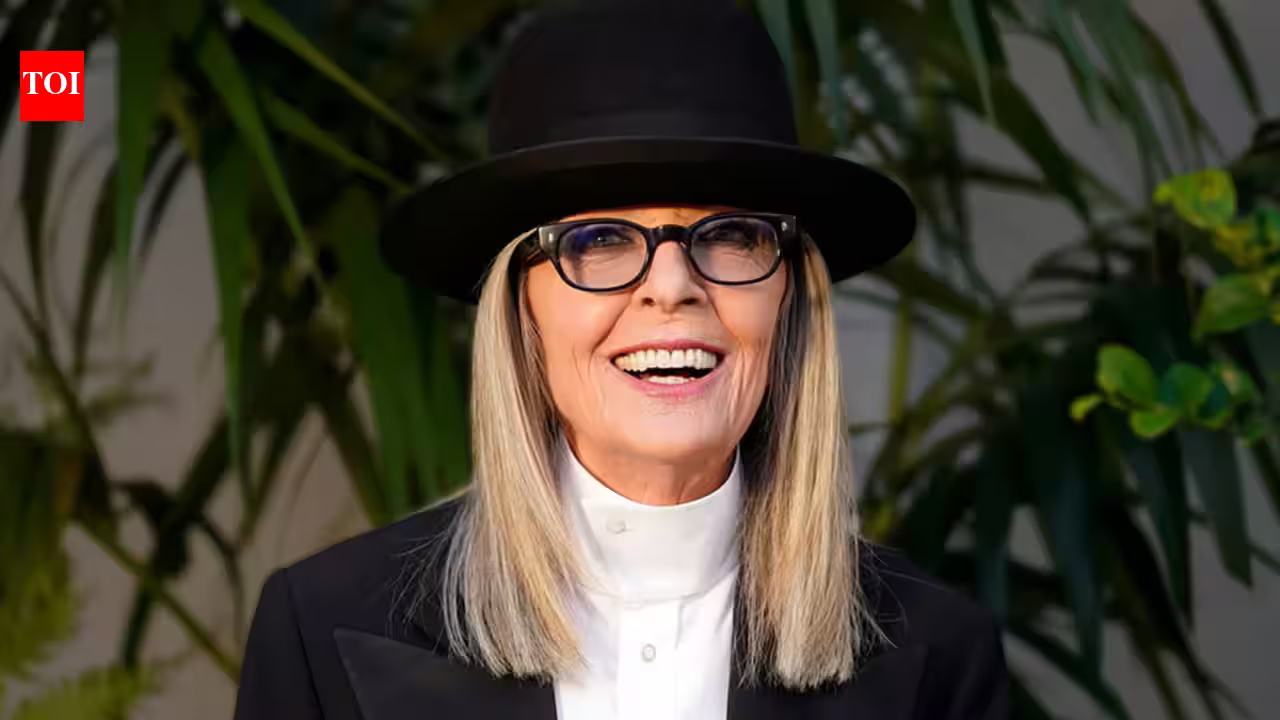
For most Hollywood stars, real estate is a game of scale—how many square feet, how many subterranean garages, how many acres of manicured hedge. But for Diane Keaton, the game has always been different. It’s not about the flex; it’s about the pedigree. Long before she became a fixture on Instagram for her witty, high-contrast home tours, Keaton was quietly establishing herself as the unofficial preservationist of Los Angeles’ architectural soul.
Nowhere was this more evident than in her storied relationship with a specific Los Feliz residence designed by Lloyd Wright—the talented, often-overshadowed son of the legendary Frank Lloyd Wright. While the public remembers her iconic roles in Annie Hall and The Godfather, those in the design world remember her for something else entirely: her obsession with saving the ghosts of California’s architectural past.
How did Diane Keaton end up with the Lloyd Wright house?
In the early 1990s, Keaton found herself drawn to the hillside enclave of The Oaks in Los Feliz. This wasn’t the glitzy, high-security fortress of the Hollywood Hills; it was a neighborhood defined by its deep roots in Los Angeles history. The property she targeted was a 1928-built, 2,700-square-foot structure that felt more like an intimate sanctuary than a celebrity manor.
At the time, the home was a testament to Lloyd Wright’s signature style—a blend of organic architecture that prioritized the relationship between structure and topography. Unlike the sterile, cavernous boxes favored by many of her contemporaries, this house demanded a delicate touch. It required someone who understood that the charm wasn’t in the marble countertops or the gold-plated faucets, but in the intentionality of the concrete floors and the way the light hit the canyon walls. Keaton, ever the connoisseur of character, saw potential where others might have seen only maintenance headaches.
The true cost of vision: Investing in the soul of a home
The narrative of celebrity real estate often centers on the “flip”—buy low, renovate, sell high. But Keaton’s time in the Los Feliz property tells a different story. According to reports from the Los Angeles Times in 1996, Keaton poured nearly $1 million into the refurbishment of the property. To put that in perspective, considering she had purchased the home for roughly $1.2 million, she was essentially reinvesting almost the entire value of the home back into its own bones.
This wasn’t just a kitchen remodel. Keaton collaborated with interior designer Stephen Shadley and landscape visionary Pamela Burton to ensure the project wasn’t just “updated,” but revived. She was fighting against the entropy that plagues historic buildings, working to restore copper finishes, shelves, and built-ins that had weathered the decades. It was an expensive, labor-intensive lesson in what it means to be a steward of history rather than just an owner of property. As she later reflected in Architectural Digest, she loved the space dearly, though she eventually realized it didn’t quite suit the shifting rhythms of her life.
Why the Los Feliz property was a design outlier
Lloyd Wright’s work carries a distinctive DNA. If Frank Lloyd Wright was the architect of the prairie, Lloyd was the architect of the California dream, integrating his homes into the steep, dramatic terrain of the Pacific coast. The Los Feliz house was a masterclass in this philosophy.
The beauty of the property lay in its lack of boundaries. Rooms didn’t just sit in isolation; they bled into the surrounding gardens and terraces. You could see the ocean from the canyon-side vistas, and every structural choice felt like an extension of the hill it rested on. It was a home designed to facilitate a life lived in conversation with nature. By spending years meticulously restoring these connections, Keaton ensured that the house didn’t just survive the late 20th century—it thrived, preserving an essential slice of LA’s mid-century narrative.
Life’s unexpected turns: Leaving the canyon
By 1996, the walls of the Los Feliz house had become too small—not because the house was failing, but because Keaton’s life was expanding in the most beautiful way possible. The decision to sell was catalyzed by a major personal milestone: she had become a first-time mother through adoption.
Suddenly, the cozy, organic flow of a three-bedroom architect-designed hillside home needed to evolve into something that could accommodate family life. The result was a move to a sprawling Spanish-style estate in Beverly Hills, a 7,000-square-foot departure from the Los Feliz aesthetic. But even as she traded the Lloyd Wright for an eight-bedroom mansion, the imprint of the experience remained. You could see it in her future projects; she didn’t just stop at one restoration. She became addicted to the process of finding “sad” old houses and bringing them back to their former glory.
The legacy of the 1996 sale
Retrospectively, the 1996 sale of the Los Feliz property stands as a pivotal moment in Keaton’s career as an architectural advocate. At the time, it was headline news simply because a famous actress was moving house. Today, we view it as a foundational entry in a long portfolio of work that has influenced modern home aesthetics.
Diane Keaton proved that there is prestige in preservation. By sinking $1 million into a house that many would have deemed “too much work,” she set a standard for what it means to be an intentional homeowner. She proved that you don’t have to tear down the old to make something new; you just have to be willing to listen to what the house is telling you. That $950,000 sale in 1996 wasn’t just a transaction—it was the successful culmination of a love affair between a visionary actress and a master architect, a love affair that cemented Keaton’s reputation as Hollywood’s most discerning custodian of history. Whether it’s Spanish Colonial, Mid-Century Modern, or a tucked-away Lloyd Wright, Keaton’s fingerprints are on the evolution of Los Angeles, one restoration at a time.
Disclaimer: This content is auto-generated for informational purposes only.
Source: Read Original News