







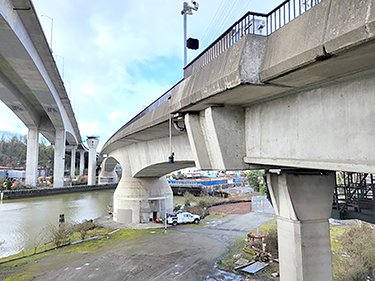
Commuters in the Seattle area should brace for travel disruptions this weekend as the Spokane Street Swing Bridge, colloquially known as the “low bridge,” prepares for a scheduled closure. The Seattle Department of Transportation (SDOT) has announced that the bridge will be off-limits to all vehicle traffic to facilitate the replacement of a damaged barrier gate on its eastern approach.
This critical infrastructure project comes as the city continues to integrate smarter traffic management systems. In an era where urban mobility is increasingly defined by real-time data, the maintenance of physical assets like the swing bridge remains a foundational challenge for municipal engineers tasked with keeping modern, tech-connected cities moving.
## Leveraging Data for Urban Mobility
As the city coordinates this closure, digital mapping tools and AI-driven navigation platforms are playing a pivotal role in mitigating the impact on the public. Google Maps and other major navigation services are expected to update their routing algorithms to reflect the closure in real-time. By utilizing historical traffic data and predictive modeling, these platforms help distribute vehicle congestion across alternative routes, preventing gridlock in neighborhoods surrounding the West Seattle corridor.
The reliance on these digital tools highlights a broader shift in the tech industry: urban planning is no longer just about concrete and steel; it is about the flow of information. AI-enhanced traffic routing now considers bridge operations, construction schedules, and real-time accidents to provide the most efficient path forward. As Google continues to refine its “eco-friendly routing” and real-time transit updates, the importance of accurate municipal data feeds—like those provided by SDOT—becomes even more critical to ensuring that automated traffic systems function effectively.
## The Intersection of Infrastructure and AI
The maintenance of the Spokane Street Swing Bridge involves complex mechanical components that act as the gatekeepers of the Duwamish Waterway. While the gate replacement itself is a mechanical task, the tech sector is increasingly interested in how digital twins and sensor networks can predict such maintenance needs before they necessitate emergency closures.
Leading tech companies are actively exploring “Smart City” frameworks where Internet of Things (IoT) sensors are embedded directly into bridges to monitor structural integrity and mechanical wear. By applying machine learning to the data collected from these sensors, cities can move from a reactive maintenance model to a proactive one. This transition aims to reduce unexpected service disruptions, ensuring that infrastructure remains as reliable as the software powering our navigation devices.
## Preparing for the Weekend Commute
For residents and travelers, the upcoming bridge closure serves as a reminder to check digital dashboards before hitting the road. Tech-forward travel management is highly dependent on the user’s engagement with these digital updates. Google’s ongoing commitment to improving the precision of its satellite imagery and transit predictions ensures that commuters can see road status changes almost as soon as they are broadcast by municipal agencies.
As the city prepares to swap out the damaged gate, the incident underscores the symbiosis between traditional public works and modern software solutions. The bridge, a vital artery for the local community, represents the physical layer of the city, while the digital platforms we use to navigate it represent the intelligence layer. Residents are encouraged to use integrated travel apps to monitor potential delays throughout the weekend and plan their journeys accordingly to avoid getting caught in localized traffic buildup. The project serves as a clear illustration that even in the age of advanced algorithms and autonomous research, the fundamental need for well-maintained, physical bridge infrastructure remains a cornerstone of the modern transit experience.
Disclaimer: This content is auto-generated for informational purposes only.
Source: Read Original News