





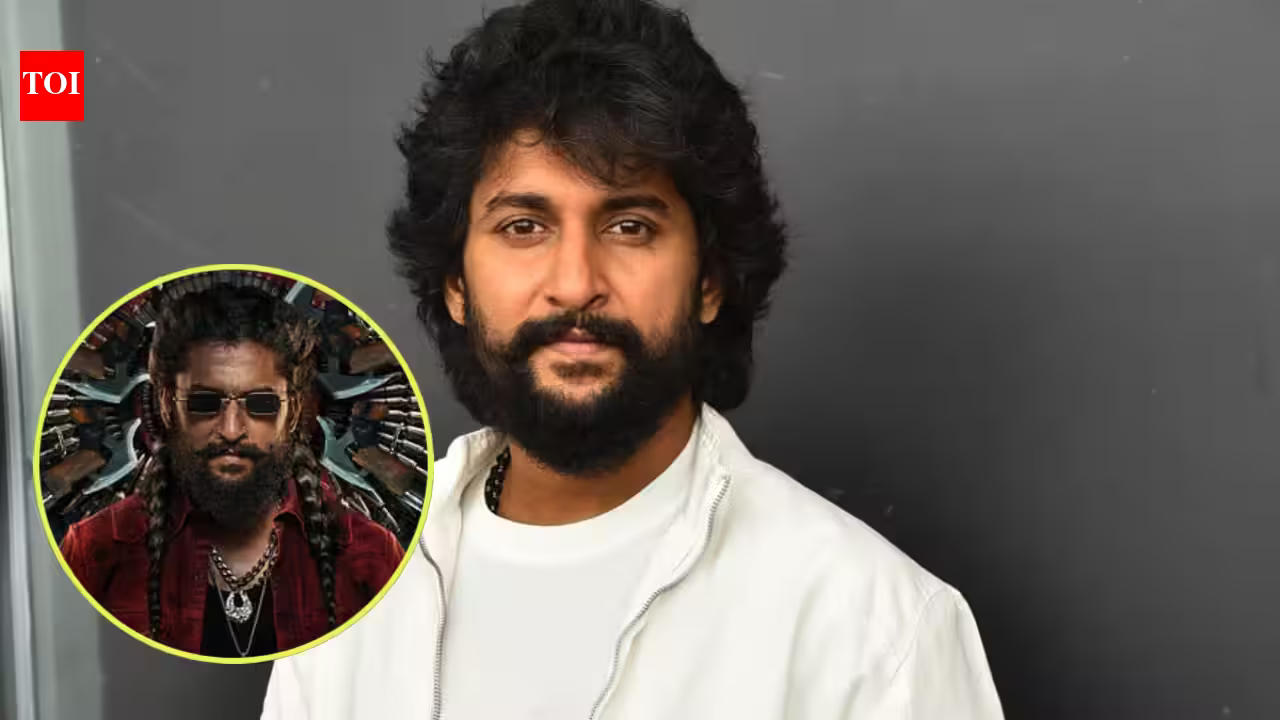
In the high-stakes world of Tollywood, where actors are often pigeonholed into specific archetypes, Nani has carved out a unique space for himself as the “Natural Star.” For years, he was the face of relatable, heartwarming family dramas—the boy next door who could charm his way into anyone’s living room. However, the trajectory of his career has taken a sharp, jagged turn recently. With his latest release, The Paradise, Nani is testing the limits of his audience’s comfort zone, proving that even as he matures as a performer, his moral compass remains tethered to his most important critic: his nine-year-old son, Arjun.
The Fatherhood Filter: Redefining the Star Persona
The transition from the lovable, quirky lead to a darker, more intense performer wasn’t an overnight decision, but it was certainly accelerated by the realities of fatherhood. While promoting The Paradise, Nani candidly admitted that his son’s presence has fundamentally altered his script-selection process. In an industry that often celebrates the “mass” hero—someone who can tear through sets with grit and gore—Nani is asking himself a very different question: Will I be embarrassed if my son watches this in six years?
It’s a refreshing, grounded take from an A-list celebrity. While many stars prioritize box-office numbers or the sheer “cool” factor of a project, Nani is thinking about legacy. “Now, when this fellow grows up to be a 15-year-old, when he watches it, do I have to change the channel? Do I have to cringe about it?” Nani pondered during a recent interview. It’s not about censoring his art, but rather about ensuring his body of work reflects a standard of quality and integrity that he can stand behind when Arjun eventually reaches his teenage years.
Navigating the ‘A-Rated’ Complexity
The Paradise, which carries an ‘A’ certification, serves as the perfect case study for this new, matured approach. It is a departure from the lighthearted, middle-class narratives that propelled Nani to stardom. Yet, when asked about the film’s accessibility, Nani strikes a delicate balance between artistic ambition and parental responsibility. He acknowledges that he has already told Arjun that he isn’t ready for The Paradise yet—a conversation many parents in the audience can likely relate to.
“For example, my own son is asking me if he can watch Paradise,” Nani shared during the film’s promotional circuit in Chennai. “And I said, ‘Not when it releases, but soon, when I think you’re ready for it.'” It’s a moment of transparency that bridges the gap between the superstar and the father. He isn’t trying to hide the darker themes of his work; he’s simply acknowledging that his growth as an actor must occasionally outpace the age-appropriate viewing habits of his child.
Balancing Artistic Ambition with Public Perception
Inevitably, an actor known for family-friendly hits taking a plunge into darker, “A-rated” territory sparks debate. Will his core audience feel alienated? Does the shift toward “intensity” dilute the charm that made him a household name? Nani seems unfazed by the potential backlash, viewing it as a necessary evolution of his craft.
“As an actor, I think I’ll have to explore all kinds of genres,” he insisted. He argues that the specific kind of intensity required for a film like The Paradise simply cannot be achieved within the constraints of a PG-rated family drama. For Nani, it’s about the authenticity of the performance. He believes that if the story demands a certain grit, he owes it to the project to commit fully—even if it means moving away from his “safe” brand.
Transparency in the Age of Social Media
One of the most defining characteristics of Nani’s career has been his relationship with his fanbase. He has always operated with a level of transparency that is rare in the opaque world of Indian cinema. When The Paradise opened to mixed reviews, he didn’t retreat into a press-release silence. Instead, he took to X (formerly Twitter) to address the public directly.
His statement was remarkably human: “I’ve received all your love and equally enjoyed your hilarious trolls. I’m heartwarmed by the way audience have owned the film and also learnt from the flaws that critics and reviewers have pointed out.” By acknowledging the criticism—and even embracing the humor of the trolls—Nani managed to pivot the conversation from a PR disaster to a moment of genuine connection. He recognizes that, as an actor, he is a steward of the audience’s time and money. When he says, “We have made The Paradise with a lot of blood and sweat to give you a unique experience,” it doesn’t sound like corporate marketing; it sounds like an invitation to a conversation.
A Future Defined by Intentionality
Despite the lukewarm critical reception and the “A” certification, The Paradise has secured the biggest opening weekend of Nani’s career. This suggests that while the audience might be divided on the film’s execution, they are clearly invested in the risk-taking nature of his current chapter.
Moving forward, Nani’s challenge will be to keep finding that “sweet spot”—projects that satisfy his creative hunger for complex, mature storytelling without losing the humanistic core that endeared him to millions in the first place. Whether he is playing a serial killer in V or diving into the intense atmosphere of The Paradise, one thing is certain: he is no longer just playing a character. He is considering the audience, his legacy, and most importantly, the boy sitting at home who will one day sit down, press play, and see exactly who his father was during his peak years.
Nani isn’t just navigating the film industry; he is navigating his own maturation in real-time, one “cringe-free” decision at a time. It’s a rare and commendable path to take in an industry that usually demands stars stay frozen in the image of their younger, safer selves.
Disclaimer: This content is auto-generated for informational purposes only.
Source: Read Original News