









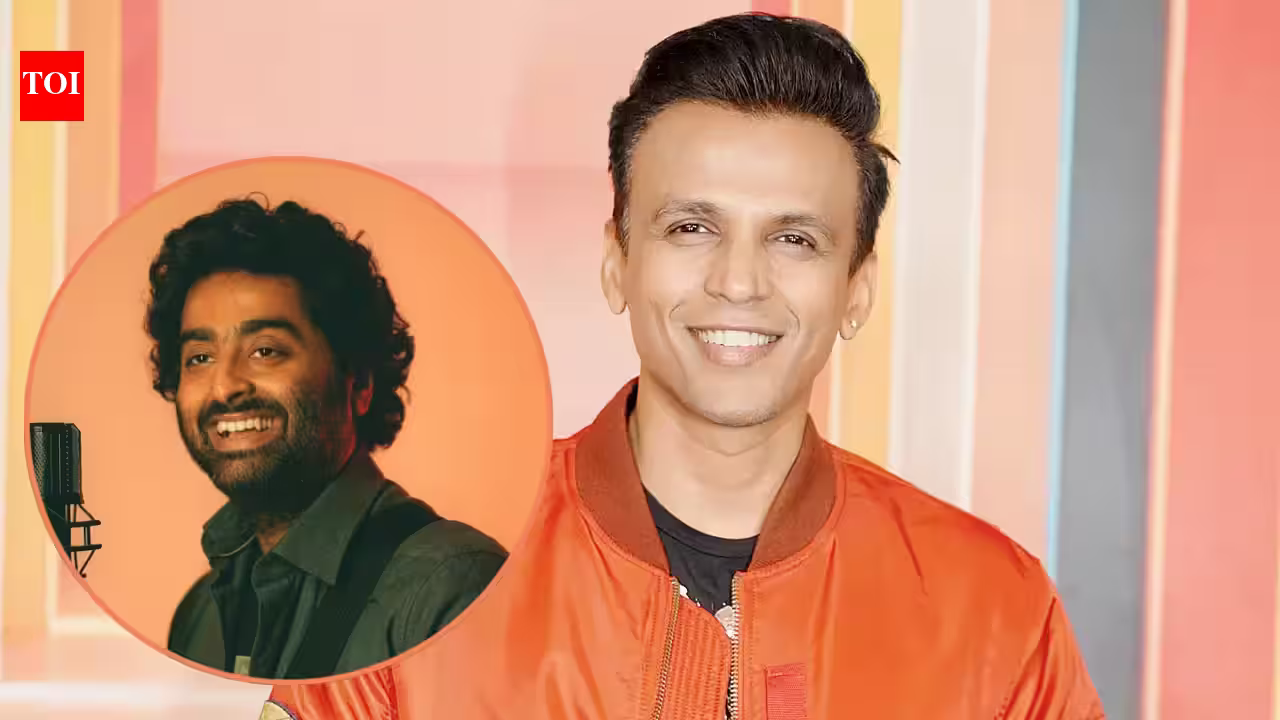
The trajectory of Indian reality television has produced countless fleeting stars, but few names resonate with the dual weight of history and mystery quite like Abhijeet Sawant and Arijit Singh. It has been nearly two decades since the cultural phenomenon of 2005, a watershed year that gave us the inaugural Indian Idol and the song-and-dance battleground of Fame Gurukul.
Today, the two men stand at vastly different intersections of the music industry. While Abhijeet Sawant remains the original poster boy of the reality singing era, an artist whose victory defined the nation’s newfound obsession with televised talent hunts, Arijit Singh has transcended the “contestant” label to become arguably the most influential playback voice of the modern era. In a candid reflection on their divergent paths, Sawant recently offered a sobering, nuanced perspective on what separates a momentary winner from a generational icon: it isn’t just talent; it is the ruthless, often invisible machinery of fate.
The Weight of Early Stardom
For the uninitiated, it is easy to forget just how massive Abhijeet Sawant was in 2005. Winning Indian Idol wasn’t just a win; it was an instant elevation to national celebrity. With a million-rupee prize, a record deal, and a level of press attention that hadn’t been seen in the domestic television market before, Sawant was the template for the reality star.
Speaking with Filmygyan, Sawant recalled the intensity of that period. He acknowledges the disparity in their early experiences with refreshing honesty. “If you compare him and me at that time, I was very popular, but he wasn’t,” Sawant noted. That popularity, while a blessing, was also a gilded cage. For a winner, the pressure to maintain relevance, navigate public expectations, and survive the inevitable decline of the “new sensation” tag is immense. While Sawant was occupied with the duties of being a public figure, Arijit Singh—who had finished his run on Fame Gurukul—was effectively entering a decade-long period of obscurity.
The Decade of Anonymity
The most intriguing part of Sawant’s assessment is his characterization of Arijit’s “lost years” as a hidden crucible of growth. While many reality show participants faded away entirely after their initial buzz dissipated, Singh chose a path of labor. He didn’t chase the limelight; he chased the craft.
“He went to the music studios, and he worked with all the major music composers, not as a singer but as a producer, as a programmer,” Sawant explained. This is a crucial distinction. By stepping out of the spotlight and working in the trenches of music production, Singh gained an intimate understanding of the technical side of the industry—arrangement, sound design, and the intricate demands of a composer. He was essentially an apprentice to the greats for ten years.
While the public saw him as a “failed” or “forgotten” contestant, he was actually building a foundation of professional relationships and technical proficiency that would eventually make him the most reliable choice for any music director looking for emotional resonance. It was, in Sawant’s words, a “blessing in disguise.”
The Alchemy of Destiny and ‘Tum Hi Ho’
Every career requires a catalyst, and for Arijit Singh, that catalyst was the sweeping, era-defining ballad ‘Tum Hi Ho’ from Aashiqui 2. Abhijeet Sawant is quick to point out that while Singh’s work ethic provided the spark, the massive cultural eruption of that song was a matter of destiny.
“That song landing in the lap of any singer… it was all about destiny,” Sawant remarked. There is a palpable sense of respect in his words. He understands, perhaps better than anyone, that the music industry is a lottery of timing. A song needs the right film, the right actor, the right lyricist, and the right moment in history to become a cultural touchstone. Had Aashiqui 2 not arrived when it did, or had that melody been given to another, the narrative of “Arijit Singh” might have remained one of a hardworking technician rather than a household name. Sawant’s humility here is notable; he isn’t bitter about the paths taken, but rather observant of the winds of change that propel one artist to the stratosphere while another maintains a steady, different altitude.
The Flaw in How We Value Art
Perhaps the most poignant takeaway from Sawant’s recent interview is his critique of the audience. We, as consumers of entertainment, are notoriously fickle. We treat reality show careers like stock market trends—obsessing over the high-flyers and quickly discarding those whose growth is slower or more lateral.
Sawant points out a fundamental flaw: “We keep praising the one who is successful, but the ones we don’t know much about, we keep finding flaws in them.” This highlights the cruel paradox of fame. We define an artist’s value by their current market share, ignoring the years of persistence, the failures, and the personal evolution that happens outside the glare of the cameras. Sawant’s defense of the artistic journey—regardless of whether it results in a chart-topping hit or a quiet career—serves as a reminder that the “winner” of a show is often just the beginning of a much longer, more complicated story.
The Future of the Melodist
As Arijit Singh enters a transitional phase—having announced his retirement from active playback singing, though clearly still honoring his existing commitments—the conversation around his legacy has shifted. He is no longer just the guy from Fame Gurukul, nor just the voice behind Aashiqui 2. He is now the benchmark against which every other contemporary singer is measured.
Whether he is lending his voice to a massive Shah Rukh Khan project like King or quietly working on independent compositions, the industry remains fixated on his next move. Meanwhile, Abhijeet Sawant continues to perform and maintain his own dedicated audience, a reminder that success is not a binary state. In the grand ecosystem of Indian music, there is space for the meteoric rise and the steady, enduring burn. Both men, forged in the fires of 2005’s reality TV madness, prove that the “winner” isn’t always the one who takes the trophy home on the night of the finale—it’s the one who eventually finds a way to make the world listen, on their own terms.
Disclaimer: This content is auto-generated for informational purposes only.
Source: Read Original News