



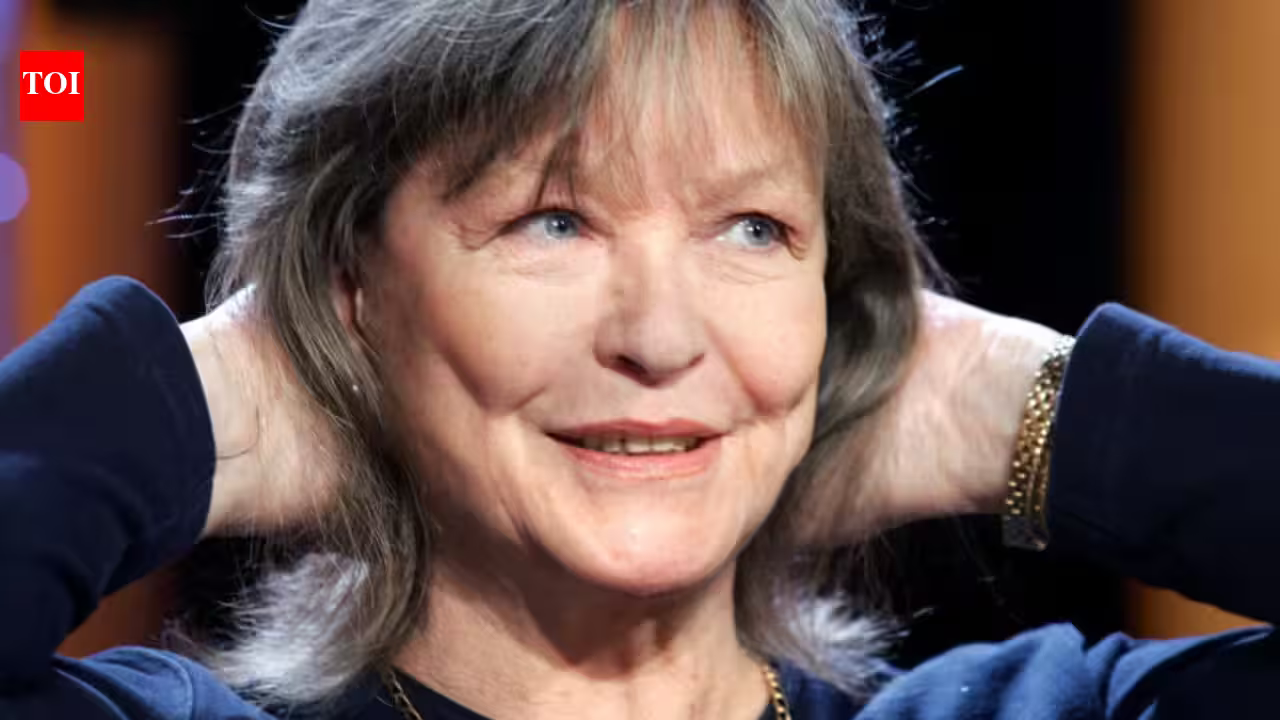
The final curtain has fallen on one of the most enigmatic and enduring figures of European cinema. Marina Vlady, the French actress whose ethereal presence and sharp artistic sensibilities defined an era of international filmmaking, passed away on Thursday at the age of 88. Her family confirmed the news to Agence France-Presse (AFP), noting that she died peacefully at her home, surrounded by her loved ones and her beloved animals.
In a poignant statement, Vlady’s children honored their mother’s memory, describing her passing as the conclusion of “a long and beautiful life, well lived.” For a woman who graced the screen in more than 80 films, the tribute feels entirely appropriate; Vlady was not merely an actress, but a polymath of the arts who moved through the mid-20th century with an elegance that bridged the gap between Old World glamour and the experimental fervor of the New Wave.
A Legacy Forged in Cannes and Beyond
To understand the magnitude of Vlady’s impact, one must look back to the 1963 Cannes Film Festival. It was there that Vlady cemented her status as a titan of the craft, taking home the Best Actress award for her haunting, complex performance in Marco Ferreri’s The Conjugal Bed (L’ape regina).
The role, which explored the suffocating domesticity and shifting power dynamics of a marriage, showcased her ability to convey volumes with a single, knowing glance. It was a career-defining turn that resonated far beyond the French Riviera, eventually earning her a Golden Globe nomination and bringing her distinctive brand of intensity to an international audience. While many actresses of her generation were pigeonholed as mere starlets, Vlady possessed a gravitas that demanded respect from the most rigorous auteurs of her time.
A Collaborator to the Giants of Cinema
Vlady’s filmography reads like a syllabus for a masterclass in film history. She was a chameleon, capable of shifting seamlessly from the stylized, cerebral challenges of the French New Wave to the grand, sweeping narratives favored by Hollywood legends.
Perhaps most notably, she found herself in the orbit of the mercurial Orson Welles. In 1965, she appeared in his Shakespearean epic Chimes at Midnight. Appearing in an English-language role for one of the most demanding directors in history was no small feat, yet Vlady held her own, delivering a performance that stood out even within the dense, theatrical landscape Welles had constructed.
Her range was further exemplified by her work with Jean-Luc Godard. In an era where the rules of filmmaking were being torn up and rewritten, Vlady was a natural fit. She inhabited the screen with a modern, restless energy that made her a favorite among those who wanted to push the boundaries of what a movie could—and should—be.
The Artistic DNA of an Icon
Vlady’s innate connection to performance was, in many ways, an inheritance. Born into an artistically rich household, she was the daughter of a former dancer and an opera-singing French army aviator. This background instilled in her a discipline and an appreciation for the fluidity of performance that would carry her through decades of work.
However, Vlady was never content to let acting define the entirety of her creative existence. She possessed a musical spirit that manifested in a charming and somewhat lesser-known chapter of her life: her work with her sisters. The Vlady sisters ventured into the recording studio, releasing two albums that showcased a folk-inflected, intimate side to her personality. This musical detour served as a reminder that she was, at her core, a performer who responded to the rhythm of her environment, whether it was the pacing of a script or the melody of a song.
Navigating the Global Stage
Throughout her long career, Vlady refused to be tethered to a single linguistic or cultural box. She moved through genres—from biting social satire and dark dramas to period epics—with a fluid intelligence. Her ability to navigate different languages and styles of filmmaking allowed her to remain relevant while many of her contemporaries were left behind by the rapidly changing landscape of the industry.
She possessed a distinct “European cool”—a mixture of intellectual rigor, emotional vulnerability, and an unshakeable sense of self. She lived through the golden age of French cinema and survived the transitions of the late 20th century, all while maintaining a level of dignity and privacy that is rarely seen in today’s hyper-connected celebrity culture.
Reflecting on a Life Well Lived
As the industry mourns, the focus naturally turns to the void left by her passing. Yet, to look at the list of her 80-plus films is to realize that Vlady’s voice is far from extinguished. From her early, budding stardom to her work as a seasoned veteran of the craft, she left a trail of performances that continue to challenge and delight.
In the end, Vlady wasn’t just a face on a poster; she was a witness to and a participant in the evolution of cinema itself. She navigated the fame that came with her Cannes success and the subsequent pressures of being a global icon with a grounded perspective, choosing to spend her final years in a quiet home surrounded by the things she loved most.
The history of cinema is written in the performances of those who dared to be more than just icons. Marina Vlady was one such artist—a woman who lived fully, performed with truth, and left an indelible mark on the screen that will endure for generations of film lovers to come. Her life was, as her family so aptly put it, a beautiful, long, and well-lived journey—and the final act is one that closes with well-earned applause.
Disclaimer: This content is auto-generated for informational purposes only.
Source: Read Original News