







In the glossy, high-stakes world of Bollywood, where PR teams usually curate every syllable that exits a star’s mouth, there is something profoundly refreshing about the brutal honesty of a “desi” mom. Anjali Anand, the powerhouse performer who held her own alongside titans like Ajay Devgn and Riteish Deshmukh in Dhamaal 4, recently learned that no amount of box-office success can shield you from the unfiltered critique of your own parent.
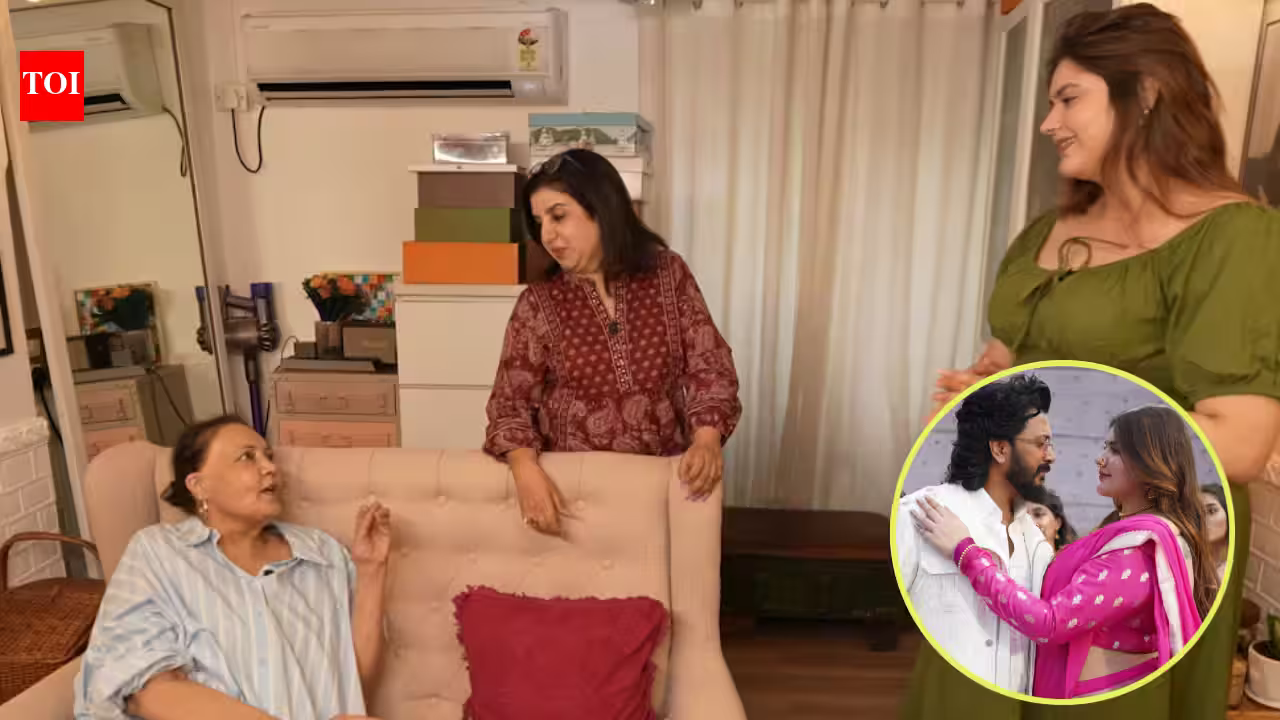
In a candid, heartwarming segment on Farah Khan’s popular YouTube food vlog, the industry veteran turned digital host sat down with Anjali, and the conversation quickly pivoted from film sets to the dinner table. What followed was a masterclass in the kind of grounded reality that only a mother can provide, leaving both Farah and the audience in splits.
The “One-Time Watch” Verdict
The dynamic between an actor and their family is often the most grounded relationship in their lives, and Anjali Anand’s mother is clearly the anchor that keeps the Rocky Aur Rani Kii Prem Kahaani star firmly tethered to the earth. When Farah Khan—who has seen enough “filmy” families to know a good story when she hears one—probed Anjali’s mother about her thoughts on Dhamaal 4, the answer was swift and merciless.
“Achhi hai, one-time watch,” the mother declared, a rating that is essentially the cinematic equivalent of a lukewarm pat on the back. While most industry parents might offer a diplomatic, “It’s a great entertainer for the masses,” Anjali’s mom didn’t mince words.
The comedic timing peaked when Anjali, perhaps hoping for a redemption arc, asked, “Beti kaisi lagi apni?” (How did you like your daughter in it?). Without a flicker of hesitation or a hint of motherly bias, she replied, “Hmm, theek hai” (Hmm, she’s okay). The studio, which had been buzzing with laughter, erupted. It was a beautiful reminder that for our parents, we are never the star on the poster; we are just their child, and the bar for greatness is set much higher than mere screen time.
From Despair to Karan Johar’s Spotlight
While the segment provided plenty of comic relief, the conversation also took a poignant turn, highlighting the grueling reality of the acting profession. Anjali pulled back the curtain on the year 2020, a period she describes as her lowest point. For an actor, the lockdown wasn’t just a health crisis; it was a professional vacuum.
“Lockdown ho gaya tha, paise khatam ho gaye the… 6 mahina jitni savings thi ud gayi,” Anjali shared. For those who see the glamour of the red carpet, it’s easy to forget that beneath the surface, many performers live paycheck to paycheck, or in this case, project to project. The sheer anxiety of watching one’s savings account drain to zero is a universal struggle, and Anjali was ready to pack her bags and leave India entirely to pursue a different life.
It is during these moments of surrender that the industry often pulls its most unpredictable stunts. While in Goa with friends, desperate and ready to walk away, she received the call that would change everything: an invitation to audition for a project under the banner of Dharma Productions—Karan Johar’s Rocky Aur Rani Kii Prem Kahaani.
The “No-Backing” Skepticism
Perhaps the most relatable part of the story was the skepticism from home. We often assume that an actor’s family would be their biggest cheerleaders, but Anjali’s mother offered a much more pragmatic—and dare we say, classic—parental perspective.
“Koi backing nahi hai, koi pehchan wala nahi hai,” the mother admitted, recalling how she initially dismissed the idea of her daughter auditioning for a Karan Johar film. In an industry notoriously driven by connections and nepotism, Anjali’s mother was simply playing the odds. “Badi aayi Karan Johar ko milne ja rahi hai. Tujhe kyun milega woh?” (Oh, look at her; she’s going to meet Karan Johar. Why would he even meet you?)
It is a heartbreakingly honest sentiment. Parents often worry about their children getting their hearts broken by a system that doesn’t play fair. Yet, this maternal doubt serves to underscore the magnitude of Anjali’s eventual success. She didn’t get the role because of a name or a contact; she walked into that room as a complete outsider and commanded the space, ultimately securing a role that became a defining pivot point in her career.
Why We Need More “Real” Conversations
The chemistry between Farah Khan and Anjali Anand—and the participation of Anjali’s mother—proves that the audience is craving more than just scripted promotional interviews. We are tired of the PR-manufactured “best ever” film reviews. We want to see the humans behind the characters.
Anjali Anand’s journey is a microcosm of the modern struggling artist: a mix of intense talent, accidental miracles, and the enduring, slightly annoying, but absolutely necessary skepticism of a family that refuses to treat you like a movie star.
Whether Dhamaal 4 was a “one-time watch” or a masterpiece in the eyes of her mother, one thing is certain: Anjali Anand has arrived on her own terms. And if she can survive the honest critiques of her mom, she can handle whatever the cutthroat world of Bollywood throws her way. She doesn’t need a lobbyist in the industry when she has a mother who will ensure her ego never grows larger than her talent. After all, in a town of “yes men,” being told you’re just “theek hai” is probably the most valuable feedback an actor can receive.
Disclaimer: This content is auto-generated for informational purposes only.
Source: Read Original News