






The Rise of Orbital Servicing and the SSPICY Mission
The burgeoning field of in-orbit servicing, assembly, and manufacturing (ISAM) is reaching a critical inflection point as companies shift from theoretical models to operational realities. At the forefront of this transition is Starfish Space, a startup that has spent seven years refining the complex software and mechanical systems required to navigate, inspect, and physically interact with objects in space. The upcoming SSPICY mission represents a significant milestone for the firm, marking the first time a full-scale Otter spacecraft will perform government-contracted inspection duties.
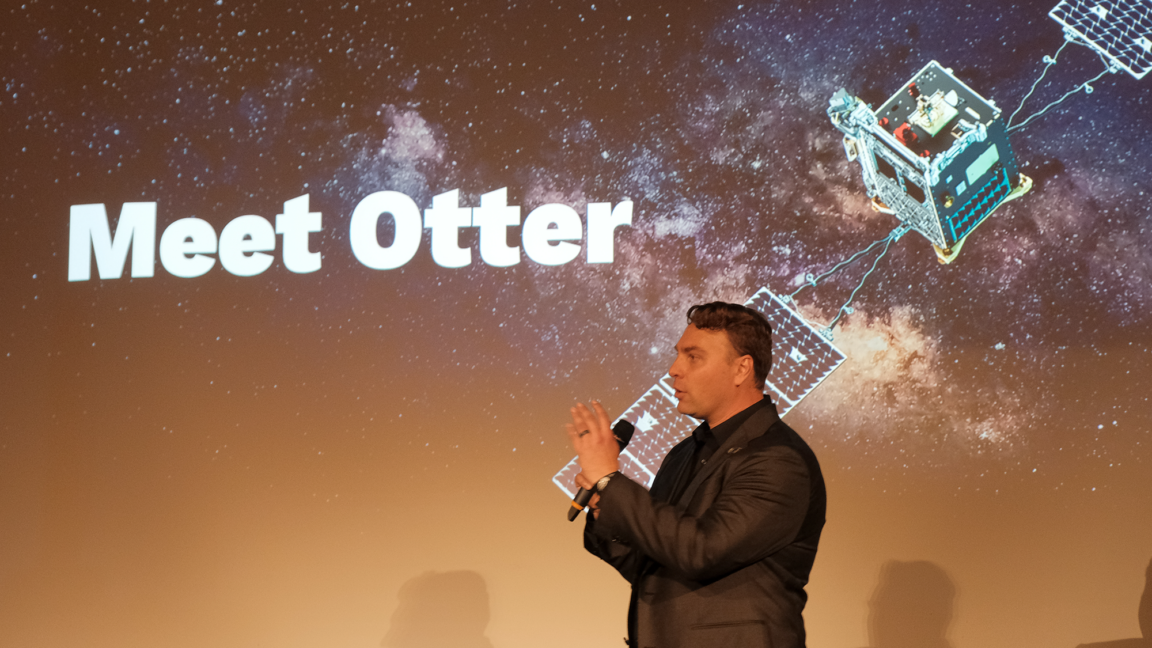
Unlike previous small-scale demonstrators, the Otter spacecraft is designed for high-fidelity maneuverability. By utilizing a spacecraft bus procured from Astro Digital, Starfish has narrowed its internal focus to the development of sophisticated guidance, navigation, and control (GNC) algorithms. These systems allow the vehicle to identify and approach target satellites autonomously, a capability that is foundational for the future of the space economy. According to company leadership, the initial phase of the SSPICY mission will prioritize inspections, but the platform’s modular design allows for extended operations, potentially enabling the vehicle to provide life-extension services or assist in active debris removal once its primary task is complete.
Navigating Technical Hurdles and Iterative Development
The path to the current configuration of the Otter platform was characterized by rigorous trial and error. The company’s journey began in 2023 with the launch of Otter Pup 1, a mission that served as a harsh training ground for the engineering team. An unexpected failure of the orbital transfer vehicle resulted in the premature ejection of the payload at a high spin rate of 330 degrees per second. This event provided a real-world stress test for the company’s recovery protocols. While the team successfully stabilized the spacecraft, the experience underscored the volatility of the low-Earth orbit environment and the necessity for robust, redundant recovery software.
Lessons learned from the Otter Pup 1 anomaly were integrated directly into the development cycle for subsequent iterations. The team’s commitment to an incremental testing strategy allowed for the identification of critical failure points before transitioning to larger, more expensive hardware. This iterative methodology transformed the company’s approach to GNC software, leading to the successful deployment of Otter Pup 2 in 2025. This later demonstrator proved the efficacy of the company’s navigation systems by maintaining close-proximity flight within a one-kilometer distance of a target object, setting the stage for imminent full-scale docking attempts.
Leveraging Autonomy and Closed-Loop Control
Central to the success of the Starfish platform is its closed-loop guidance, navigation, and control software. This technology enables autonomous rendezvous, allowing a spacecraft to interpret telemetry and visual data to adjust its trajectory without constant human oversight. The maturity of this system was demonstrated through a collaboration with Impulse Space, during which Starfish software was used to navigate the Mira spacecraft following its primary mission completion.
The demonstration confirmed that a lightweight camera system, when paired with the company’s proprietary navigation stack, could reliably close the gap between two independent satellites. By eliminating the need for complex ground-based command loops during the final phases of a rendezvous, this autonomous capability reduces the latency-related risks inherent in orbital operations. This software-first architecture ensures that the Otter can operate safely in environments where communication windows are limited or where immediate reaction times are required to avoid collisions.
Scaling Production for Future Orbital Demands
With five additional Otter vehicles currently in production, Starfish Space is moving beyond the demonstration phase to a period of industrialization. Each new vehicle is designed to showcase expanded capabilities, ranging from high-precision docking maneuvers to de-orbit services. The ability to perform de-orbit tasks is particularly relevant given the increasing density of objects in low-Earth orbit. As regulators look toward sustainable orbital management practices, providers capable of safely guiding defunct satellites into the atmosphere for disposal will become essential infrastructure partners for both private and public space agencies.
The transition from a boutique startup to a service provider for NASA indicates a broader validation of the ISAM industry. By focusing on a standardized bus design and investing heavily in software, Starfish has managed to maintain a lean operating structure while delivering sophisticated orbital hardware. This strategic positioning allows the company to minimize capital expenditure while scaling its fleet, an essential requirement for building a sustainable business model in an environment where launch costs and operational risks remain significant factors.
The Broader Impact on Space Sustainability
The success of the SSPICY mission holds implications that extend well beyond a single company’s technical achievements. The ability to service, inspect, and potentially refuel satellites suggests a future where the lifespan of space assets is determined by their physical integrity rather than their initial fuel reserves. As the cost of placing mass into orbit remains high, the economic incentive to maintain and upgrade existing constellations becomes increasingly compelling.
Furthermore, the integration of autonomous proximity operations into routine space missions provides a template for future modular assembly. If spacecraft can reliably approach and dock with one another, the potential for building larger structures in space—or extending the utility of aging satellites—becomes significantly more feasible. The work being performed by Starfish and its peers is effectively establishing the “rules of the road” for a crowded orbital theater. As the SSPICY mission proceeds, the data collected will provide vital evidence for the reliability of these autonomous systems, potentially accelerating the adoption of service-oriented architectures in future aerospace procurement programs. The focus now shifts to the deployment of the full-scale Otter, a moment that represents the culmination of years of iterative testing and the arrival of a new, highly capable tier of orbital service vehicles.
Disclaimer: This content is auto-generated for informational purposes only.
Source: Read Original News