







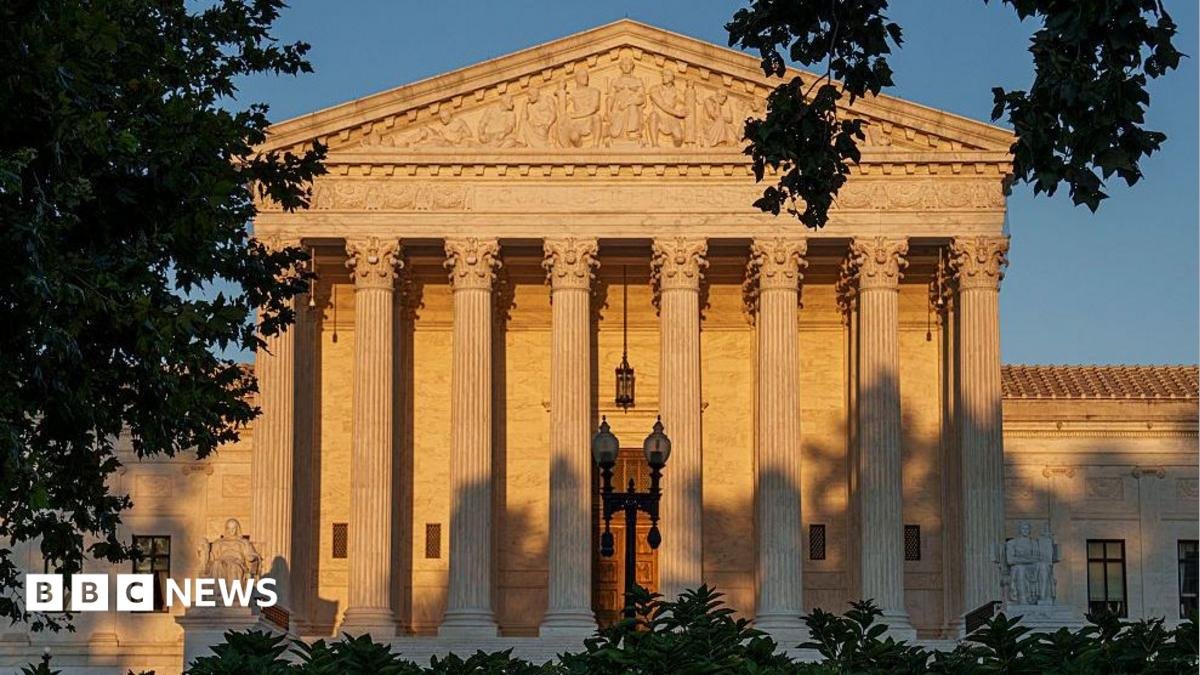
WASHINGTON — The US Supreme Court issued a major ruling on Friday, lifting restrictions that had previously blocked the Trump administration from utilizing a controversial federal database to identify and purge suspected non-citizens from voter rolls.
The decision allows for the continued use of the Systematic Alien Verification for Entitlements (SAVE) program, a tool originally established in 1986 to verify immigration status for public benefit applicants. Under the Trump administration, the program was significantly expanded to allow for bulk searches of voter registration lists using sensitive data from Social Security records.
The high court’s conservative majority overruled a lower court decision, arguing that federal law mandates the Department of Homeland Security (DHS) to provide citizenship information to states that request it. The justices held that the previous injunction, handed down in June by US District Judge Sparkle L. Soonnan, improperly hindered the government from employing a system it deems essential for election integrity.
“The federal government has an obligation to respond to states seeking that information,” the majority wrote, noting that because the use of the SAVE system by states is voluntary, the court’s decision allows federal authorities to utilize the tools they believe are best suited for the task.
However, the ruling ignited a fierce internal divide within the court. The three liberal-leaning justices dissented, with Justice Ketanji Brown Jackson issuing a sharp rebuke. She warned that the reliance on such data poses a grave threat to the democratic process, arguing that the risk of disenfranchising eligible American citizens far outweighs the government’s interest in pursuing this specific verification method.
“The harm caused by burdening or disenfranchising even a few lawful voters outweighs the non-existent harm that the government experiences when it is prevented from taking an action that it likely lacks the authority to take,” Justice Jackson wrote in her dissent.
Critics of the program, including civil rights groups, have long decried the database as unreliable, pointing to evidence of widespread administrative errors. In Texas, for instance, local officials found that of nearly 100 voters flagged by the system as potential non-citizens, at least 10% were actually US citizens. Furthermore, despite the Trump administration’s repeated claims that hundreds of thousands of non-citizens are registered to vote, actual prosecutions for illegal voting remain statistically rare.
While the Supreme Court’s ruling is a victory for the administration’s efforts to overhaul federal election oversight, the immediate impact on the upcoming midterm elections is expected to be limited. The court noted that the National Voter Registration Act includes specific provisions that prohibit “broad purges” of voter rolls in the weeks immediately preceding an election.
Currently, 27 states utilize the SAVE system as part of their voter verification processes. The debate over its use remains a central front in the broader, ongoing national struggle over the balance between election security and the protection of voting rights.
Disclaimer: This content is auto-generated for informational purposes only.
Source: Read Original News