








For the past decade, the global community has focused heavily on assigning a financial value to nature. As forests are reclassified as carbon sinks and wetlands as vital natural infrastructure, billions of dollars have flooded into carbon markets and green bonds. The underlying assumption is that once nature is integrated into formal financial systems, it will be protected by its own economic worth.
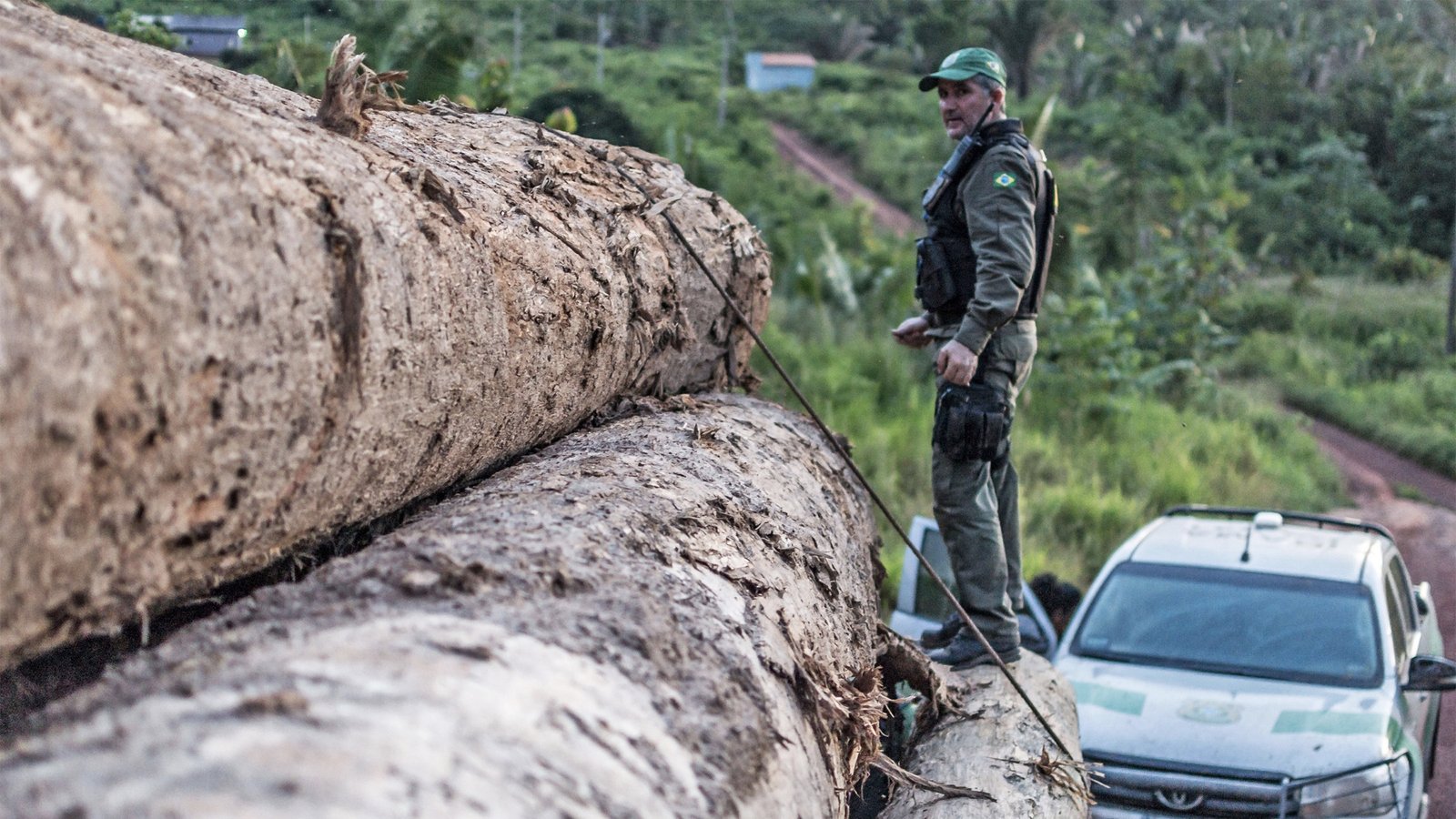
However, a more destructive and established economy has been pricing nature for decades—not for its preservation, but for its extraction. A new commentary from the Igarapé Institute highlights that land grabbing, illegal logging, illicit gold mining, and wildlife trafficking are not merely local environmental offenses; they are high-profit engines of organized crime that fundamentally undermine sustainable development and global climate goals.
“The world is still working out how much a standing forest is worth,” note authors Robert Muggah and Ilona Szabó de Carvalho. “Criminal markets settled on a price for a felled one long ago.”
While public perception often focuses on the individual logger or miner at the point of extraction, these actors are often the lowest-paid, most expendable laborers in a vast, sophisticated supply chain. The real wealth is captured much further downstream by financiers, intermediaries, and illicit brokers who manipulate permits and facilitate the laundering of stolen goods into the global marketplace.
Estimates of the scale of this criminal economy vary, but conservative figures place annual proceeds in the hundreds of billions of dollars, with many experts suspecting the true toll reaches into the trillions. The danger lies in the seamlessness with which illegal commodities—gold, timber, or fish—are integrated into the legitimate global economy. Once a felled tree or a bucket of gold is “washed” through fraudulent paperwork or mixed with legal stock at a sawmill or refinery, it becomes nearly impossible to trace back to the scene of the environmental crime.
This “criminal convergence” is particularly evident in regions like the Amazon Basin, where organizations once dedicated to drug trafficking have diversified into environmental crimes. These groups provide the infrastructure—from illicit machinery and mercury for gold mining to forged land titles—that keeps the cycle of destruction spinning. For the impoverished workers on the ground, these criminal networks often provide the only source of credit or livelihood in areas where the state is absent or ineffective.
Because the profits are captured in corporate offices and trading houses far from the point of destruction, traditional enforcement efforts—which typically rely on local park rangers or police raids—have largely failed to curb the trend. Closing a single illegal mine or intercepting a timber shipment rarely stops the broader operation; it merely shifts the activity to a new location.
Effective solutions, the authors argue, must shift focus toward following the money and the commodity. This involves using modern investigative tools like satellite imagery and cross-border financial data to target the organizers and financiers. Recent initiatives, such as the cross-border “Operation Green Shield,” have shown that international cooperation and the pooling of intelligence can lead to significant seizures and arrests. Furthermore, new consumer regulations, such as the European Union’s deforestation-free mandate, are beginning to force companies to take greater responsibility for the provenance of their goods, potentially creating the supply-chain transparency needed to shut out illegal commodities.
Ultimately, the fight against environmental crime requires a shift from viewing these acts as isolated policing problems to treating them as systemic risks. As long as criminal markets can profitably absorb the fruits of environmental destruction, conservation finance will continue to struggle. To truly value nature, the global financial system must first make the destruction of it far more costly than its preservation.
Disclaimer: This content is auto-generated for informational purposes only.
Source: Read Original News