





The Compassionate Plate: Purataasi and the Ethical Roots of Vegetarianism
As the Tamil month of Purataasi begins, a subtle yet profound shift sweeps through households across the state. The air, long accustomed to the savory aromas of non-vegetarian preparations, suddenly carries the fragrance of traditional sattvic cooking. It is a period of voluntary discipline, where even the most dedicated meat enthusiasts set aside their preferences in honor of Lord Vishnu, embracing a lifestyle defined by simplicity and spiritual reflection.
A Season of Transition
Purataasi is not merely a calendar marker for piety; it acts as a bridge between seasons. The classic Tamil observation, “Pon karaya kaayum, mann karaya peyyum”—a time when the sun burns hot enough to melt gold and the rains fall hard enough to erode the soil—encapsulates the volatility of the weather during this transition. Ancient wisdom suggests that this physiological challenge calls for a gentle, plant-based diet, allowing the body to recalibrate its internal rhythm while the external environment undergoes a radical change.
Historically, however, the human journey began differently. Evidence from ancient Sangam literature, such as Pathitrupathu, reveals that our ancestors were far from restrictive in their eating habits. Descriptions of red meat cooked with pulses and rice paint a vivid picture of a culinary heritage that arguably predates the modern biryani, reminding us that vegetarianism was a moral evolution rather than an inherited norm.
Thiruvalluvar and the Philosophy of Compassion
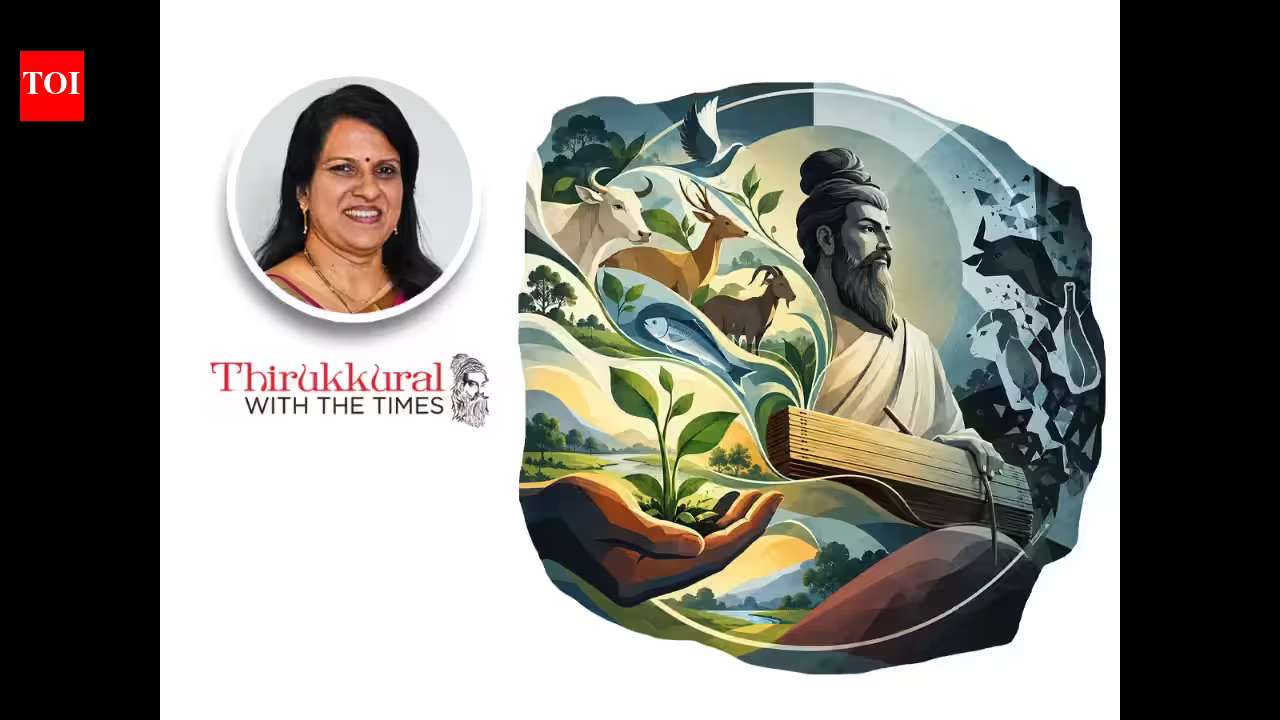
The transition from carnivorous practices to vegetarianism was articulated most eloquently by the poet-philosopher Thiruvalluvar. In his monumental work, Thirukkural, he dedicated the chapter Pulal Maruththal (Refusal of Meat) to the ethics of consumption. His argument transcends religious dogma, grounding the choice in the principle of ahimsa, or non-violence.
In Kural 260, he poignantly notes:
“One who does not kill and refuses to eat meat is worshipped by all living beings.”
For Valluvar, vegetarianism was a litmus test for the heart. It was not about dietary purity, but about the refusal to participate in the suffering of another creature. Many scholars trace this influence to Jainism, a tradition that elevates non-violence to the pinnacle of spiritual existence. The legend of Prince Neminatha, the 22nd Tirthankara, who abandoned his wedding upon hearing the cries of animals slated for slaughter, serves as a haunting reminder of the moral weight attached to the food on our plates.
The Modern Paradox
In an ironic turn of history, the global discourse is shifting. While the West is increasingly turning toward veganism, driven by concerns over animal welfare and environmental sustainability, India—a country historically synonymous with large-scale vegetarianism—is seeing a rise in meat consumption.
Yet, perhaps the enduring relevance of Valluvar’s message lies in its timeless nature. He asks us to look inward: can our conscience remain undisturbed by the cost of our appetite? As we navigate the month of Purataasi, it serves as a timely reminder that what we choose to exclude from our diet is as much an act of self-definition as what we choose to consume. Ultimately, the practice is a silent, daily prayer for compassion—a simple, powerful choice to live in a way that minimizes harm to the world around us.
Disclaimer: This content is auto-generated for informational purposes only.
Source: Read Original News