







HISTORY has been rewritten in the digital arena, and it has been done by a child who, until recently, was primarily concerned with his primary school curriculum. Yuki Kurihara, an 11-year-old Japanese prodigy, has stunned the world by clinching an Asian Games gold medal in Puyo Puyo Champions, cementing his status as one of the most remarkable talents ever to grace the regional sporting stage.
In a sport often dominated by battle-hardened veterans with years of professional grinding under their belts, Kurihara’s ascent to the top of the podium represents a seismic shift in the perception of youth participation in esports. Yet, despite the gravity of his achievement—becoming the youngest athlete in Japanese history to compete at the Asian Games—the primary schooler’s reaction was not one of boisterous triumph, but of humble, endearing restraint.
A gold medal after dominating older players
The path to the gold was anything but a fluke. Kurihara’s performance throughout the tournament was characterized by a clinical, almost robotic efficiency that dismantled opponents decades his senior. In the semi-final showdown, he dismantled Thailand’s 28-year-old Tanarak Wongkitkun with a staggering 10-1 scoreline, a margin of victory that sent a clear message to the rest of the field.
The final saw Kurihara face off against 24-year-old South Korean challenger Kang Dongshin. The nerves of the big stage appeared to flicker only for a fleeting moment when Kurihara conceded the opening game 1-0. However, like a veteran campaigner, he recalibrated instantly. Utilizing the rapid-fire decision-making that has become his trademark, he proceeded to orchestrate a dominant 10-2 sequence, leaving his opponent no path back into the match.
While the arena erupted, the winner remained strikingly composed. Later, reflecting on the moment he secured the gold, Kurihara admitted to the unique pressures of competing against adults. “To be completely honest, I felt a bit embarrassed, so I couldn’t really show my expressions or change my face much,” he confessed. It was a candid moment of vulnerability that reminded onlookers that despite his god-like reflexes in the game, he is still, at his core, an 11-year-old navigating a world designed for grownups.
‘The gold medal is really beautiful’
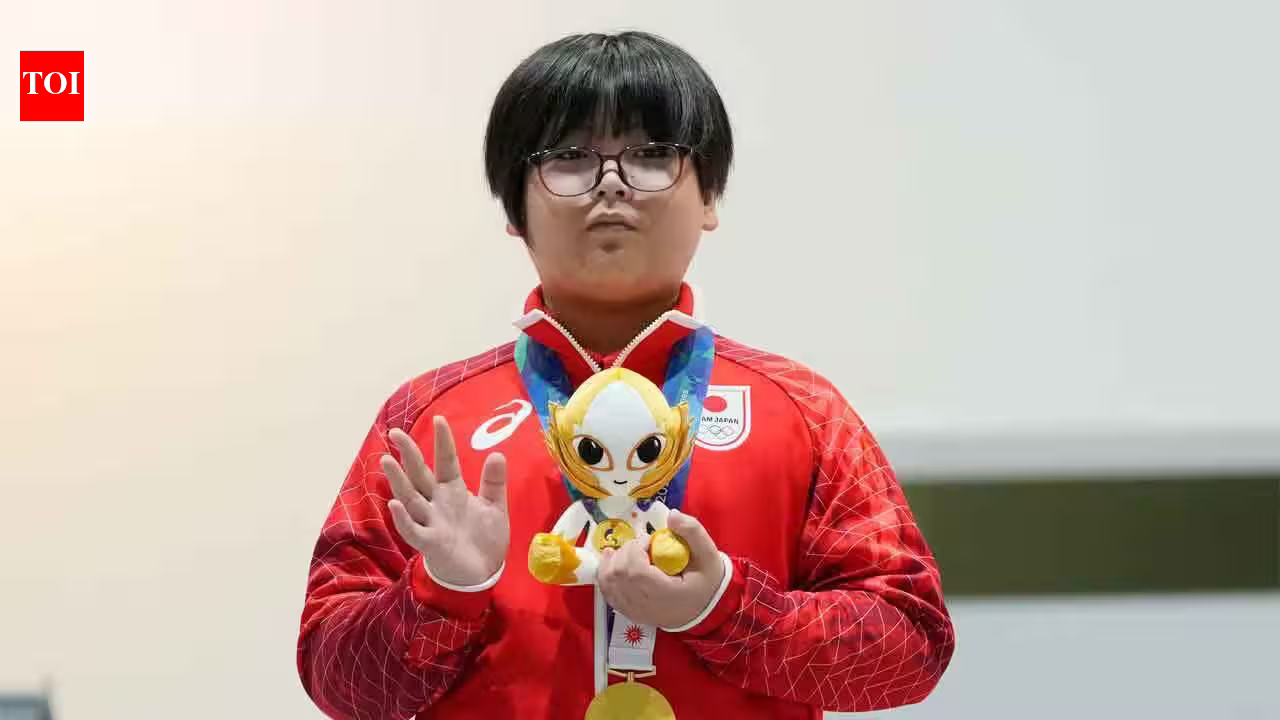
Standing on the podium, draped in the prestige of an Asian Games champion, Kurihara offered a polite bow and a modest wave to the crowd. He spoke with the unfiltered joy of a child rather than the media-trained platitudes of a professional athlete. “I’m really happy. The gold medal is really beautiful, shiny and heavy,” he said, beaming. He even made sure to praise the mascot waiting for him, noting, “Also, the plush toy is super cute, and it’s cool that it is gold-coloured too.”
His innocence stands in stark contrast to his lethal prowess on the screen. Puyo Puyo Champions, a high-speed puzzle game requiring immense spatial awareness and quick-thinking, is a platform where errors are punished instantly. To perform at this level requires thousands of hours of practice—a feat he manages while simultaneously balancing the demands of primary education and “cram school,” or juku.
Started playing Puyo Puyo in primary school
Kurihara’s trajectory has been meteoric since he first picked up the game in his initial year of primary school. Recognizing his uncanny aptitude for the puzzles, he quickly transitioned from casual play to local and national tournaments. By April of this year, his talent was so undeniable that he was granted a professional license—a milestone that allowed him to compete at the highest level of Japanese esports.
His ability to balance his academic responsibilities with the intense preparation required for the Asian Games has been a testament to his discipline. “It’s hard having to balance it with school and cram school, but it’s really fun,” Kurihara remarked prior to the Games. It is a grueling schedule that would break most adults, yet for the 11-year-old, it remains an extension of his passion.
Youngest at the Asian Games?
The question of whether Kurihara is the absolute youngest medalist in the history of the Asian Games remains a subject of ongoing historical verification. The Games, which trace their roots back to 1951, have seen a recent trend of younger athletes making their mark in non-traditional sports.
In 2018, Indonesian skateboarder Bunga Nyimas claimed a bronze medal at age 12, a feat that captured the world’s imagination. More recently, 13-year-old Chinese skateboarder Cui Chenxi secured gold in the women’s street skateboarding event at the Hangzhou Asian Games.
Kurihara, however, has set a new benchmark at 11 years old. His victory is not just a win for Japan; it is a watershed moment for esports, proving that the digital playing field is truly colorblind, ageless, and entirely meritocratic. As he returns home to his schoolbooks and his everyday life, Yuki Kurihara does so not just as a student, but as an Asian Games legend—a reminder that in the world of gaming, size, age, and experience take a backseat to pure, unadulterated talent.
Disclaimer: This content is auto-generated for informational purposes only.
Source: Read Original News