









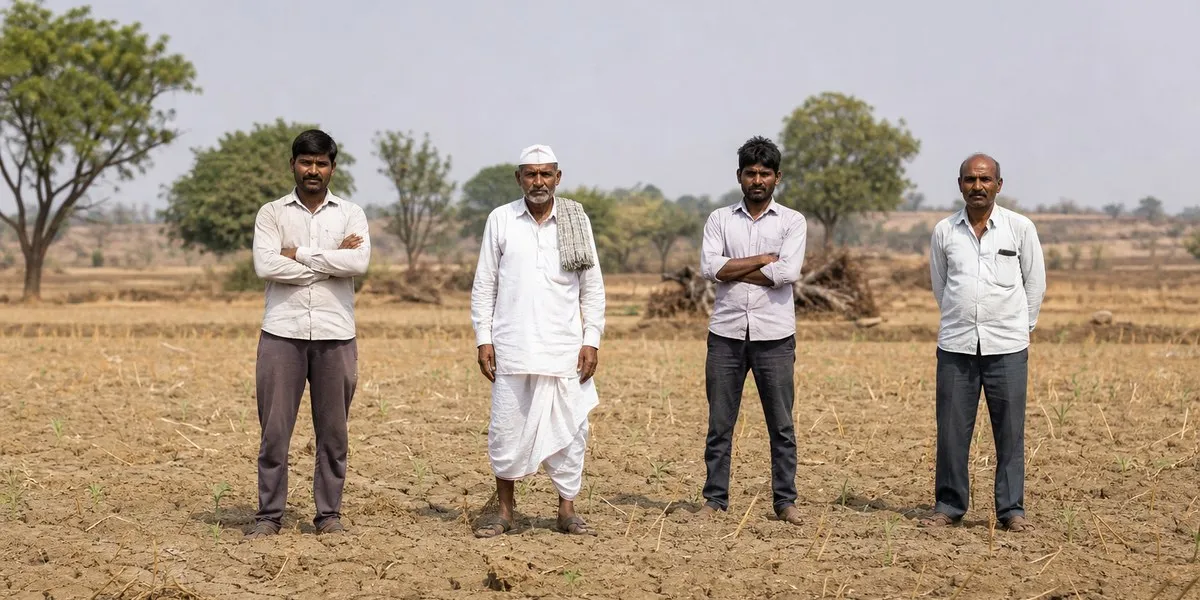
Maharashtra Faces Severe Crisis as Drought Grips 74% of State
In a major blow to India’s agricultural heartland, the state government of Maharashtra has officially declared a drought across 74% of its territory. The announcement comes in the wake of a prolonged period of insufficient rainfall, which has left one of the nation’s most vital economic regions grappling with a deepening water and agrarian crisis.
Maharashtra, home to approximately 130 million people and the financial powerhouse of Mumbai, serves as a crucial hub for the production of cotton, soybeans, sugarcane, and various legumes. With the majority of the state’s agricultural output reliant on seasonal precipitation rather than robust irrigation networks, the failure of the rains threatens not only the state’s economy but the livelihoods of millions of rural families.
The Impact of Monsoon Failure
The current scarcity is being attributed to a significant deficit in the annual monsoon season, which typically runs from June through September. According to the national meteorological service, the monsoon period is set to conclude with rainfall levels far below historical averages.
Climate experts have identified the El Niño phenomenon as a primary driver behind the erratic weather patterns. El Niño, characterized by abnormally warm ocean temperatures in the Pacific, is known to shift global atmospheric circulation, often resulting in drier, more volatile conditions across South Asia. This year’s intensity has been particularly disruptive, leading to widespread moisture deficits that have severely hampered sowing and crop development cycles.
The crisis is not confined to Maharashtra alone; neighboring Karnataka has similarly reported alarming rainfall shortages, leading local authorities there to also roll out emergency assistance packages for farmers struggling to cope with the environmental shock.
Government Response and Relief Efforts
Recognizing the severity of the situation, Maharashtra Chief Minister Devendra Fadnavis has announced a comprehensive plan to mitigate the impact on the state’s agrarian sector. Speaking on the administration’s strategy, officials confirmed that the government is currently mobilizing to assess the total extent of crop damage across the affected districts.
The state’s relief strategy focuses on the immediate financial stabilization of rural populations. By conducting rigorous field assessments, the government aims to channel direct support to farmers and agricultural laborers who have lost their harvests.
“Our primary goal is to ensure that no rural family is left abandoned during this period of distress,” a spokesperson for the Chief Minister’s office noted. “We are committed to providing timely assistance to help our farmers weather this financial storm and prepare for the upcoming seasons.”
As the state grapples with the fallout of the current drought, the situation serves as a stark reminder of India’s ongoing vulnerability to climate-induced disruptions. While relief efforts are underway, the agricultural community remains on edge, hoping for a more favorable monsoon cycle in the coming year to prevent a recurring cycle of debt and economic instability. For now, the administration continues to coordinate with district authorities to fast-track relief disbursements to the most hard-hit villages, prioritizing those where total crop failure has been confirmed.
Disclaimer: This content is auto-generated for informational purposes only.
Source: Read Original News