








Curtain Falls on an Icon: Bengaluru’s Urvashi Cinema Faces Demolition
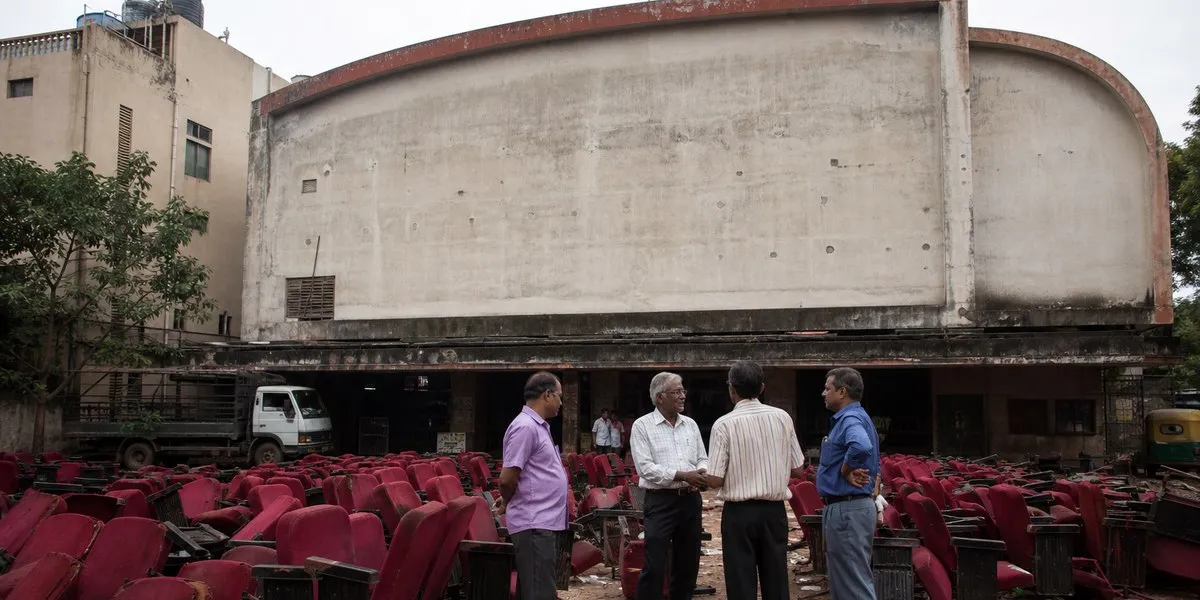
The landscape of Indian entertainment is undergoing a seismic shift, and the latest casualty in Bengaluru is the iconic Urvashi Cinema. Built in the 1970s, the single-screen giant, once home to 1,200 seats, is currently being dismantled. Its closure is a poignant symbol of a broader trend across India, where the golden age of standalone cinema halls is being eclipsed by the rise of multiplexes and the convenience of streaming services.
The End of an Era
For decades, Urvashi Cinema served as more than just a place to watch movies; it was a cultural hub for the community. Manjunath, a local shopkeeper who operated his business right across the street, remembers the bustling crowds that once flocked to the venue. In its prime, moviegoers would gather at his stall for snacks before and after shows. “Now, there are almost no visitors,” he lamented.
These halls offered a communal experience that modern, sanitized multiplexes often fail to replicate. They were arenas of pure emotion—places where audiences would erupt in thunderous applause, whistle at heroic entries, hum along to romantic ballads, and collectively gasp at plot twists. This visceral energy is rapidly fading as high real estate costs and the prohibitive expenses of maintaining aging equipment force these legendary venues to close their doors.
A Staggering Decline
The statistics surrounding this decline are stark. Researchers estimate that during the 1980s, India boasted approximately 14,000 single-screen cinemas. Today, that number has plummeted to roughly 2,000.
The scope of this cultural loss has been meticulously documented by photographer and former Bollywood cinematographer Hemant Chaturvedi. Over a seven-year odyssey, Chaturvedi traveled through 1,000 cities to capture the reality of the single-screen experience. His photographic archives serve as a haunting testimony to a dying architecture, showcasing venues that are being converted into commercial multiplexes, repurposed for new developments, or left to slowly crumble into decay.
Holding the Line
Despite the sweeping tide of change, some bastions of traditional cinema continue to stand tall. In Bengaluru, Mukunda Cinemas remains a testament to the enduring appeal of the old-school theatrical experience. The 50-year-old venue recently drew a massive crowd for a 6:00 a.m. screening of a Kannada blockbuster featuring superstar Yash. The scene outside the hall was reminiscent of a festival, with fireworks lighting up the sky and the interior vibrating with the whistles and cheers of devoted fans.
Viran Reddy, representing the third generation of the family that manages Mukunda Cinemas, acknowledges the immense difficulty of the endeavor. He points to the relentless pressure of inflation, the skyrocketing costs of operations, and the cutthroat competition from modern commercial hubs. Yet, for venues like Mumbai’s historic Art Deco masterpiece, the Regal Cinema, which opened in 1933, the struggle to stay relevant continues. These survivors represent a vital link to India’s cinematic heritage, standing as stubborn reminders of a time when the silver screen was a shared, grand experience for the masses.
Disclaimer: This content is auto-generated for informational purposes only.
Source: Read Original News