








The Battle of the Flagships: Pricing and Positioning
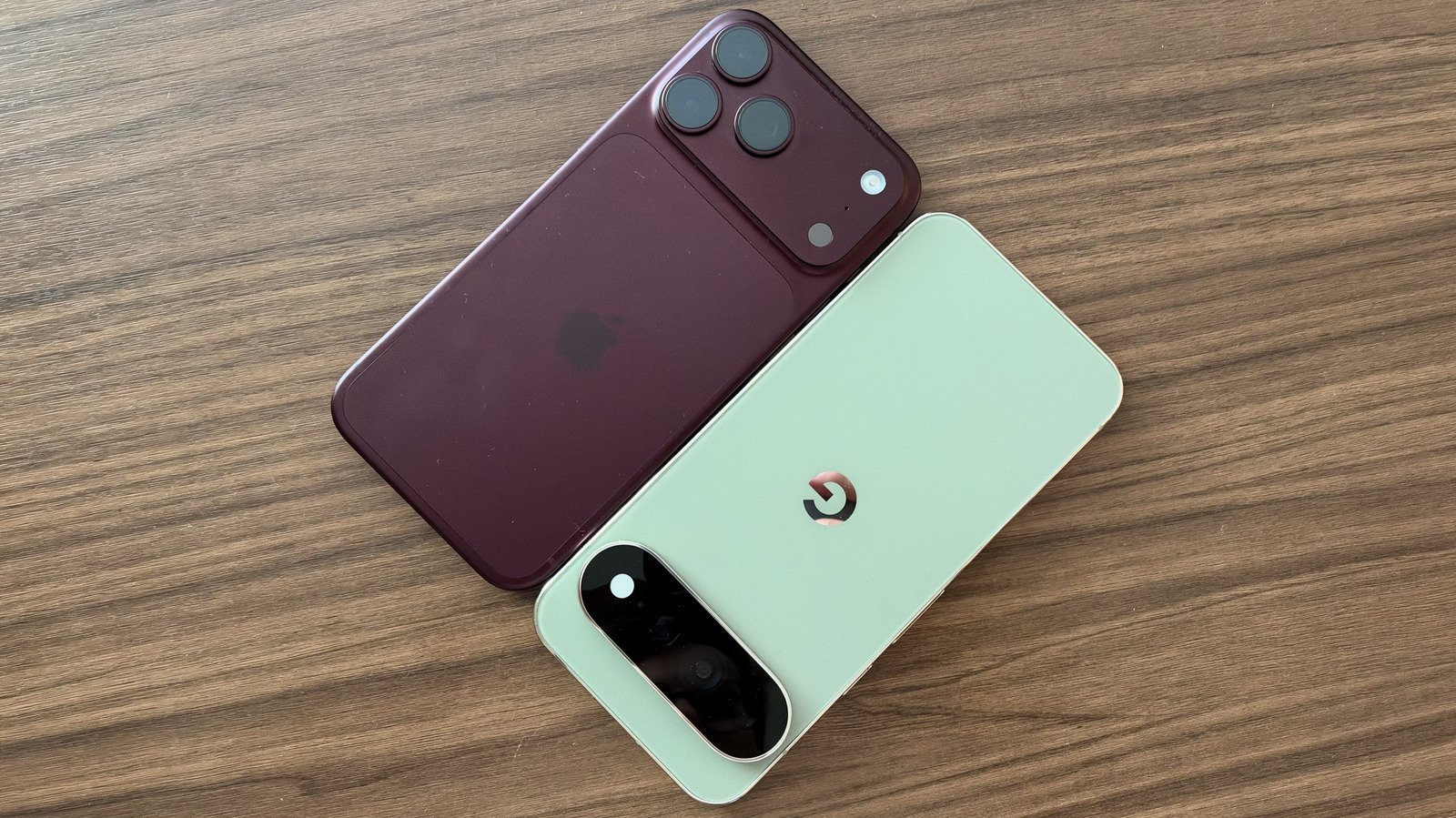
Apple and Google have reached a moment of parity in their hardware strategies, arriving at the same $1,299 starting price for their respective 256GB flagship models. The iPhone 18 Pro Max and the Pixel 11 Pro XL represent the pinnacle of their manufacturers’ design capabilities, appearing more similar on paper than they have in years. Both devices are expansive handsets featuring high-end OLED panels, robust triple-camera arrays, and magnetic wireless charging systems. However, beneath the surface, significant technical differences in processing architecture, zoom capabilities, and thermal management define the user experience.
Shared Hardware and Design Specifications
Visually and physically, these two devices share a common design philosophy aimed at the premium market. The iPhone 18 Pro Max utilizes a 6.9-inch OLED display with a 2,868-by-1,320 resolution, while the Pixel 11 Pro XL opts for a 6.8-inch Super Actua OLED screen with a slightly higher density at 2,992-by-1,344 resolution. Both displays feature adaptive 120 Hz refresh rates and always-on display functionality. While the Pixel boasts a higher peak brightness of 3,600 nits compared to the iPhone’s 3,000 nits, both panels remain highly readable under direct sunlight.
Both smartphones feature aluminum frames, IP68 water and dust resistance, and connectivity suites including Wi-Fi 7, Bluetooth 6, and ultra-wideband technology. In terms of power, Apple’s MagSafe and Google’s Pixelsnap systems both deliver up to 25 W of wireless charging through integrated magnets. Neither manufacturer includes a power adapter in the box, and both devices have moved entirely to eSIM-only configurations in the United States, mandating that users verify carrier support before making a transition.
Processing Power and Performance Metrics
The most striking divergence between these two phones lies in their silicon. Apple’s A20 Pro chipset is built on a 2 nm process, featuring a six-core CPU and a seven-core GPU. In Geekbench 6 testing, the A20 Pro significantly outperforms the competition, recording scores of 4,735 in single-core and 12,545 in multi-core tests. Conversely, the Tensor G6 chip inside the Pixel 11 Pro XL reached 2,691 and 7,203 in the same benchmarks.
These figures correlate directly to real-world performance. The iPhone 18 Pro Max manages heavy multitasking with ease, maintaining high system responsiveness. The Pixel 11 Pro XL, while sufficient for daily tasks, exhibits signs of strain when managing heavy background processes, such as simultaneous operation of navigation, cloud-based photo syncing, and high-bitrate media streaming. For power users who rely on their devices for demanding professional tasks, the performance headroom provided by the A20 Pro is a clear differentiator.
Optical Capabilities and Zoom Performance
Camera systems remain a primary focus for both manufacturers, though they approach photography with different objectives. The iPhone 18 Pro Max utilizes a 48 MP telephoto lens providing 4x optical zoom and 8x optical quality, topping out at 40x digital zoom. Apple’s approach emphasizes reliability and predictable color science, with a variable aperture on the main sensor that excels in low-light environments.
The Pixel 11 Pro XL features a 48 MP telephoto lens with a 5x optical reach, extending to 120x via Pro Zoom. Google relies heavily on AI-assisted image processing to achieve these ranges. While this enables the capture of text and distant details that the iPhone cannot reach, the computational nature of the zoom can occasionally lead to artifacts or “hallucinations” in the image. Furthermore, while the Pixel is highly capable, it currently faces some software inconsistencies, including a camera bug and limited utility from the “HiLight” LED flash ring, which serves more as a cosmetic feature than a functional tool.
Battery Efficiency and Thermal Management
Battery longevity remains a critical metric for devices of this scale. Apple quotes up to 30 hours of typical usage and 45 hours of video playback for the iPhone 18 Pro Max. In field tests, this translates to exceptional endurance, with the device finishing a 25-hour travel day with over eight hours of screen-on time while still retaining double-digit battery life.
The Pixel 11 Pro XL offers a respectable 30-plus hours of operation, yielding approximately seven hours of screen-on time in standard daily use. While this is sufficient for most users, it falls short of the endurance benchmark set by Apple’s latest flagship. However, the Pixel gains an advantage in charging speed over a wired connection, hitting 75% capacity in roughly 30 minutes when paired with a 45 W adapter, compared to the iPhone’s more conservative charging profile.
Final Assessment and Buying Recommendations
Choosing between these two flagships ultimately depends on individual priorities regarding software ecosystem and performance stability. The iPhone 18 Pro Max is the recommended choice for those prioritizing hardware performance, long-term battery endurance, and consistent camera reliability across a wide variety of lighting conditions. Its integration into the broader Apple ecosystem provides a level of polish that remains difficult to replicate.
The Pixel 11 Pro XL offers a distinct, AI-centric experience that appeals to power users of Google services, particularly those who benefit from the advanced zoom capabilities and frequent software updates. However, for those deterred by the $1,299 price tag, both manufacturers offer mid-range alternatives. The $899 Pixel 11 provides a large portion of the Pro XL experience at a lower entry price, while the previous generation iPhone 17 Pro Max remains a capable, cost-effective alternative for those seeking flagship features without the premium of a brand-new release.
Disclaimer: This content is auto-generated for informational purposes only.
Source: Read Original News