









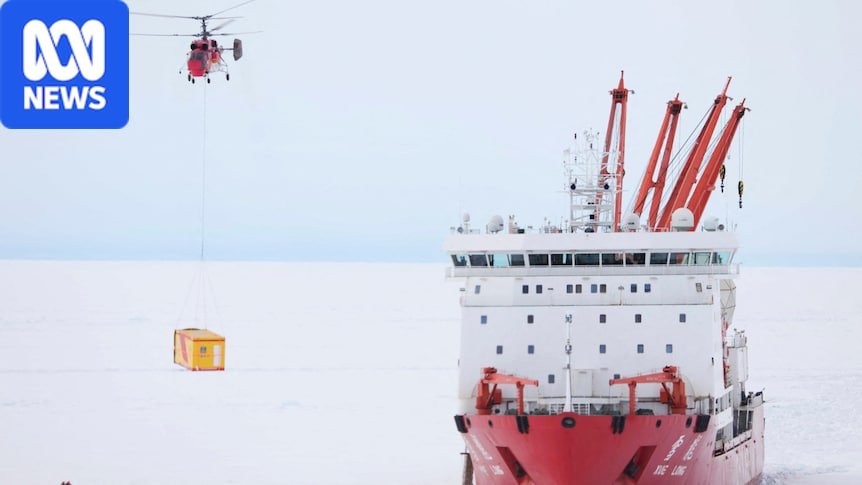
China’s ambitions in the frozen south are intensifying, with the nation preparing to establish its sixth research station in Antarctica. The planned facility, set to be built next year, will be located in Marie Byrd Land—a vast, remote, and historically under-researched region of West Antarctica.
While Beijing maintains the site is intended strictly for peaceful scientific pursuits, such as monitoring climate change and ice sheet dynamics, the announcement has triggered unease among politicians and security experts. Independent senator Jacqui Lambie has been among the most vocal critics, urging the Australian Department of Defence to reconsider its regional priorities. “Five bases have already been built, and China claims there is no geopolitical motive,” Senator Lambie said. “Open your eyes, Defence.”
The move highlights a growing tension within the Antarctic Treaty System, the 1959 framework designed to keep the continent a sanctuary for peace and science. Under these rules, member states cannot veto the establishment of new research stations. China’s new project follows the recent opening of its fifth base, the Qinling Station, further cementing its physical footprint on the continent.
Analysts suggest the real concern lies in “dual-use” capabilities. While stations are ostensibly civilian, infrastructure such as satellite ground systems, communications hardware, and drone technology can be easily repurposed for military surveillance. Elizabeth Buchanan, a senior fellow at the Australian Strategic Policy Institute, warns that China’s Military-Civil Fusion policy—which encourages civilian companies to support military goals—could grant Beijing a degree of “polar independence,” effectively reducing the leverage of other nations.
“Polar power with serious polar independence means we have very little leverage left,” Dr. Buchanan stated.
However, not all experts view the expansion as an immediate precursor to conflict. Tony Press, the former head of the Australian Antarctic Division, argues that the logistical nightmare of operating in the Antarctic environment makes it a “terrible place to fight a war from.” He characterizes the new base as a strategic signal rather than a tactical outpost, noting that its planned summer-only operation lacks the profile of a permanent military command.
Instead, the friction is playing out through “quiet disruption” within international governance bodies. China, often joined by Russia, has frequently blocked efforts to establish marine protected areas, citing a lack of scientific consensus. This has led to a stalemate over the regulation of Antarctic krill, a vital food source for local predators like emperor penguins, which are currently facing severe breeding failures due to receding sea ice.
As diplomatic distrust grows, the consensus-based model of the Antarctic Treaty is being tested. While some scholars believe the treaty remains resilient, others are calling for a more robust “plan B” to balance China’s growing influence. With critical discussions on fishing limits approaching, the future of the continent appears increasingly defined by geopolitical maneuvering rather than simple scientific cooperation.
Disclaimer: This content is auto-generated for informational purposes only.
Source: Read Original News