







India’s Strategic Stance: No Compromise on Security Against Cross-Border Terror
New Delhi: Defence Minister Rajnath Singh delivered a stern message regarding India’s national security posture, asserting that the government remains fully prepared to authorize military strikes against terrorist infrastructures as long as neighboring nations persist in fostering militancy.
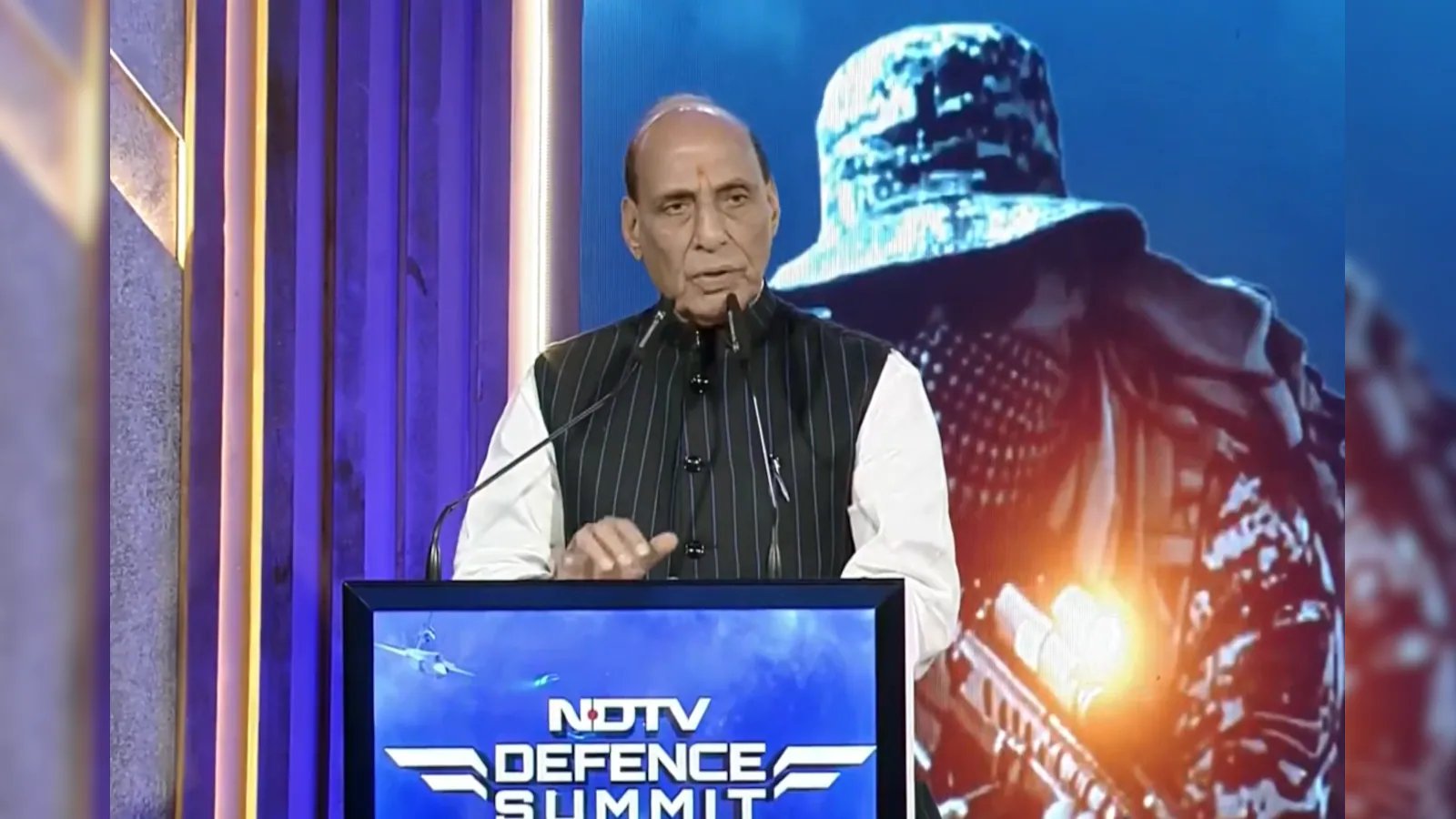
Speaking at the NDTV Defence Summit 2026, the Defence Minister emphasized that while India is fundamentally a peace-loving nation that holds no expansionist ambitions, its commitment to tranquility should not be interpreted as a sign of vulnerability.
A Clear Warning on National Security
During his keynote address to senior military officials, defence experts, and industry leaders, Singh articulated the country’s firm stance on sovereign protection. “India believes in peace, does not want war. India does not want to take over another land, does not want to threaten anyone. But there is a difference between silence and weakness,” he stated.
Addressing the ongoing tensions with Pakistan—often cited as the primary sponsor of terror networks targeting Indian soil—the Minister was unequivocal. He reiterated that India remains open to dialogue, but underscored that such diplomacy is contingent upon the cessation of hostilities. “India believes in dialogue, but if any country propagates terrorism, the dialogue will end then and there,” he declared, adding that the nation will not allow cooperation to come at the expense of its core national interests.
Lessons from Past Escalations
The Defence Minister’s remarks come against the backdrop of a volatile security environment. In recent years, India has shifted from a policy of strategic restraint to a more proactive approach in neutralizing threats.
A critical turning point occurred on April 22, 2025, when a horrific terror attack in the tourist hotspot of Pahalgam, Jammu and Kashmir, claimed the lives of 26 people, including international visitors. That incident triggered a decisive response from the Indian Armed Forces, which launched targeted missile strikes against terror launchpads and facilities across the Line of Control, including sites in Muzaffarabad, Kotli, and various sectors of the Neelum Valley. These actions marked a significant escalation in India’s “zero-tolerance” policy toward state-sponsored terrorism.
The Future of Defence Preparedness
The NDTV Defence Summit 2026 served as a platform to discuss the evolution of India’s military capabilities and its preparedness for modern hybrid warfare. As the country modernizes its arsenal and integrates advanced technological solutions into its border security strategy, the message from the top government leadership remains consistent: national borders are non-negotiable.
The government’s stance suggests that the “new normal” for India involves a dual-track approach—pursuing economic and regional stability through diplomacy while maintaining the capability and the political will to strike preemptively if the security of its citizens is compromised. As geopolitical tensions fluctuate in the region, Rajnath Singh’s address reinforces that New Delhi will continue to prioritize its territorial integrity above all else.
Disclaimer: This content is auto-generated for informational purposes only.
Source: Read Original News