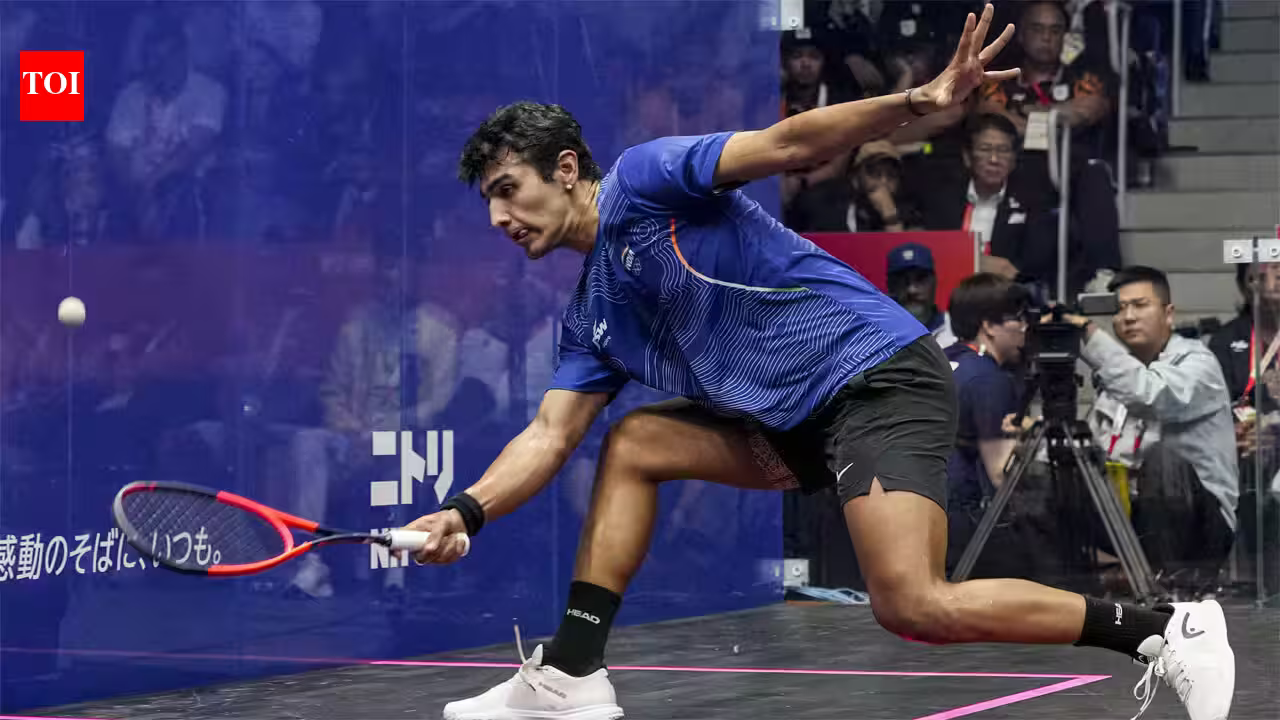






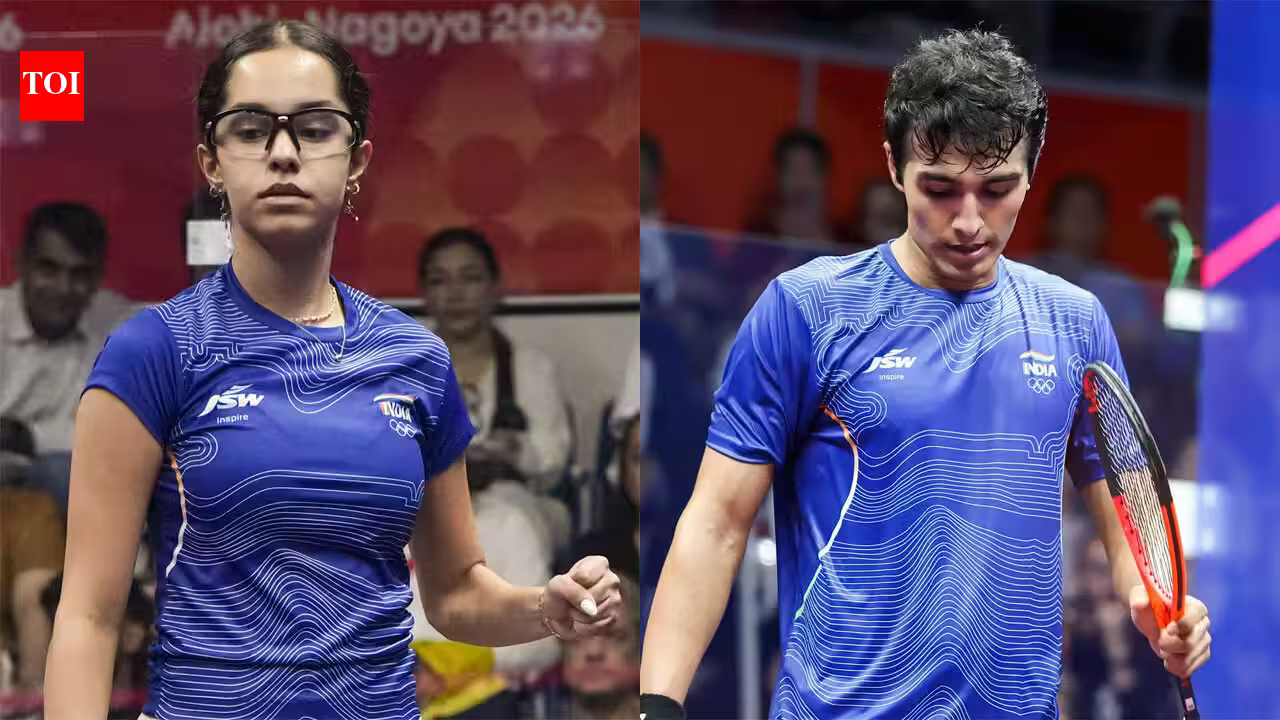
Nagoya’s Kinjo Futo Arena served as a stage for high-stakes drama on Sunday, but for the Indian squash contingent, the day concluded with a bittersweet realization. In a dual-pronged assault on the gold medal podium, both Anahat Singh and Abhay Singh fell to formidable Malaysian opposition, forcing India to settle for silver in both the men’s and women’s individual squash finals at the Asian Games.
While the results denied India the top prize, they underscored a maturing program that is increasingly capable of standing toe-to-toe with the world’s elite. The two silver medals, combined with an earlier bronze in the mixed doubles, provide a solid foundation as the squad pivots toward the upcoming team events.
The Malaysian Masterclass
Malaysia emerged as the dominant force in the singles draw, executing a near-perfect tactical game plan that stifled Indian ambitions. In the men’s final, world No. 17 Ng Eain Yow proved exactly why he commands respect on the PSA World Tour, dismantling world No. 26 Abhay Singh in a comprehensive 11-9, 11-5, 11-5 display.
Abhay, who had navigated his path to the final with impressive poise and consistency, showed flashes of brilliance early in the match. His ability to change angles and keep the rally length manageable kept the opening game tight, trailing by only a point at 8-7. However, the experience of the Malaysian shone through in the closing exchanges, as Ng neutralized the Indian’s attacking intent to draw first blood. Though Abhay fought to regain a foothold in the third game—briefly leading 4-2—the clinical precision of his opponent proved too difficult to overcome.
Anahat Singh’s Historic Milestone
The women’s final was headlined by 18-year-old sensation Anahat Singh, who entered the match carrying the weight of history on her shoulders. By becoming the first Indian woman to reach a squash singles final at the Asian Games, the reigning world junior champion has already etched her name into the annals of Indian sporting history.
Anahat’s start was electric. She signaled her intent early, carving out an initial 3-2 lead against world No. 5 Sivasangari Subramaniam. For those few minutes, it appeared that the teenager might just pull off the upset of the tournament. However, Sivasangari, a seasoned campaigner with superior defensive depth, rapidly adjusted her rhythm. By reclaiming the center of the court, the Malaysian forced Anahat into longer, more taxing rallies.
As the match progressed, the physical and tactical gap widened. Sivasangari took control of the pace, closing the first two games 11-4, 11-4. Despite a valiant effort from Anahat to force a turnaround in the third, the Malaysian held firm to secure the title with an 11-7 finish. While the scoreline will read as a straight-games defeat, Anahat’s performance throughout the week suggests that her time at the summit of the sport is inevitable.
A Missed Opportunity for Olympic Qualification
Beyond the immediate disappointment of the silver medals, the results carry long-term implications. The Asian Games singles competition served as a vital, direct qualification pathway for the 2028 Los Angeles Olympics, where squash is slated to make its long-awaited debut. Missing out on the gold means the Indian contingent will have to look toward alternate qualifying routes in the coming years.
The pressure of that Olympic stake was palpable in every rally, adding an extra layer of tension to a final already laden with national expectation. For both Abhay and Anahat, the heartbreak of today serves as a masterclass in the fine margins that define professional squash at the world level.
Looking Ahead: The Team Events
Despite the stinging loss in the singles finals, the Indian squad has little time to dwell on the results. The focus shifts immediately to the team events, which commence on Monday. With three medals already secured—including the mixed doubles bronze clinched by Joshna Chinappa and Velavan Senthilkumar—India remains one of the most consistent performers in Nagoya.
The team events often reward depth and squad harmony, areas where India has traditionally thrived. As the individual dreams of gold for 2026 are packed away, the collective mission takes center stage. If the grit displayed by Anahat and Abhay in the individual bracket is any indication, the Indian team is hungry to avenge these losses and return to the podium with even greater hardware. The battle for regional supremacy is far from over, and with the team competition approaching, the Indian squash campaign is set to enter its most volatile and exciting phase yet.
Disclaimer: This content is auto-generated for informational purposes only.
Source: Read Original News