






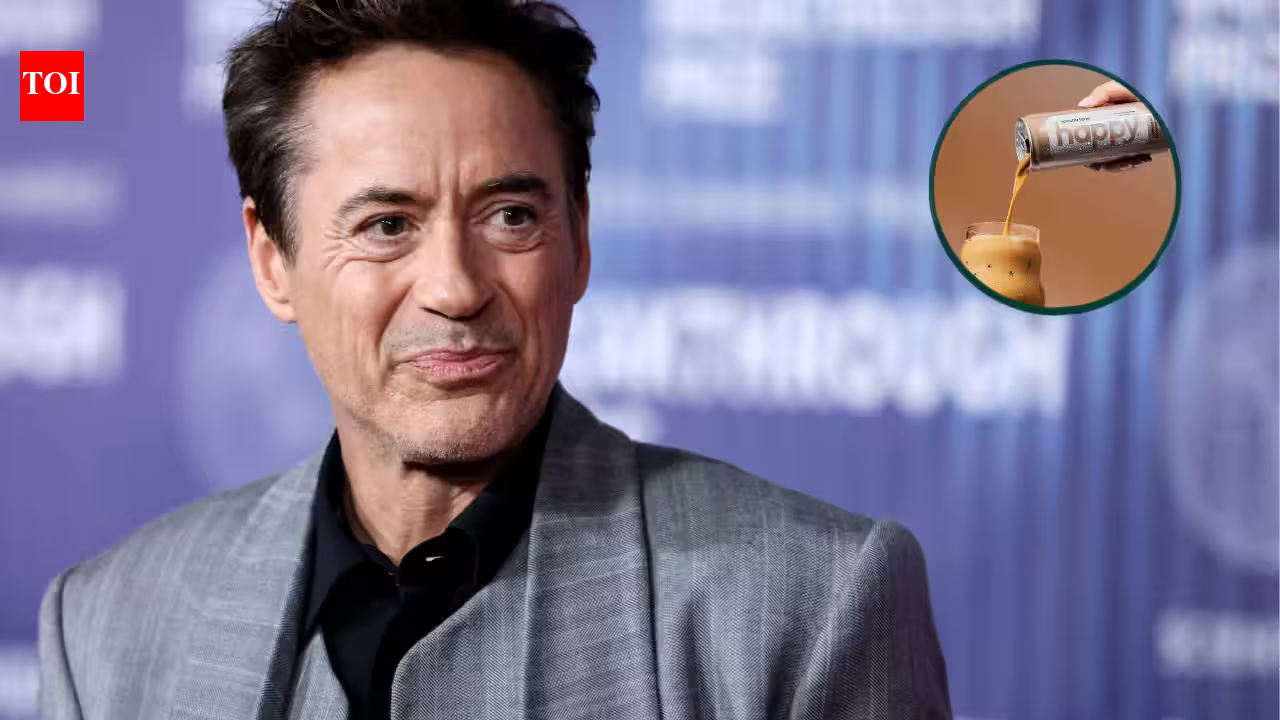
In the crowded landscape of celebrity entrepreneurship, the path is well-trodden: an A-lister lends their name to a tequila, a skincare line, or a fast-fashion collaboration, usually promising luxury and status. But Robert Downey Jr., a man who has spent the better part of three decades navigating the intense glare of the public eye and his own well-documented personal evolution, has chosen a different, more grounded route.
In 2024, the Iron Man star pivoted toward the kitchen pantry, co-founding “Happy,” a coffee company that feels less like a vanity project and more like a public service announcement hidden in a morning ritual. Partnering with serial entrepreneur Craig Dubitsky—the mind behind the design-forward brands Eos and Hello—Downey Jr. isn’t just selling caffeine. He is attempting to build a bridge between the mundane act of brewing a cup of coffee and the often-daunting task of seeking mental health support.
The Architect of a New Retail Model
To understand why Happy stands out, one must look at the blueprint. Celebrity brands are traditionally built on “aspirational” marketing; they want you to look like them, dress like them, or party like them. Happy, however, pivots toward the “functional” and the “altruistic.” When Downey Jr. joined forces with Dubitsky, the duo didn’t just want to roast high-quality beans; they wanted to address a systemic crisis.
The partnership with the National Alliance on Mental Illness (NAMI) is the backbone of the entire operation. It’s not a tax-deductible donation at the end of the fiscal year or a “limited edition” charitable run. Instead, NAMI has been granted an actual ownership stake in the company. This structural integration ensures that mental health advocacy isn’t just a brand value—it’s baked into the business model itself. For a consumer, this translates to a tangible presence: every can, bag, and box of Happy coffee acts as a billboard for support, featuring the NAMI helpline number and a QR code that serves as a direct pipeline to professional resources.
Coffee as a Catalyst for Conversation
There is a deliberate, psychological nuance to placing mental health resources on a grocery item. Often, people suffering from anxiety, depression, or burnout struggle with the hurdle of “active seeking.” They might be too overwhelmed to open a search engine or too stigmatized to call a help line. By placing this information on a household staple—the first thing many people reach for when they wake up—Happy is normalizing the conversation.
The message is clear: mental health is as essential to your daily routine as your morning cup of coffee. It shifts the narrative from one of crisis to one of maintenance. By integrating these resources into the packaging, Downey Jr. and Dubitsky have effectively turned a commercial product into a silent, supportive companion. It’s a subtle intervention, but one that acknowledges that the most effective help is often that which is most accessible.
Beyond the Domestic: A Global Perspective on Wellness
While the NAMI partnership addresses the domestic mental health crisis, Happy’s scope of wellness extends far beyond the United States. The coffee industry has long been criticized for its exploitative labor practices and the lack of support for farmers at the beginning of the supply chain. Happy has attempted to challenge this by focusing on its female growers in Colombia.
The company has established wellness and resource groups for these women, focusing on business acumen as well as emotional health. This is a crucial distinction in the modern entertainment-business landscape. It’s one thing to preach mental health awareness to a Western audience; it’s another to invest in the psychosocial infrastructure of the communities that provide the product itself. By combining professional development with mental health support, the brand is attempting to address the holistic needs of its workforce, creating a ripple effect of stability that starts at the coffee farm and ends in the consumer’s kitchen.
Disrupting the “Celebrity Brand” Fatigue
We live in an era of intense “celebrity brand fatigue.” Consumers are increasingly savvy—and cynical—about stars who use their influence to hawk overpriced consumer goods. The success of Happy will depend on its ability to transcend the “Downey Jr.” factor. While his name provides the initial spark, the brand is betting on the idea that the consumer stays for the mission.
The company’s approach—directing users to the 988 Suicide & Crisis Lifeline and providing accessible mental health education—strips away the glitz of Hollywood. It suggests a vulnerability that is rarely seen in corporate marketing. By admitting that life is difficult and that everyone deserves a point of access to support, the brand strips away the barrier between the icon and the individual.
The Future of Mission-Driven Commerce
Ultimately, Robert Downey Jr.’s venture into the coffee world serves as a compelling case study for the future of celebrity branding. If the “Happy” experiment proves that consumers are willing to prioritize brands that give back—not just in name, but in equity and accessibility—we may see a shift in how A-listers use their platform.
The integration of 988 crisis resources and NAMI partnerships into a simple cup of coffee is a bold experiment in social impact. Whether you are a fan of his cinematic work or simply a coffee lover looking for a better roast, the intent here is hard to ignore. Downey Jr. has managed to take a stimulant—a product designed to keep us moving—and pair it with a message that reminds us, sometimes, it is perfectly okay to pause, take a breath, and reach out for help. In a world that often demands we stay “on,” that is perhaps the most refreshing cup of coffee available.
Disclaimer: This content is auto-generated for informational purposes only.
Source: Read Original News