









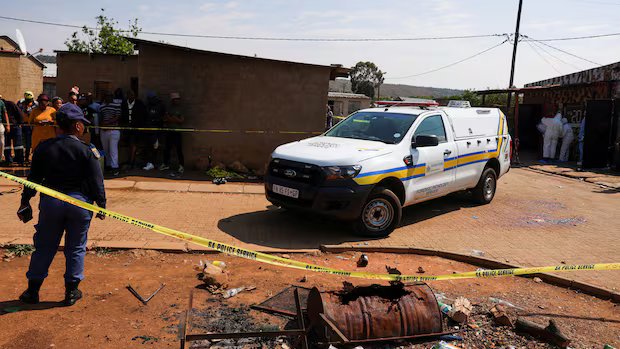
South African authorities are intensifying a nationwide manhunt following two brutal mass shootings that claimed 27 lives within a few hours of each other this weekend. The tragedies have ignited a fierce debate over the nation’s systemic gun violence and have prompted President Cyril Ramaphosa to pledge that his administration will “pull out all stops” to dismantle the criminal networks responsible.
The wave of violence began Saturday night in Wedela township near Johannesburg, where gunmen wielding AK-47 rifles opened fire at a tavern, killing 17 people and injuring 15. Only hours later, a second attack occurred at an outdoor venue in Lwandle, near Cape Town, leaving 10 people dead and 11 wounded. These events follow a similar incident near Durban just days prior, underscoring a grim trend that continues to plague the country.
## Investigating the Roots of Organized Crime
While police investigations are ongoing, officials have pointed to organized criminal activity as the likely driver of the bloodshed. Provincial police commissioner Tommy Mthombeni suggested that the Wedela massacre may be linked to the violent “zama zama” trade—a term for illegal miners who operate in local gold-rich areas where gangs exert ruthless control. Meanwhile, early reports from the Lwandle shooting suggest a motive rooted in “business jealousy,” as local tensions flared over patronage at competing venues.
Experts argue that these incidents are symptoms of a larger, systemic crisis. Yusuf Abramjee, a prominent crime expert, noted that the country’s high availability of illicit firearms remains the primary catalyst for the surge in gang-related killings. “Authorities need to look at the wider networks behind the violence rather than just the individuals pulling the triggers,” Abramjee explained.
## The Role of AI and Surveillance in Law Enforcement
As police scramble to identify the perpetrators, law enforcement agencies are increasingly turning to modern technology to bridge the gap in their investigations. President Ramaphosa confirmed that officials are actively analyzing video evidence, including surveillance footage and eyewitness smartphone captures, to track the suspects.
In an era where digital footprints often provide the most critical leads, police are leveraging forensic tools to process hours of high-definition video from the scenes. This comes as the global security sector—including major tech companies—continues to push advancements in AI-driven facial recognition and pattern detection. By utilizing machine learning algorithms, investigators can synthesize massive volumes of data, such as cross-referencing grainy images from crime scenes with existing criminal databases, to expedite the identification process. This integration of AI represents a critical pivot point for South African security forces as they attempt to curb a murder rate that ranks among the highest in the world.
## A Growing Political and Social Crisis
The frequency of these mass shootings has transformed crime into the defining issue for the upcoming municipal elections. The ruling African National Congress (ANC) faces mounting pressure to address the safety concerns of citizens who feel increasingly abandoned. Fear has permeated the public sphere, as evidenced by the somber, silent crowds gathering at the crime scenes, where locals often refuse to speak with the media due to threats of retaliation.
The federal government has previously deployed military personnel to assist police in high-risk zones, reflecting the President’s assertion that organized crime now represents a direct threat to the country’s democracy. However, with the death toll rising, the government is under renewed scrutiny to prove that hardware and surveillance technology alone can stem the tide of violence. As the nation mourns, the focus remains on whether these technological advancements can lead to real-world arrests and a sustainable policy shift before further tragedies occur.
Disclaimer: This content is auto-generated for informational purposes only.
Source: Read Original News