





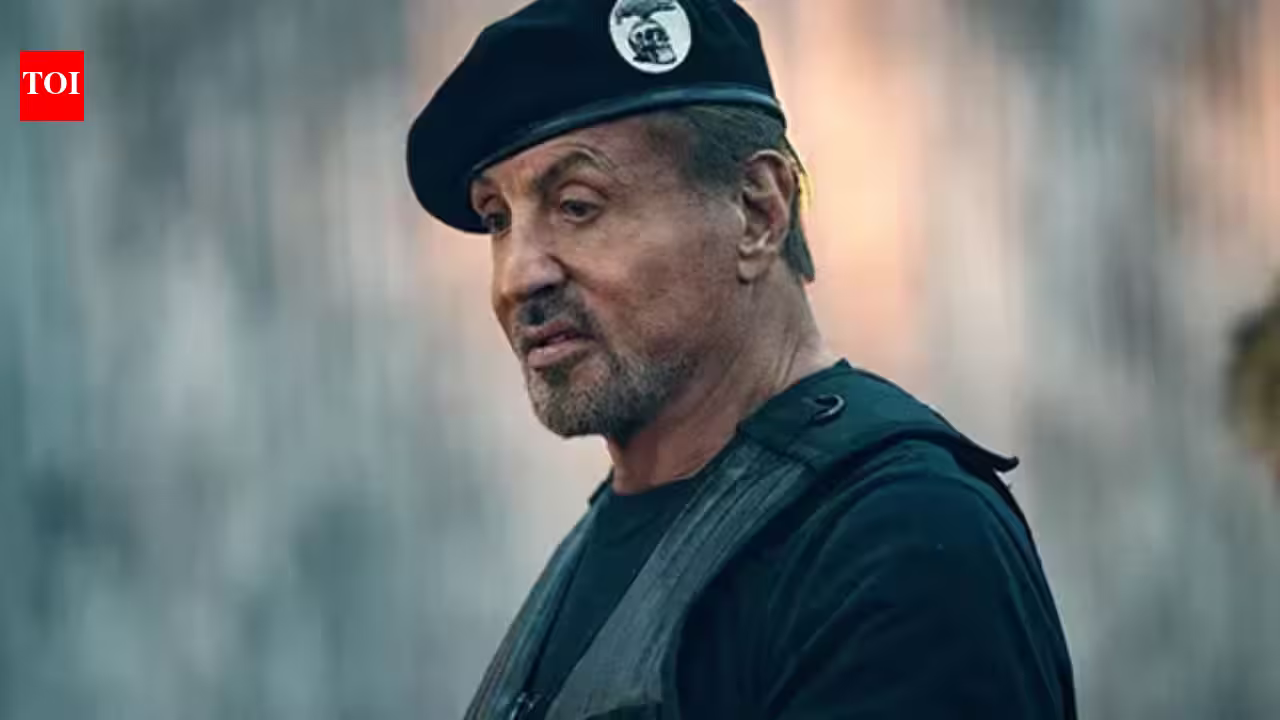
For decades, the image of Sylvester Stallone has been synonymous with an almost impossible standard of human endurance. From the grit of the Philadelphia streets in Rocky to the dense jungles of Rambo, Stallone didn’t just play action heroes; he became the physical embodiment of the American cinematic warrior. But behind the iconic sleeveless shirts and the chiseled, granite-like silhouette lay a story that was far more fragile, and at times, dangerous, than the audience ever imagined.
In a candid series of reflections that strip away the Hollywood artifice, Stallone has recently opened up about the grueling reality behind his peak physique. It is a sobering reminder that the “armor” he constructed to survive the industry eventually began to erode the man beneath it.
The Body as a Fortress
Stallone’s evolution into the ultimate action star wasn’t accidental—it was architectural. He viewed his body not merely as a vessel, but as a deliberate prop designed to sell a fantasy of invincibility.
“It became very intimate, you might say. It was my armour,” Stallone explained in a recent interview. While his initial outing as Rocky Balboa presented a relatable, blue-collar fighter, the sequels demanded a transformation. By the time he stepped into the boots of John Rambo, the goal shifted from playing a man to becoming a weapon. He spoke of designing his physique like a “jaguar”—lean, agile, and feral. However, the pursuit of this hyper-masculine ideal quickly transitioned from professional discipline into a psychological trap.
The Cost of 2.6 Percent
Perhaps the most startling revelation from the veteran actor is the disclosure of his struggle with bulimia during the production of Rocky III. At his absolute peak of cinematic conditioning, Stallone pushed his body fat down to a staggering 2.6 percent. To the average gym-goer, that figure isn’t just low; it is medically precarious.
“I got down to 2.6 per cent body fat when I was doing Rocky III, and I couldn’t hold anything down,” he admitted. The pressure to maintain such a state led to a cycle of body-worship that prioritized aesthetic perfection over basic biological survival. It was during this high-stakes era of his career that Stallone began utilizing performance-enhancing drugs. With refreshing—and perhaps uncomfortable—honesty, he debunked the myth of the “natural” action star. “Nobody does it without additives and drugs, period,” he stated, cutting through the performative transparency often found in the fitness industry.
The Physical Reckoning
The “additives” Stallone speaks of were never a long-term solution; they were a borrowed loan against his future health, and the interest has been high. He describes a cycle of six weeks on and six weeks off steroids, a regimen that helped him maintain his shape through endless months of filming. But in the long term, the toll has been catastrophic.
The tally of his injuries reads like a medical report for a professional crash-test dummy: nine back operations, two shoulder surgeries, and three neck fusions. While he remains a force of nature at 80, still committed to training, he speaks with the weary wisdom of a man who knows he pushed the engine far past the red line. He calls the process of maintaining that screen image a “terrible toll,” one that he is still paying for in every ache and stiffness he experiences today.
Finding Liberation in Vulnerability
If the high-octane 80s were Stallone’s peak of physical obsession, the 1997 crime drama Cop Land served as his psychological pivot point. Stepping into the role of Freddy Heflin—a partially deaf, overweight, and physically diminished sheriff—was a radical departure for the man who had spent years being the strongest person on screen.
For an actor whose worth had been tied to his abs, playing the “weakest guy in the room” offered a profound, if unexpected, sense of liberation. It was a moment of artistic maturation where Stallone realized that his value was not derived from his body fat percentage, but from his ability to disappear into a character who was flawed, vulnerable, and decidedly human. This role began a shift in his perception, allowing him to finally decouple his self-worth from the artificial standards he had set for himself.
Reflections on the Stunt Life
Perhaps the deepest regret for the Hollywood legend lies not in the diets or the drugs, but in the unnecessary risks he took on set. Performing his own stunts was a point of pride, a way to show his commitment to the craft. Today, he looks back at those decisions with a sense of bewilderment.
“If I could do it over again, I would say, ‘Let someone else carry the banner and don’t do your own stunts,’” he lamented. “I don’t know what it was about hurting myself all the time.”
As fans prepare for the release of his upcoming memoir, The Steps, it is clear that Stallone is entering a new phase of his legacy. He is no longer interested in maintaining the illusion of the indestructible hero. Instead, he is inviting his audience to see the human cost of the myth. By shedding the “armor” he spent a lifetime perfecting, Stallone is finally revealing that the most impressive feat of his career wasn’t becoming a machine—it was surviving the attempt to become one.
Disclaimer: This content is auto-generated for informational purposes only.
Source: Read Original News