





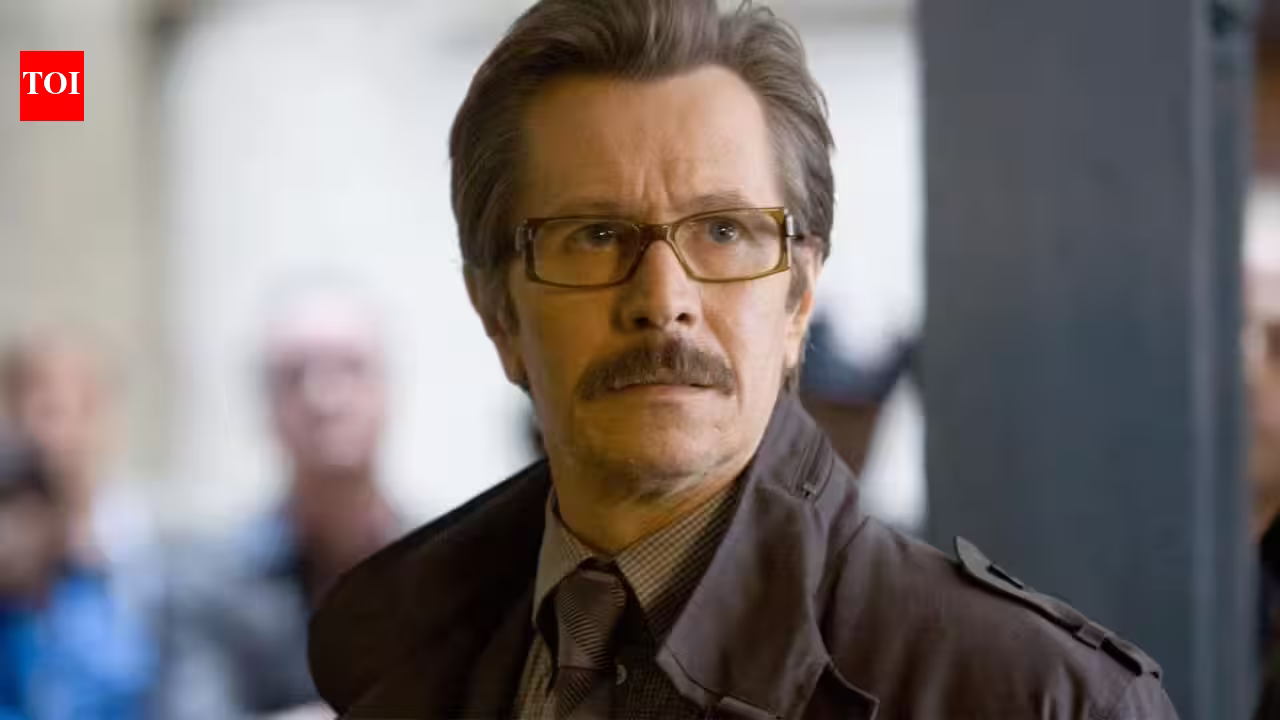
In an era where “good enough” is often marketed as the pinnacle of achievement, Gary Oldman offers a sobering, searing counter-narrative. The man who transformed himself into everyone from a punk rock icon to a British Prime Minister has long maintained that competence is not the destination; it is merely the lobby.
In a 1997 interview with Richard Covington for Salon, a younger, restless Oldman cut through the noise of Hollywood ambition. He offered a directive that remains as sharp today as it was in the late nineties: “Wanting to be a good actor is not good enough. You must want to be a great actor. You just have to have that. It’s not something you can wear like a coat. It’s in you. It’s like a furnace.”
For the casual observer, this might sound like standard industry platitudes. But when you examine the body of work that followed—a career defined by shape-shifting intensity—it becomes clear that Oldman wasn’t talking about ego. He was talking about the only fuel capable of sustaining a lifetime of creative output.
The Problem with Being “Good”
Most people operate on a system of diminishing returns. You learn a skill, you reach a level of proficiency where your boss is satisfied and your peers offer praise, and you plateau. In any field, this is the “comfort zone,” a dangerous psychological territory where the hunger to improve evaporates. Oldman’s insistence that you must want to be “great” is essentially an argument against complacency.
When he describes that ambition as a “furnace,” he is hitting on a fundamental truth about mastery: it cannot be an external costume. If you are acting—or writing, or coding, or leading—simply to “wear the coat” of success, the first cold snap of rejection or creative burnout will freeze you out. To be great, the drive must be internal. It must be a self-sustaining combustion engine that keeps burning even when the applause dies down or the project becomes a tedious grind.
The Anatomy of the Furnace
What does it mean for ambition to be a furnace? It means the heat is constant. In the modern, fast-paced digital economy, we often mistake the outward appearance of success for the process of greatness. We see the viral tweet, the sold-out product launch, or the Oscar win, and we assume it was a sprint.
Oldman’s perspective reminds us that the furnace is stoked in the dark. It is the years spent in the rafters of British theatre, the grueling physical transformations, and the willingness to take risks that might make you look foolish. “Good” is a state of being that others assign to you. “Great” is a state of being you demand from yourself. If you are satisfied with being labeled “good” by someone else, you have handed the remote control of your career to an outside source. Once you stop feeling the internal heat—the desperate, gnawing need to get it right—you stop being an artist and start being a commodity.
From New Cross to the Pantheon
To understand why Oldman’s words hold such weight, you have to look at the man himself. Born in the working-class trenches of New Cross, London, in 1958, Oldman didn’t have a clear path to fame. He wasn’t a product of nepotism or a quick-hit sensation. His entry into the craft was through the rigorous, unforgiving training of the Rose Bruford College of Speech and Drama.
His early career wasn’t about flash; it was about friction. When he exploded onto the scene as Sid Vicious in Sid and Nancy (1986), audiences weren’t just seeing a performance; they were seeing an erasure of the actor. He didn’t play the character; he haunted him. That level of dedication requires a mental architecture that most performers simply don’t possess. He took the “furnace” of his ambition and aimed it at the most difficult, raw roles he could find—Joe Orton in Prick Up Your Ears, Lee Harvey Oswald in JFK, Count Dracula. He wasn’t chasing a paycheck; he was chasing the limits of his own capability.
Longevity and the Myth of Sudden Success
Perhaps the most fascinating aspect of the 1997 Salon interview is the honesty Oldman displayed regarding his own fatigue. He admitted then that the “fire” sometimes felt like it was flickering out. It is a terrifying admission for any creative: that the very thing that defines you can feel like a chore.
Yet, decades later, he gave us Winston Churchill in Darkest Hour—a performance that finally earned him the Academy Award he had been chasing for a lifetime. He went from a young, angry punk to a weathered, master character actor, proving that the furnace doesn’t always roar; sometimes it simmers. The ability to endure the periods where the work feels boring or repetitive is exactly what separates the great from the merely good.
In a modern landscape where everyone is encouraged to “find their passion” and monetize it, Oldman’s lesson is a necessary corrective. Passion is easy to find when things are exciting. But when the novelty wears off, when you are on your hundredth take, or your third year of working on a project that hasn’t gained traction, you need that internal furnace. You don’t need a motivation poster; you need a reason to exist within the work that is deeper than fame, money, or the approval of strangers.
Ultimately, Gary Oldman’s life serves as a blueprint for the “greatness” he advocates. He didn’t just want to be an actor; he wanted to explore the human condition through the prism of character. If you’re looking to excel, don’t worry about being “good.” Being good is safe. Being good is standard. Start looking for your furnace—and once you find it, don’t ever let the fire go out.
Disclaimer: This content is auto-generated for informational purposes only.
Source: Read Original News