






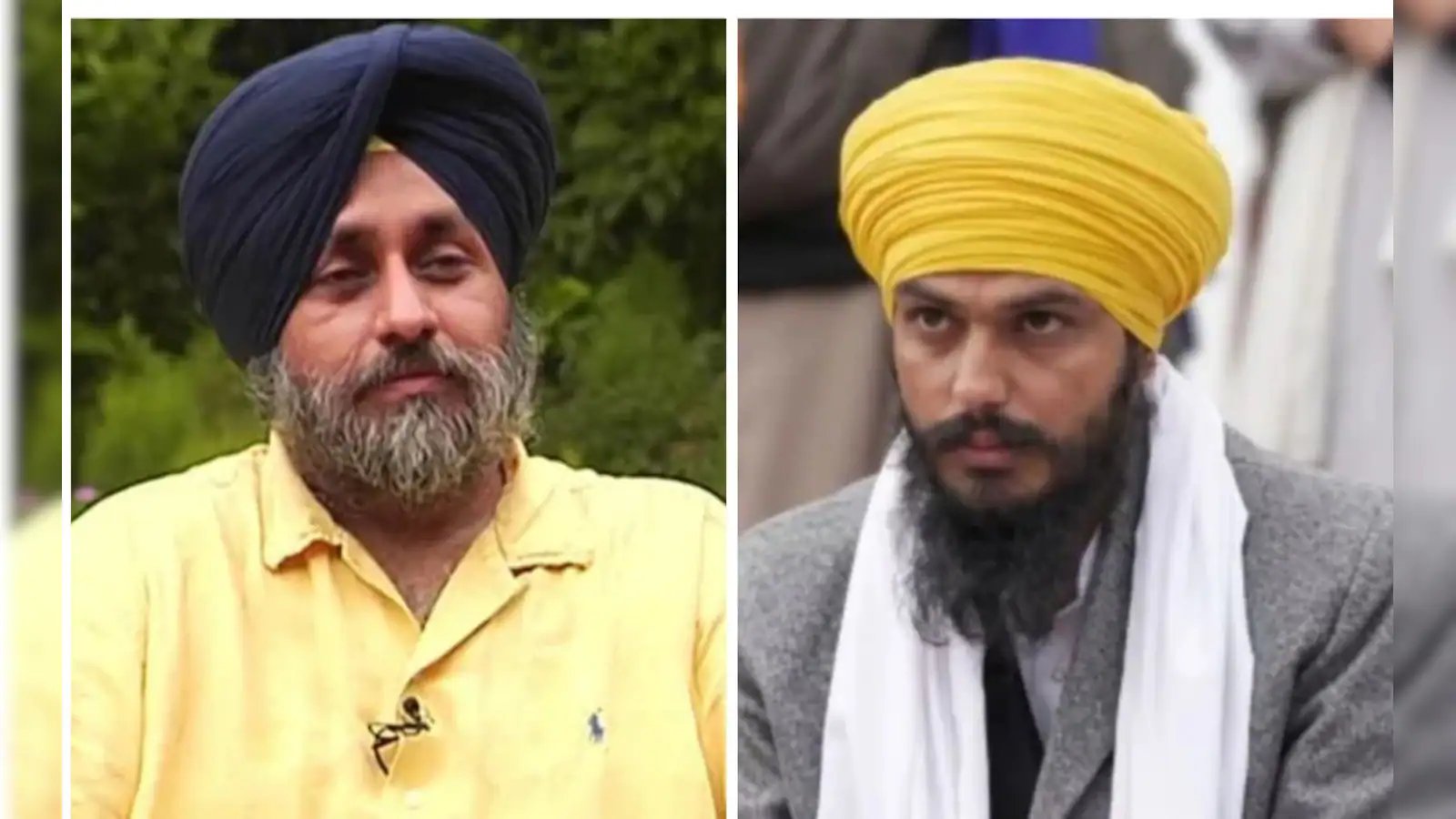
Chandigarh: As Punjab braces for the 2027 Assembly elections, the state’s political landscape is undergoing a significant transformation. The traditional Panthic hegemony of the Shiromani Akali Dal (SAD) is facing a formidable and unconventional challenge from the Waris Punjab De (WPD) outfit, led by the firebrand leader Amritpal Singh.
The political climate shifted perceptibly after Amritpal Singh’s decisive victory in the 2024 Lok Sabha elections from the Khadoor Sahib constituency. This success provided Waris Punjab De with a legitimate electoral platform, emboldening the organization to transition from a social-activist outfit into an active political player eyeing a footprint in the 2027 state polls.
The War of Words: Badal vs. Amritpal
The rise of this new faction has triggered an aggressive response from the SAD leadership. Party president Sukhbir Singh Badal has turned his political guns directly toward Amritpal Singh, attempting to delegitimize the outfit’s rapid ascent. In a series of campaign rallies, Badal has labeled Waris Punjab De a “virus” intended to erode the core foundations of the Akali Dal.
Badal has consistently scrutinized Amritpal’s background, particularly his years in Dubai and his dramatic return to Punjab. Furthermore, the SAD president has frequently invoked the memories of the 2023 Ajnala incident, questioning the group’s commitment to institutional politics and the rule of law. Beyond personal barbs, Badal has leveled serious accusations against the ruling Aam Aadmi Party (AAP), alleging a clandestine nexus between the government and the Amritpal camp. He claims the AAP is weaponizing the outfit to strategically divide the Panthic vote bank, an accusation that has added a layer of complexity to the already polarized political discourse.
Expanding the Front: The Malwa Factor
The rivalry took a dramatic turn with the entry of Dakha MLA Manpreet Singh Ayali into the Waris Punjab De orbit. Ayali’s alignment with the outfit is a strategic coup that shifts the battlefield well beyond Amritpal’s stronghold in the Majha region.
With Ayali’s support, the organization has gained a significant foothold in the Malwa region, a crucial belt for any party aiming to capture power in Chandigarh. This expansion has clearly rattled the SAD, leading to intensified rhetoric from Sukhbir Badal. The internal friction was laid bare during the recent Chhapar Mela, where both the Akali Dal and the Waris Punjab De faction held competing shows of strength, signaling to voters that the struggle for the traditional Panthic electorate is no longer a monopoly held by the Badals.
The 2027 Test
For the Shiromani Akali Dal, the upcoming election is a test of survival. The party is currently squeezed between the established presence of the Congress and the BJP, and now, an existential threat from an organization that seeks to redefine the Panthic identity.
Conversely, for Amritpal Singh and his supporters, 2027 will be a trial by fire. The challenge lies in converting the fervent public support seen in the Lok Sabha elections into a disciplined, ground-level political organization capable of winning assembly seats. As the rhetoric from the campaign trail turns into localized lobbying, the clash between the seasoned machinery of the Akali Dal and the grassroots energy of Waris Punjab De is set to be the defining sub-plot of the next Punjab election cycle.
Disclaimer: This content is auto-generated for informational purposes only.
Source: Read Original News