





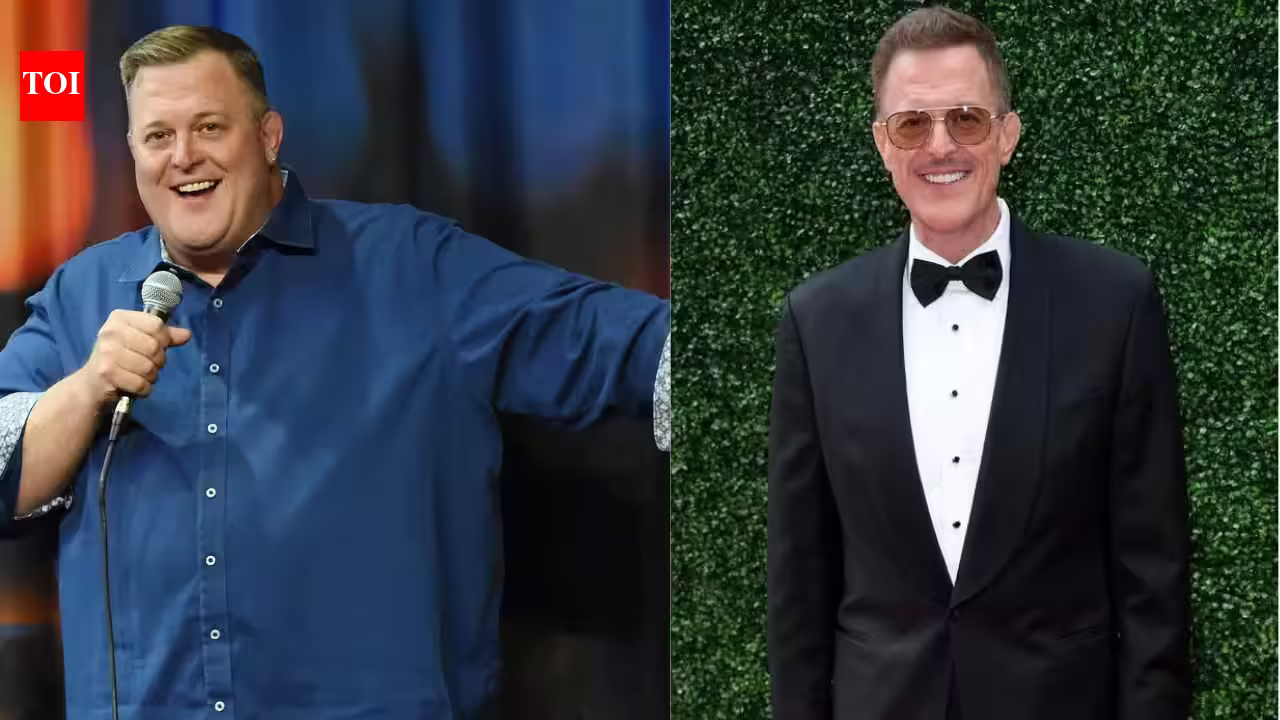
For millions of fans, Billy Gardell has long been the face of comfort—the relatable, quick-witted actor who anchored the beloved sitcom Mike & Molly with charm and heart. Yet, behind the scenes, the actor was battling a silent, escalating health crisis. Recently, in a candid and deeply revealing conversation on Tom Papa’s Breaking Bread podcast, Gardell pulled back the curtain on his grueling health journey, admitting that for years, he was essentially running on fumes.
At 55, Gardell is a man transformed, but getting to this point of vitality required a brutal confrontation with his own mortality. With his signature blunt humor and sobering honesty, the actor reflected on why his former strategy of “outrunning” his health problems eventually hit a dead end, and how bariatric surgery ultimately became the lifeline he didn’t know he needed.
The Myth of the ‘Solid Fat Guy’
For a long time, Gardell relied on a philosophy common among many men his size: the idea that as long as he remained active, his weight was a manageable variable. Having played sports in his youth and maintaining a high-energy career in comedy, Gardell possessed a physical resilience that allowed him to carry significant weight for decades. He dubbed himself a “solid fat guy,” a persona that felt sustainable until biology inevitably intervened.
“You can’t outrun those,” Gardell told Papa during their chat. “I think the only reason I was able to survive as long as I did is one, I got decent genetics, and two was I played some sports when I was younger.”
However, genetics only go so far. As he entered his fifties, the “warranty” on his body began to expire in earnest. The combination of Type 2 diabetes, skyrocketing cholesterol, and heart-related concerns began to stack up. The final straw, he noted, wasn’t a medical report—it was a physical one. After an injury to his knee rendered him unable to walk for exercise, he realized he had backed himself into a corner where willpower alone was no longer enough.
The Turning Point: Choosing Surgery
In 2021, facing a reality where his own body was failing him, Gardell made the difficult decision to undergo bariatric surgery. In the public eye, weight-loss surgery is often reduced to a cosmetic procedure, but for Gardell, it was a profound, life-saving medical intervention.
“I got the surgery, and it’s been a couple years now, and I probably saved my life,” he said. The results have been nothing short of miraculous. Beyond the visible weight loss, he reports that his diabetes is in remission and he is no longer reliant on daily medications.
He speaks with refreshing transparency about the realities of life post-surgery. It isn’t a “magic fix” that erases the desire for food; instead, it creates a physical boundary that forces a new relationship with nutrition. “I only have 12 ounces to work with,” he quipped, describing his restricted capacity. He jokes about the “fat Hulk” that still lives inside him, wanting to indulge in old habits, highlighting that while his stomach has changed, the psychological discipline required to maintain this new life remains a daily practice.
Before the Knife: The Ozempic Chapter
Gardell’s journey wasn’t an overnight pivot. Before committing to surgery, he spent roughly a year navigating the complexities of modern diabetes management, including the use of Ozempic.
In a previous interview with diaTribe, he was equally open about the trial-and-error process of his health recovery. He didn’t just take a pill and hope for the best; he dove into the data. By using a blood glucose monitor, he learned exactly how his body reacted to different fuels, allowing him to view food as a tool for health rather than a source of comfort. This stage of his journey was perhaps the most crucial, as it addressed the emotional and intellectual side of his diagnosis—a diagnosis he admits was terrifying, especially given his father’s own struggle with Type 2 diabetes.
Reclaiming the Little Things
The most touching aspect of Gardell’s transformation isn’t his medical charts or his lean physique; it’s the restoration of his everyday life. When you speak to people who have undergone massive lifestyle shifts, they rarely talk about the big, glamorous milestones. They talk about the small, invisible freedoms.
For Gardell, that means being able to hike with his wife, Patty Knight, and shop for clothes without the crushing weight of physical limitation. These, he admits, were activities that had once been denied to him by his own body.
“It’s just those little freedoms that you go, ‘Wow, man. I’m so grateful I can do this now,'” he shared. “I know those are simple, stupid things, but they mean the world to me.”
A Legacy of Authenticity
Billy Gardell’s journey is a masterclass in honesty. In an industry that often demands perfection or glosses over the “messy” parts of transformation, Gardell has remained authentically himself. He isn’t selling a miracle cure; he is sharing a story of necessity, discipline, and the sheer grit required to change your own narrative.
His path from a comedy legend who was “just getting by” to a man actively engaged in his second act of life serves as an inspiration to many. By placing his family—his wife and his son, William—at the center of his motivation, he has reminded his audience that the best reason to get healthy isn’t just to look better; it’s to be present for the people who matter most.
As he continues to work in comedy, Gardell’s new material reflects a man who has looked death in the face and decided to choose a different path. He has successfully traded in the “running out” warranties of his fifties for a renewed lease on life, proving that while you can’t outrun your genetics forever, you can always choose to stop running and start living.
Disclaimer: This content is auto-generated for informational purposes only.
Source: Read Original News