





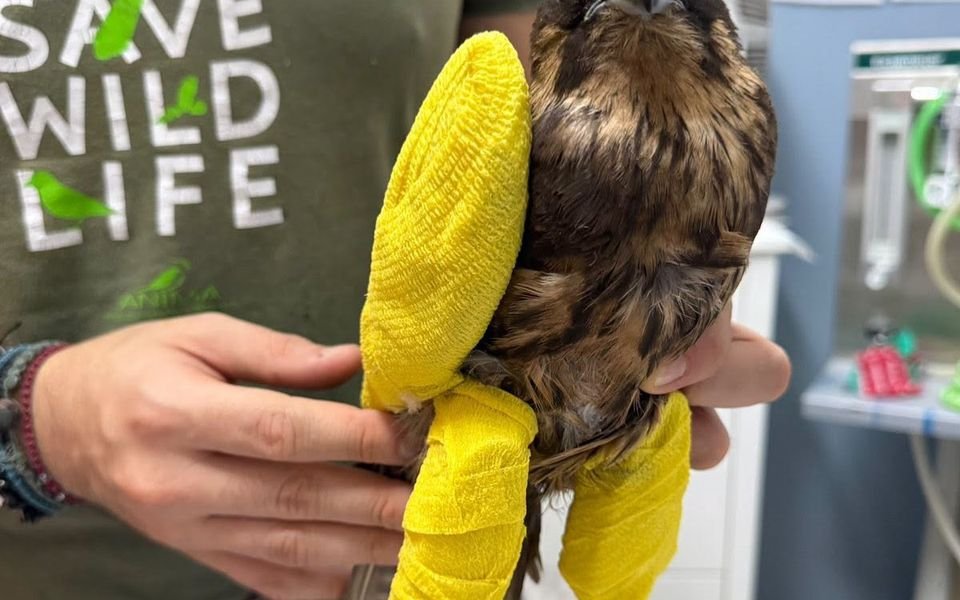
An injured Eleonora’s falcon, rescued from the island of Crete, is currently under the specialized care of the Anima wildlife association following a diagnosis of multiple severe fractures. The bird of prey was transported to the facility by the Natural History Museum of Crete, which facilitated the urgent transfer to ensure the creature received professional medical intervention.
According to updates provided by Anima, the falcon sustained fractures in both of its legs as well as its right wing. While the extent of the damage is significant, veterinary staff remain optimistic regarding the bird’s recovery. In a recent social media statement, the association confirmed that the medical prognosis for the falcon is good, though they stopped short of detailing the specific circumstances that led to the bird’s injuries.
The Eleonora’s falcon (Falco eleonorae) is a species of profound ecological importance to the Mediterranean region. Renowned for their long-distance migratory patterns, these birds arrive in Greece each spring to breed along the rocky coastlines and island cliffs. As autumn approaches, they prepare for a grueling southward migration, departing in October for eastern Africa. This journey is nothing short of extraordinary, as the falcons cover distances of up to 9,000 kilometers, navigating diverse climates and landscapes to reach their wintering grounds.
The treatment of this particular falcon highlights the vital role played by organizations like Anima, which serve as a critical safety net for Greece’s diverse fauna. Each year, the association processes thousands of individual animals—ranging from migratory birds of prey to reptiles and various mammal species—that have been incapacitated by accidents, habitat loss, or human-wildlife conflict. These creatures are brought to the facility from across the country, where they undergo rehabilitation with the ultimate goal of being released back into the wild.
The case of the Eleonora’s falcon serves as a reminder of the hazards faced by migratory species. As these birds traverse vast stretches of territory, they are frequently subjected to risks such as illegal shooting, collisions with power lines, and the encroaching impacts of climate change on their migratory routes. For species like the Eleonora’s falcon, which are highly sensitive to environmental disturbances, local conservation efforts are essential to maintain stable population levels.
The partnership between academic institutions like the Natural History Museum of Crete and specialized care centers like Anima underscores a collaborative approach to biodiversity conservation. By providing immediate medical care to individual injured animals, these groups not only save lives but also contribute to broader environmental monitoring efforts, helping researchers understand the threats that local wildlife face.
While the healing process for the falcon will likely be lengthy due to the complexity of the fractures, the dedicated care provided by the medical team at Anima offers the best possible chance for the bird to return to its natural habitat. Once the fractures have mended and the falcon has regained the strength necessary for flight, it will be reintroduced into the wild to continue its role within the Mediterranean ecosystem. The incident remains a poignant illustration of the ongoing efforts required to protect the vulnerable species that call the Greek archipelago home.
Disclaimer: This content is auto-generated for informational purposes only.
Source: Read Original News