







In the high-stakes world of modern Indian cinema, the line between a “star” and a “stunt performer” is blurring. While audiences have become accustomed to seeing male leads perform gravity-defying feats, Rashmika Mandanna is currently rewriting the playbook. With her upcoming project Mysaa, the powerhouse performer isn’t just occupying the frame; she is immersing herself—quite literally—into the most grueling physical challenge of her career.
A Leap into the Deep End
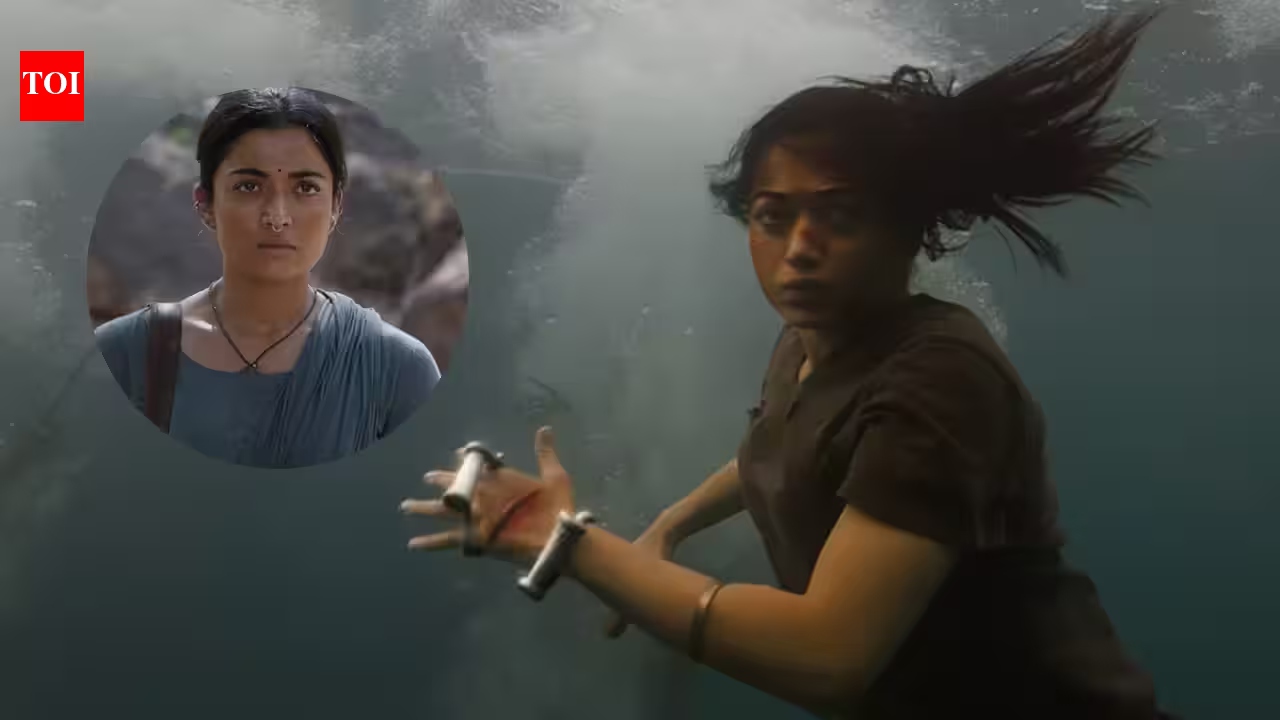
The headlines surrounding Mysaa, directed by Rawindra Pulle, have been dominated by a singular, record-breaking feat: an extended, three-and-a-half-minute underwater fight sequence. In an industry where stunt doubles are the unsung heroes of high-octane action, the decision to go solo is bold. But for Rashmika, it wasn’t a PR stunt; it was a necessity born of artistic integrity.
“We can’t rehearse underwater fighting,” director Rawindra Pulle explained in a recent interview. It is a hauntingly simple statement that underscores the sheer danger involved. Water isn’t just a backdrop; it’s a living, resisting force that alters physics. When the team approached professional stuntwomen to handle the scene, they were met with a firm refusal—the sequence was simply too complex, too demanding, and too dangerous for even experienced doubles.
That was the moment Rashmika Mandanna stepped up. By deciding to perform the sequence herself, she didn’t just save a scene; she elevated the production to what the makers are calling India’s first female-led underwater combat sequence.
The Cost of Realism: 20 Hours Submerged
The mental image of a fight scene is usually one of speed, agility, and adrenaline. Underwater, those qualities are replaced by the grueling constraints of biology. A human can typically hold their breath for a minute, maybe slightly more under extreme duress. Shooting a sustained, three-and-a-half-minute sequence required the actor to master her internal clock, her oxygen levels, and her emotional state, all while engaging in simulated combat.
The logistics were nothing short of nightmarish. Filmed at a specialized studio in Shamshabad, the production spanned several days of agony. Over the course of the shoot, Rashmika spent nearly 20 hours submerged. Beyond the physical act of fighting, she had to navigate the physiological barriers of cold water and low visibility. Perhaps the most difficult aspect was the necessity of keeping her eyes open to capture the raw, visceral expressions of her character. To ensure her safety, cinematographer Sukesh Vishwanath had to teach her a specialized form of underwater sign language—a bridge of communication that allowed her to signal the diving team if she reached her breaking point.
Resilience Amidst Physical Toll
While the underwater sequence stands as the highlight of her technical preparation, the road to Mysaa hasn’t been without scars. The intense, physically demanding nature of the film has taken a visible toll on the actor’s body. In August, Rashmika revealed a sobering update: a tendon detachment in her right hip.
The injury, occurring during a dance sequence, saw one of the four essential tendons connecting her hip to her leg snap. For a performer known for her relentless work ethic, the news was a forced deceleration. She shared a candid update with fans, acknowledging that this was her third major injury in rapid succession and offering a poignant reminder to herself and her followers: “I need to treat my body like a human body and not some machine.”
The injury served as a stark reminder that behind the glitz of pan-India stardom, the physical demands of cinema are real, painful, and occasionally career-threatening.
Redefining the ‘Hero’ Narrative
Mysaa is shaping up to be a pivot point in Rashmika’s filmography. Set against the rich, rugged backdrop of tribal lands, the film features the actor as a Gond woman—a far cry from the urban, vibrant roles that catapulted her to national fame. With a cast that includes heavyweights like Eshwari Rao, Guru Somasundaram, and Rao Ramesh, the project is clearly aiming for substance to match its spectacle.
Rawindra Pulle’s insistence that he doesn’t want to distinguish between a “male hero” and a “female hero” speaks volumes about the shifting tides in Indian storytelling. By framing Rashmika as the undisputed engine of this action thriller, the production is testing the appetite for female-led, pan-India cinema. There is a palpable shift occurring where female leads are no longer relegated to the supporting arcs of action dramas; they are driving the action themselves.
The Anticipation for November 2026
As the production moves toward its November 27, 2026, release date, the buzz surrounding Mysaa is built on more than just star power. It is built on the narrative of a woman pushed to her physical limit, choosing to face the abyss rather than rely on a proxy.
Whether it is the haunting stillness of an underwater battle or the grit of a tribal-based action drama, the film is clearly attempting to push the boundaries of what is possible in regional and national cinema. If the behind-the-scenes accounts of 20-hour water sessions and professional stuntwomen backing away from the challenge are any indication, audiences are in for a visceral experience. Rashmika Mandanna is gambling on her own endurance, and if the early word from the set is anything to go by, it’s a gamble that will redefine her career trajectory for years to come.
Disclaimer: This content is auto-generated for informational purposes only.
Source: Read Original News