






Jaishankar Highlights “Bumps” in India-US Ties, Emphasizes Need for Mutual Understanding on Terrorism
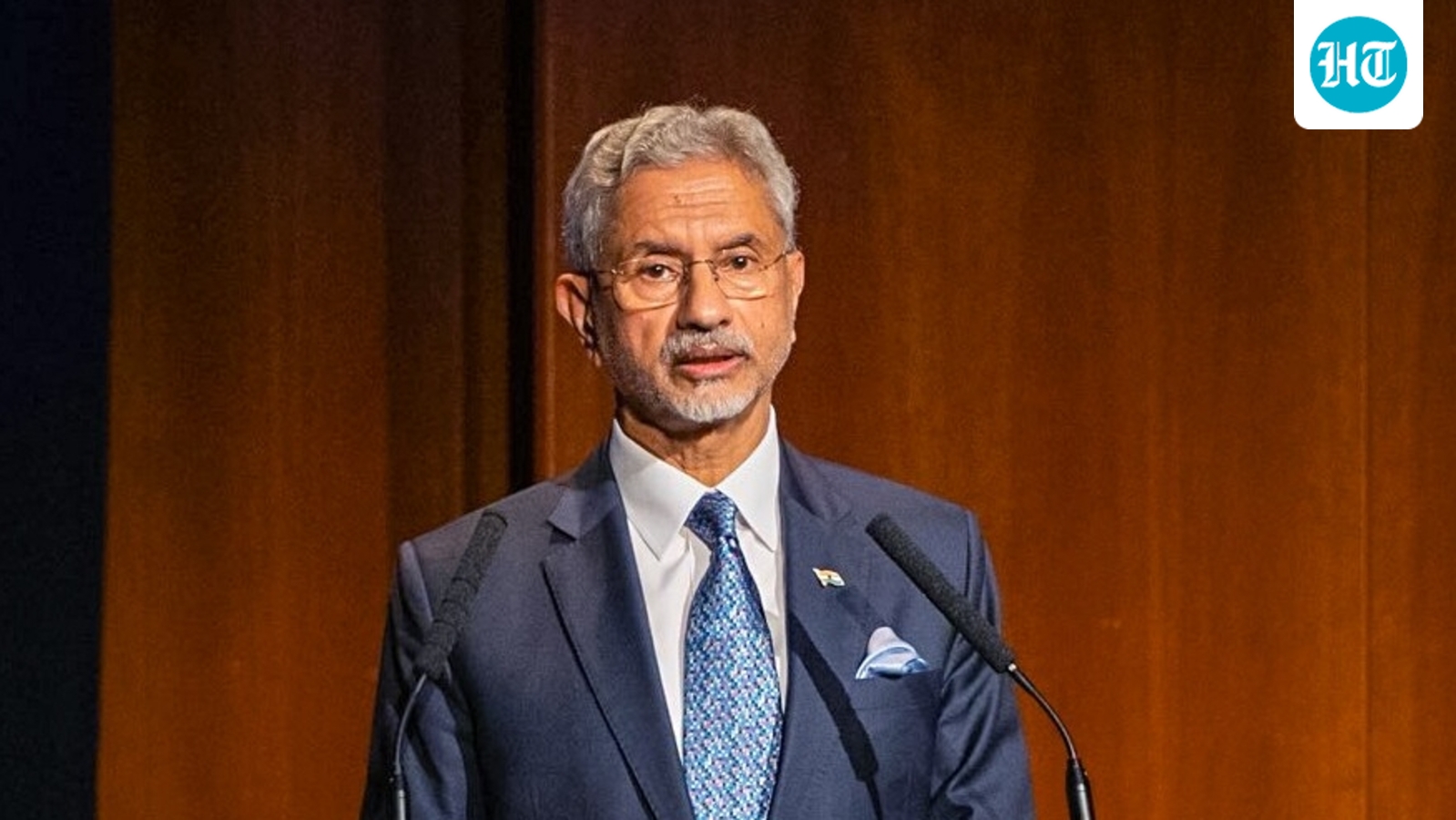
New York: External Affairs Minister S Jaishankar has candidly addressed the complexities currently defining the strategic partnership between New Delhi and Washington. Speaking at an Asia Society event in New York following the United Nations General Assembly’s high-level week, the Minister acknowledged that while the relationship has matured, it has faced notable “bumps” regarding trade negotiations, tariff policies, and diverging perspectives on regional security.
Trade and Economic Complexity
Jaishankar noted that the pace of trade discussions between the two nations has often been hindered by the inherent intricacy of India’s economic landscape. He pointed out that protecting the interests of India’s vast network of small-scale entrepreneurs and the agricultural sector necessitates a delicate balancing act during international negotiations.
While the Minister suggested that both sides have reached a functional understanding regarding a trade agreement, he highlighted that the primary source of ongoing uncertainty stems from shifts in the US policy framework. Specifically, he drew attention to the evolving processes under “Section 301” of the US trade law, which has introduced new layers of complexity following the discontinuation of previous reciprocal tariff arrangements.
Terrorism: A Non-Negotiable Concern
A significant portion of Jaishankar’s address focused on India’s persistent struggle with terrorism originating from across its border. He stressed that India views cross-border militancy as a deliberate, long-term policy of its neighbour, Pakistan.
The Minister cautioned that a lack of adequate empathy or appreciation for India’s security concerns among its strategic partners—including the United States—could negatively impact bilateral relations. “If one of my primary concerns is not fully appreciated by my partner, then clearly there is an impact of that on the relationship,” Jaishankar stated, emphasizing that true partnership requires a shared understanding of existential threats.
Navigating Multipolarity and Strategic Autonomy
Reflecting on the changing global order, Jaishankar dismissed the antiquated notion that India should limit its diplomatic options to a single major power. Addressing the past pressure on India to prioritize its relationship with Washington above all else, he noted that “the pretence has dropped.”
He observed that the world is decisively moving toward a multipolar framework, where nations now routinely engage with multiple partners simultaneously to serve their national interests. In a pointed observation, he remarked that Washington itself is now practicing the very “multi-alignment” that was once discouraged in India, as the US actively manages complex relationships across Europe, Asia, and Russia.
Assertive Stance at the UNGA
The Minister’s remarks in New York followed a sharp rebuke he delivered at the United Nations General Assembly last week. Without naming Pakistan Prime Minister Shehbaz Sharif directly, Jaishankar dismissed Islamabad’s recent claims at the UN as “misrepresented facts.” He firmly reiterated that India will not tolerate attempts to normalize terrorism, declaring that the country’s right to self-defence remains paramount.
He further clarified that friendship cannot thrive alongside state-sponsored militancy, placing the burden on the perpetrator to rectify its behaviour. This comes in the wake of Sharif’s claims regarding the May 2025 border conflict, known as “Operation Sindoor,” which India continues to characterize as a matter handled through direct, bilateral communication rather than third-party intervention.
Looking forward, Jaishankar noted that the nature of diplomacy is transforming, as public sentiment and social media now play a pivotal role in shaping foreign policy, extending the influence of international relations well beyond the traditional confines of government officials and ministers.
Disclaimer: This content is auto-generated for informational purposes only.
Source: Read Original News