








Ladakh Blooms: High-Altitude Lilium Harvest Marks New Economic Era
LEH: In a historic development for the Union Territory of Ladakh, the cold desert region has officially entered the national commercial floriculture map. On Tuesday, the first commercial consignment of locally grown Lilium flowers was flagged off from Leh airport, signaling a transformative shift in the region’s agricultural landscape and economic potential.
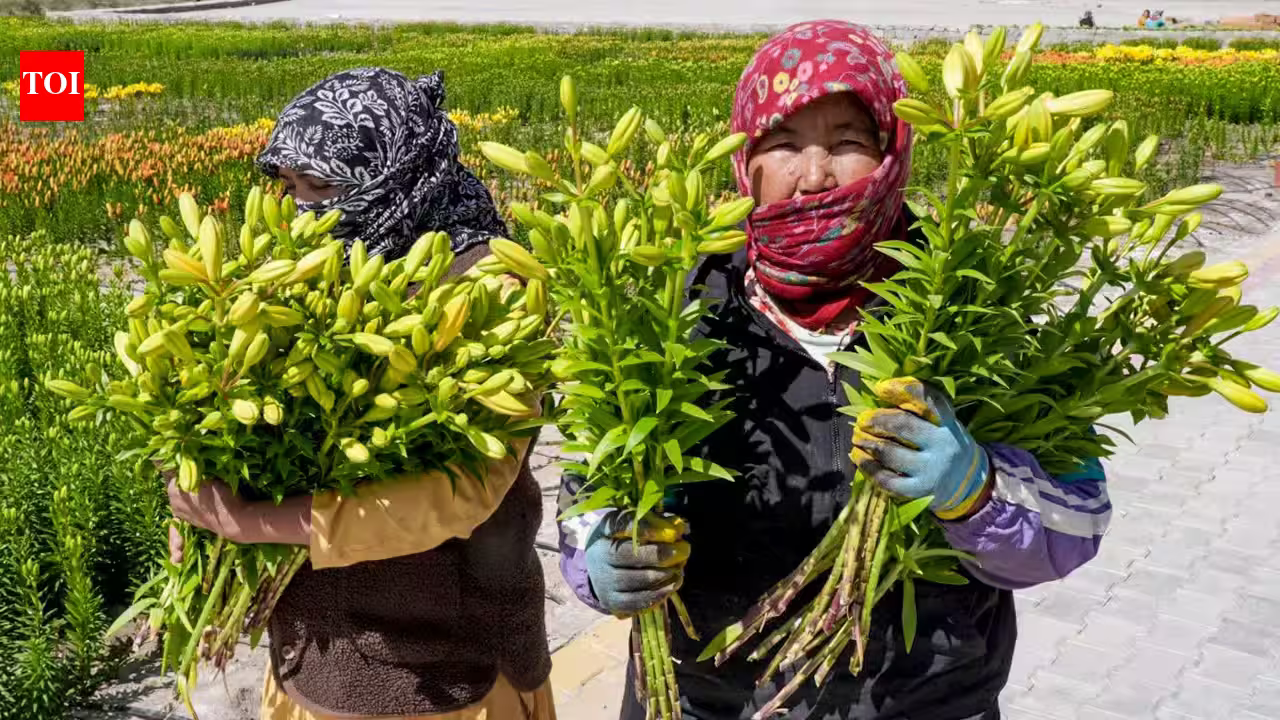
The inaugural shipment, consisting of 15,000 premium Lilium blooms in vibrant shades of red, pink, white, and orange, is headed for major metropolitan hubs, including Delhi, Mumbai, and Chandigarh. These flowers, cultivated at an impressive altitude of 10,600 feet in Choglamsar, are being hailed for their exceptional quality. Each stem boasts four to five buds, positioning them as “A-grade” produce capable of commanding premium retail prices ranging between Rs 150 and Rs 200 per stem.
From Barren Peaks to Blooming Fields
The project represents a stark departure from the traditional perception of Ladakh as a land of rugged, barren mountains. Ladakh Lieutenant Governor Vinai Kumar Saxena, who presided over the flagging-off ceremony, highlighted the visual and economic significance of the initiative.
“This high-altitude commercial floriculture project is a landmark for the region,” Saxena stated. “We are moving beyond the traditional image of Ladakh’s landscape by introducing vibrant, life-sustaining cultivation. These millions of Liliums provide a stunning contrast to our mountain ranges while serving as a viable, sustainable engine for local growth.”
The scale of the operation is significant. The flower field at Choglamsar, which serves as the hub for this pilot project, currently houses over 2.5 million blooms. Developed in a remarkably short span of two months, the field has already become a major attraction, drawing widespread public interest since its opening on September 17.
Empowering the Local Workforce
Beyond the aesthetic appeal, the project is rooted in social and economic empowerment. The administration has prioritized local talent throughout the supply chain. A team of 15 local women is currently employed for the harvesting, sorting, and packaging of the blooms, each earning a daily wage of Rs 900. Furthermore, the commercial operations—from logistics to market outreach—are being spearheaded by a local qualified botanist, ensuring that the project remains a community-driven enterprise.
The initiative serves as a model for sustainable livelihoods in high-altitude environments, where traditional agriculture often faces immense climate challenges.
A Blueprint for Expansion
The success of the Leh pilot has prompted the UT administration to fast-track its expansion. Officials have issued directives to the deputy commissioners of Kargil, Drass, Sham, Changthang, and Zanskar to replicate this high-altitude floriculture model. Each district has been tasked with identifying at least 20 acres of land suitable for similar large-scale flower cultivation.
As the industry looks to scale, the focus remains on maintaining the quality of the blooms, which currently enjoy a shelf life of five to seven days. By tapping into the high demand for premium flowers in India’s tier-one cities, Ladakh is well-positioned to turn its unique climatic conditions into a lucrative economic advantage, proving that even the highest altitudes can be a landscape of opportunity.
Disclaimer: This content is auto-generated for informational purposes only.
Source: Read Original News