









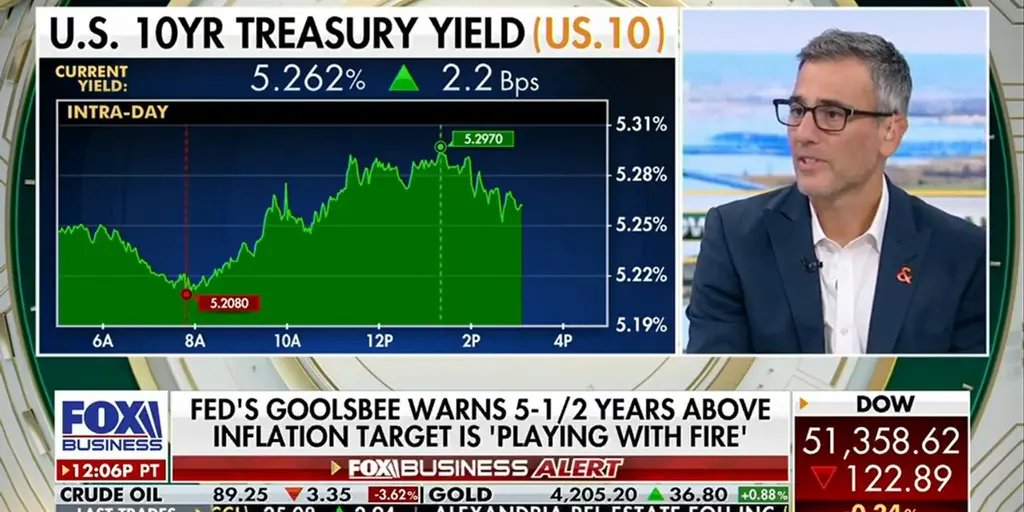
As global financial markets grapple with shifting macroeconomic pressures, the intersection of credit strategy and environmental, social, and governance (ESG) considerations has moved to the forefront of institutional investor discourse. Michael Contopoulos, Head of Investment Grade Credit at Janus Henderson Investors, recently joined “The Claman Countdown” to analyze how current interest rate volatility and market tightening are reshaping the landscape for high-grade debt and the broader corporate commitment to sustainable transition.
For investors navigating the present climate, the focus has pivoted from speculative growth to a disciplined assessment of credit quality. As central banks maintain a “higher for longer” posture regarding interest rates, companies across the energy, manufacturing, and utility sectors are facing a dual challenge: refinancing debt at higher costs while simultaneously financing the capital-intensive transition to net-zero operations. According to Contopoulos, the current market environment necessitates a granular approach to corporate balance sheets, where the resilience of a company’s credit profile is increasingly tethered to its ability to manage environmental risk.
The cost of capital is no longer just a function of benchmark rates; it is increasingly influenced by the sustainability profile of the issuer. Markets are signaling a growing preference for investment-grade companies that demonstrate clear, executable decarbonization pathways. In this context, credit analysts are moving beyond traditional balance sheet metrics to integrate climate-related data, such as carbon intensity and resource management efficiency, into their risk-weighting models. This shift represents a maturation of the ESG market, moving away from purely thematic investment toward a rigorous evaluation of how environmental externalities affect long-term corporate solvency.
“Opportunities exist in today’s landscape, but they require a focus on quality and a deep understanding of structural change,” Contopoulos noted during the discussion. In the realm of investment-grade credit, this translates to identifying firms that have already navigated the initial phases of transition. Companies that have successfully decoupled their revenue growth from carbon emissions are finding that their debt remains highly sought after, even as overall market liquidity tightens. Conversely, firms with significant exposure to legacy fossil fuel assets or those lacking transparent transition plans are seeing higher risk premiums baked into their bond yields.
The broader market outlook remains cautious, reflecting the complexities of balancing inflation control with the necessity of green capital expenditure (CapEx). As the global economy undergoes a fundamental transition, the role of credit investors is evolving to serve as a critical gatekeeper of capital. By prioritizing high-grade issuers that effectively manage their environmental footprint, institutional investors are not only mitigating systemic risk but are also providing the necessary bridge funding to support sustainable technological advancements.
Despite the prevailing economic uncertainty, the current state of the credit market offers a window for strategic positioning. For long-term investors, the correlation between credit-worthiness and environmental stewardship has never been clearer. As firms continue to face regulatory scrutiny and pressure to fulfill climate commitments, the gap between “climate-resilient” debt and assets prone to transition risk is likely to widen.
The strategy underscored by Contopoulos highlights a pivotal shift in finance: the integration of environmental health into the bedrock of fiscal health. As interest rates settle into a new, higher equilibrium, the survival and success of corporate entities will depend on their agility in the face of both monetary policy shifts and environmental imperatives. For those monitoring the market, the message is clear: the most stable investments in the coming decade will be those that view decarbonization not as a compliance burden, but as a strategic advantage in a complex and competitive global economy.
Disclaimer: This content is auto-generated for informational purposes only.
Source: Read Original News