








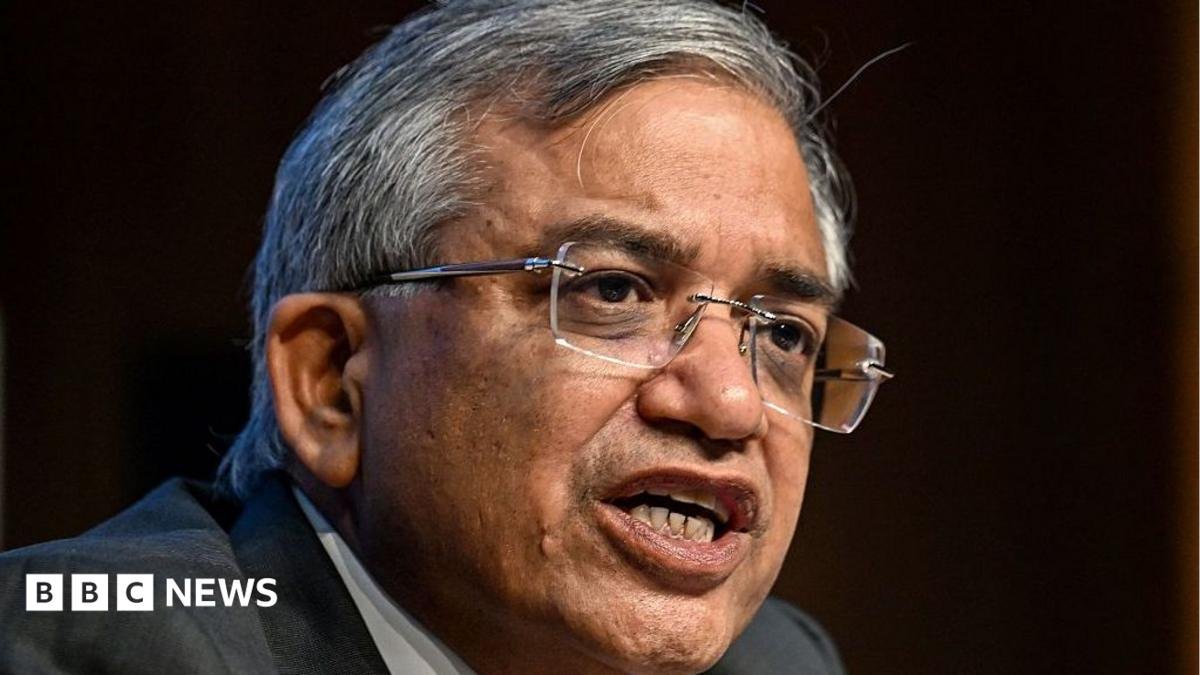
Internal Rift and Electoral Roll Controversy: The Challenging Tenure of CEC Gyanesh Kumar
For the better part of four decades, Gyanesh Kumar navigated the complex machinery of India’s bureaucracy with a reputation as a pragmatic problem-solver. A veteran of the civil services, Kumar’s career was defined by his ability to execute high-stakes assignments away from the glare of public scrutiny. However, in his current role as the Chief Election Commissioner (CEC) of the world’s largest democracy, the 62-year-old official finds himself in an unfamiliar and precarious position: defending the integrity and transparency of the institution he is tasked to lead.
The Controversy Surrounding Voter Roll Revisions
At the center of the current political storm is the “Special Intensive Revision” (SIR), a massive electoral exercise that has sent shockwaves through India’s political landscape. Commencing in Bihar last year and subsequently expanding across 30 states and federally-administered territories, the operation has resulted in the removal of over 130 million names from draft voter rolls. This staggering figure accounts for approximately 13% of the nation’s total electorate.
The Election Commission of India (ECI) maintains that the SIR is a routine housekeeping measure designed to prune duplicate entries, remove ineligible voters, and ensure the veracity of the rolls. Conversely, a coalition of opposition parties and civil society activists argues that the scale of the deletions is unprecedented and poses a severe risk of disenfranchising legitimate citizens. While Kumar and the commission have consistently denied allegations that the process is being weaponized for political gain, the intensity of the public outcry has placed the CEC under immense pressure.
Cracks Within the Commission
The situation reached a boiling point this week when reports emerged suggesting that the discord is no longer restricted to external critics but has penetrated the ECI’s internal structure. An investigative report by The Indian Express revealed that CEC Kumar’s two colleagues—Election Commissioners Sukhbir Singh Sandhu and Vivek Joshi—have registered formal objections at least 14 times over the past ten months.
According to the report, these objections centered on a lack of institutional transparency, with the two commissioners alleging that significant orders were issued without their knowledge or consultation. These disagreements reportedly touch upon the fundamental mechanics of the SIR, including the protocols for adding or removing voters, modifications to registration procedures, and the governance of the massive national voter database. Given that the ECI functions as a three-member body where policy is determined by majority vote, such internal friction threatens the perceived neutrality of the commission.
Seeking a Unified Front
In the wake of the allegations, the Election Commission sought to downplay the severity of the fractures. In an official statement, the constitutional body acknowledged that while differences of opinion are inherent to any deliberative process, the claim of a deep-seated institutional rupture was overstated. The commission emphasized that all major decisions, including those pertaining to the SIR, were eventually arrived at through a unanimous process.
As a signal of solidarity, the three commissioners—Kumar, Sandhu, and Joshi—convened over the weekend to issue a joint statement. To further project an image of stability and unity, the commission released a photograph of the trio together, attempting to quell speculation regarding a breakdown in leadership. As the ECI prepares for future electoral cycles, the challenge for Gyanesh Kumar will be to restore public confidence in the commission’s processes while ensuring that internal cohesion remains intact.
Disclaimer: This content is auto-generated for informational purposes only.
Source: Read Original News