








Race Against Time: Tamil Nadu Launches Ambitious Project to Save Vanishing Kariyachalli Island
In the shallow, azure waters of the Gulf of Mannar, a desperate battle is being fought against the relentless march of the sea. Kariyachalli Island, situated off the coast of Thoothukudi in Tamil Nadu, is rapidly disappearing. Over the last 50 years, the island has been reduced to a mere fraction of its former self, prompting state authorities to launch an urgent, large-scale conservation mission to reverse the tide of erosion.
Data paints a grim picture: in 1969, Kariyachalli spanned 20.85 hectares. By last year, that landmass had plummeted to just 3.14 hectares—an agonizing loss of more than 80% of its total area. Experts warn that if current erosion trends remain unchecked, the island could be wiped off the map entirely by 2036.
Engineering a Natural Defense
To counteract this existential threat, the Tamil Nadu government has rolled out a US$4.79 million conservation initiative. The strategy centers on deploying approximately 8,500 artificial reef modules. These massive, multi-tonne structures are being carefully lowered into the seabed at strategic intervals.
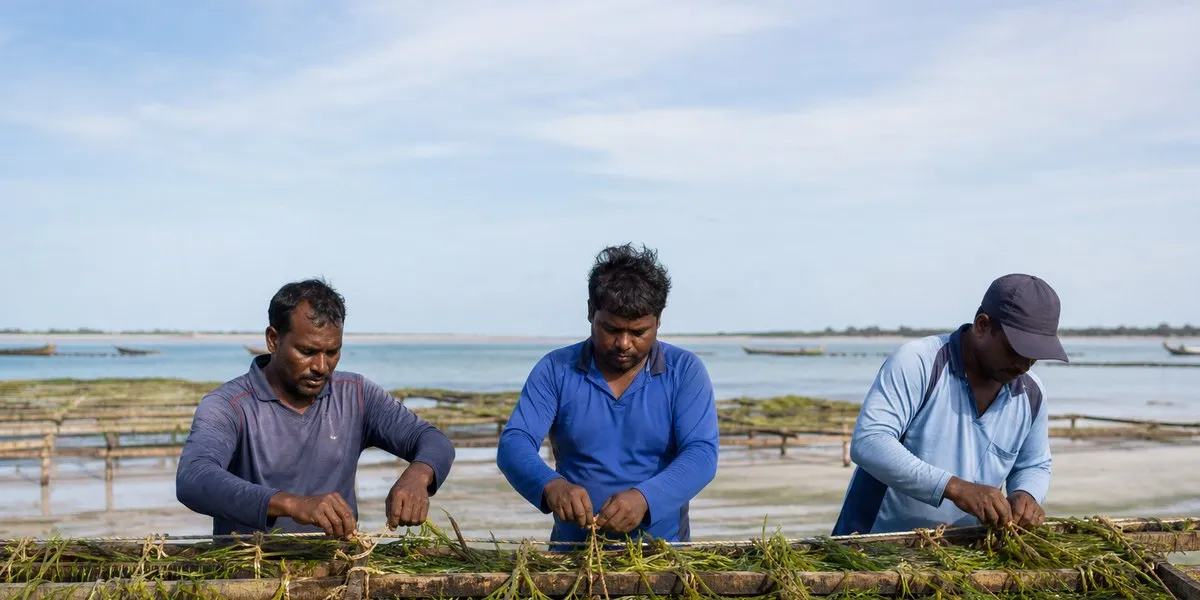
By calculating local wave patterns, seabed topography, and current velocity, engineers aim to dissipate the raw energy of incoming waves before they reach the shore. These modules serve a dual purpose: they act as a physical breakwater and provide a stable, textured substrate for new coral colonies to take root and flourish. The effort also includes extensive transplanting of seagrass, a vital coastal vegetation that binds seabed sediments and offers a critical nursery for juvenile marine life.
Engaging Coastal Communities
A unique aspect of this project is its focus on community integration. Coastal residents, particularly those linked to the local salt industry, are being trained to craft the specialized frames required for seagrass planting. This involvement not only provides an economic boost to the region but also ensures that those most dependent on the health of the Gulf of Mannar become stewards of their own environment. The current phase of module placement is slated for completion by the end of the month, followed by a rigorous four-year monitoring program to gauge the recovery of the local ecosystem.
The Resilience of the Gulf of Mannar
The Gulf of Mannar is recognized as one of Asia’s most significant marine biodiversity hotspots, home to rare dugongs, diverse fish species, and sprawling coral reefs. However, this underwater paradise has faced decades of trauma, ranging from illegal coral mining in the mid-20th century to modern-day challenges like overfishing, pollution, and the devastating impact of marine heatwaves.
The reef cover in the vicinity has suffered significantly, dropping from 500 hectares in 2005 to under 200 hectares by 2021. With 2024 witnessing severe bleaching events, researchers are now working to identify “super corals”—species that possess natural genetic resistance to rising sea temperatures—to ensure the longevity of the restoration efforts.
Success, however, is not without precedent. Similar interventions at nearby Vaan Island have already demonstrated that human intervention can stabilize and even reclaim lost land. As the modules settle into the depths around Kariyachalli, there is cautious optimism that these reefs will once again serve as a robust shield, protecting both the island and the fragile biodiversity of the Tamil Nadu coast.
Disclaimer: This content is auto-generated for informational purposes only.
Source: Read Original News