








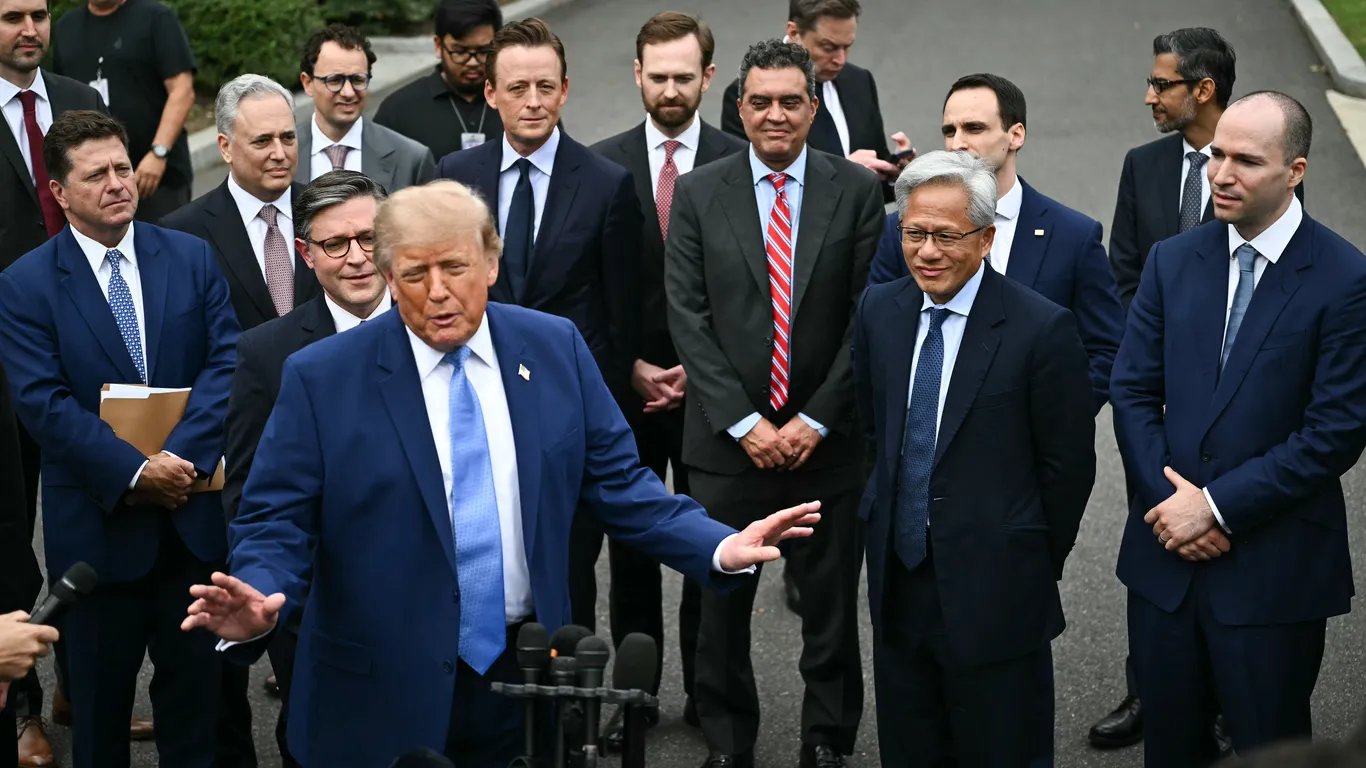
WASHINGTON — Former President Donald Trump unveiled a sweeping new proposal on Tuesday that would fundamentally restructure federal oversight, declaring that he intends to implement a “peer-policing” model across executive agencies. Speaking to reporters outside his Maricopa estate, Trump insisted that the move would eliminate bureaucratic bloat and ensure accountability within the government.
“They’re going to be policing each other,” Trump said, gesturing toward his advisors. “No more oversight from people who don’t understand the mission. We are going to have the departments monitor one another, creating a system of accountability that actually works because they know each other’s business better than anyone else.”
The announcement has triggered immediate alarms among constitutional scholars and career civil servants, who warn that the plan effectively removes independent inspectors general and outside auditors from the federal equation. Under the proposed framework, departments would be granted the authority to audit and penalize neighboring agencies, a move critics say could weaponize inter-agency rivalries and lead to unprecedented dysfunction.
“The concept of ‘policing each other’ is antithetical to the principles of administrative law,” said Elena Vance, a senior fellow at the Institute for Government Oversight. “The federal government operates on checks and balances designed to prevent corruption. If you turn agencies into self-regulating cliques, you lose the firewall that prevents the politicization of public data, environmental regulations, and national security intelligence.”
Supporters of the former president argue that the current system of federal oversight has become a “shield for the deep state,” protecting entrenched bureaucrats from political mandates. Trump’s allies suggest that by forcing departments to audit one another, the administration could streamline spending and uncover redundant programs that have historically evaded scrutiny from Congress.
“It’s about efficiency,” said one campaign spokesperson. “When the Department of Energy is looking over the shoulder of the Department of the Interior, you’re going to see a level of scrutiny that we haven’t seen in decades. It forces them to be honest, because they know their neighbor is waiting for them to trip up.”
The legality of such a plan remains a point of intense debate. Statutes governing the federal government mandate specific oversight protocols, including the role of the Government Accountability Office (GAO) and independent inspectors general. Trump’s proposal would likely face a wave of legal challenges, with opponents expected to argue that the executive branch cannot unilaterally override congressional oversight structures.
As the 2028 campaign cycle intensifies, the proposal serves as a direct challenge to the administrative state. Whether the policy is viewed as a bold reform or a dangerous consolidation of power, it signals a dramatic shift in how a potential future Trump administration would handle the federal workforce and the internal mechanics of the executive branch. For now, the prospect of an inter-agency “police state” has become the latest flashpoint in the ongoing battle over the future of American governance.
Disclaimer: This content is auto-generated for informational purposes only.
Source: Read Original News