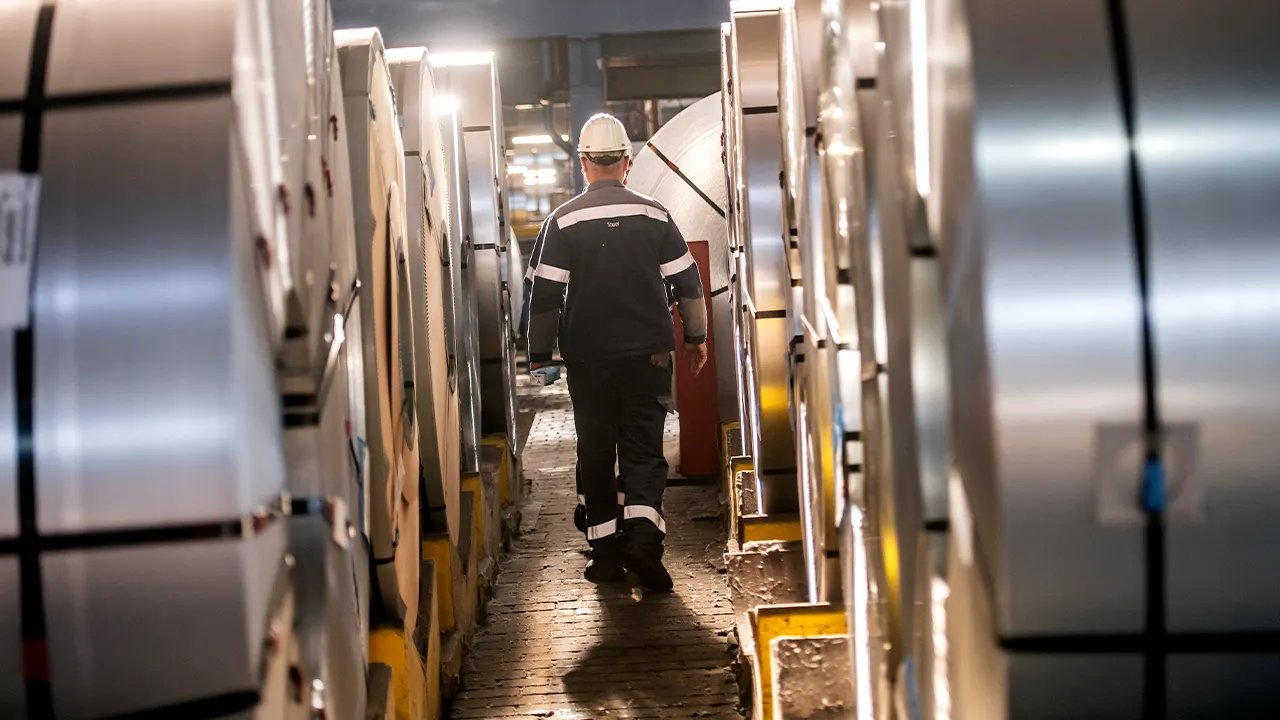










The landscape for North American industrial metals is shifting rapidly, marked by a high-stakes auction for a major steelmaker and a significant pivot in U.S. supply chain sourcing. As the sector navigates these headwinds, companies are increasingly looking toward technological integration—including data analytics and AI-driven supply chain management—to optimize production and navigate complex tariff environments.
The Race for AHMSA’s Future
Bankrupt Mexican steel giant Altos Hornos de México (AHMSA) has reached a critical juncture in its court-supervised restructuring. A group led by businessman José Arturo Domínguez, known as Construcciones e Ingenierías Electromecánicas (CIESA), has emerged as the frontrunner with a staggering US$1.4 billion bid. While the offer marks a potential lifeline for the struggling company, the deal remains precarious. Under the strict rules of the auction, CIESA has a ten-day window to demonstrate financial viability by posting a US$56.3 million good-faith deposit.
Industry analysts suggest that if the CIESA consortium fails to meet this requirement, creditors are prepared to pivot toward a collective ownership model, potentially forming a new entity to manage the steelmaker’s assets. This situation underscores a broader trend where industrial entities are leveraging modern financial modeling and AI-powered risk assessment to evaluate the viability of distressed assets amidst volatile market conditions.
U.S. Steel Sourcing Shifts to Asia
The structural dynamics of U.S. steel imports are undergoing a quiet, yet significant, transformation. Although overall import volumes have remained consistent throughout 2026, the geographic origins of that steel are changing. Current Department of Commerce figures reveal a contraction in shipments from North American partners—specifically Mexico, Canada, and Brazil—while Asian suppliers, most notably South Korea and Indonesia, have successfully captured larger market shares.
This shift coincides with the lingering impact of Section 232 tariffs and uncertainty surrounding the ongoing USMCA reviews. As trade regulations tighten, supply chain managers are increasingly relying on cloud-based logistics platforms to diversify their vendor pools. By utilizing real-time global trade data, U.S. manufacturers are pivoting toward Asian markets to mitigate the risk of supply disruptions that have plagued regional trade routes throughout the first half of 2026.
Innovation and Production Milestones in Mining
Beyond the steel sector, the broader mining industry is hitting significant operational milestones, bolstered by technological advancements in exploration and processing. Equinox Gold, for instance, is leveraging extensive drilling programs—utilizing 45 active rigs across four countries—to extend the life of its gold assets. With over 300,000 meters drilled this year alone, the company is using geological modeling software to optimize reserve growth.
Similarly, in the State of Mexico, Sierra Madre Gold and Silver has successfully ramped up throughput at its La Guitarra complex. By upgrading crushing and grinding circuits, the firm has pushed capacity to 720 tons per day, operating well ahead of its original growth schedule. The company intends to continue this expansion, with a new ball mill slated for November 2026 that aims to boost capacity toward a 1,500-ton-per-day target.
As the industry looks toward the future, these technological gains will be front and center at the 37th International Mining Convention. Scheduled for November 2027 in Acapulco, the event will focus on the theme “Mining, Origin and Future of Mexico.” Industry leaders are expected to showcase how digital transformation, alongside social responsibility initiatives, is defining the new era of mineral production. For stakeholders, the message is clear: the integration of advanced technology into traditional extraction and refining processes is no longer optional, but a prerequisite for maintaining competitiveness in a globalized, highly regulated market.
Disclaimer: This content is auto-generated for informational purposes only.
Source: Read Original News