








Consolidating the Fire TV Portfolio
For years, consumers navigating the streaming hardware market have faced a complex array of naming conventions and overlapping specifications. Amazon, a central player in the living room ecosystem, has historically maintained a sprawling catalog of Fire TV devices. This strategy, while designed to capture every price point, often resulted in technical redundancy that left buyers struggling to distinguish between similar hardware. By narrowing its current catalog from five devices down to four, Amazon is shifting toward a more transparent and intuitive purchasing structure.
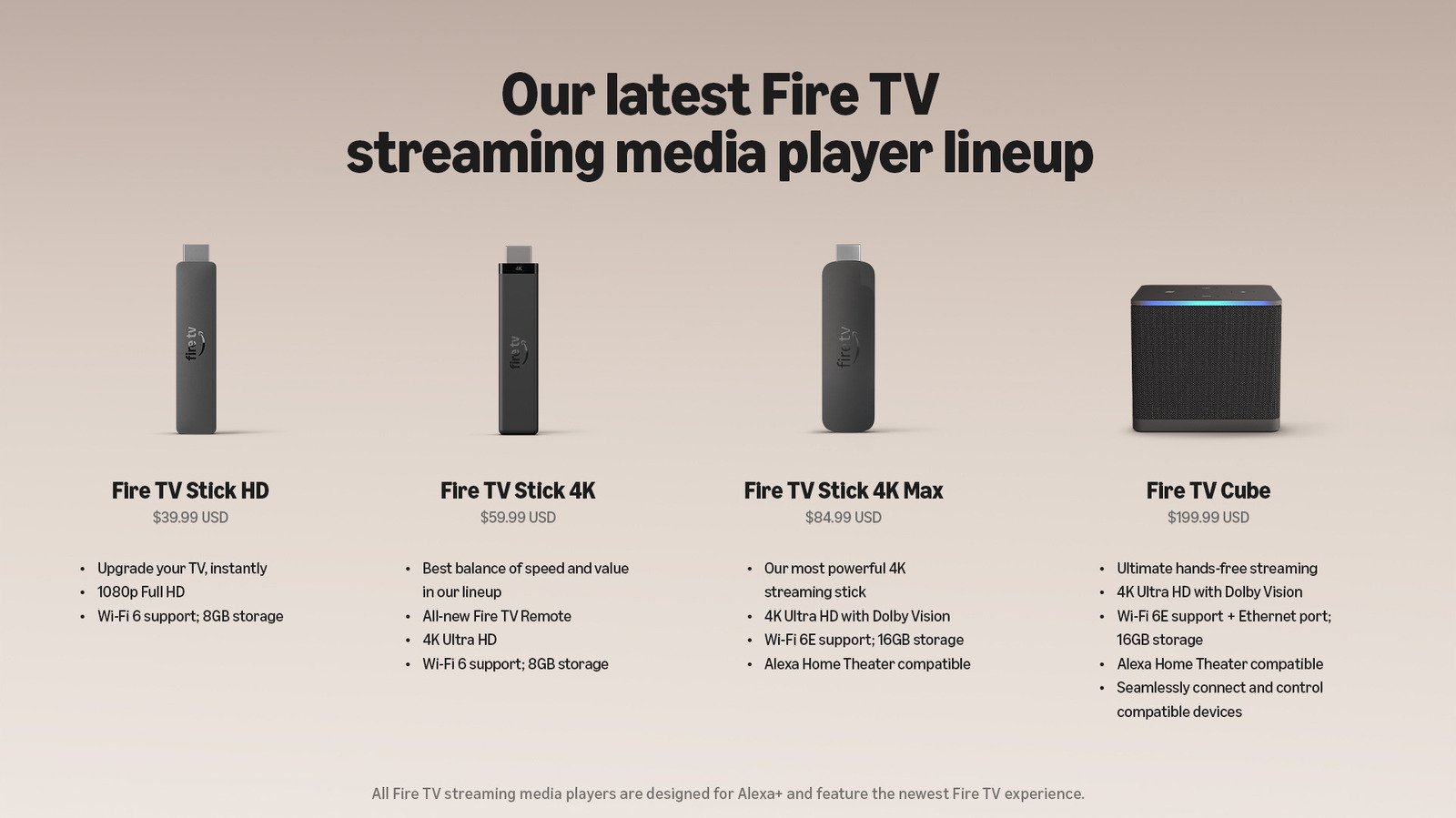
The previous lineup featured granular designations such as the Fire TV Stick 4K Select and the Fire TV Stick 4K Plus. These titles created ambiguity, as the performance deltas between the devices were often too narrow to justify separate market positions. The new, consolidated list—comprising the Fire TV Stick HD, the Fire TV Stick 4K, the Fire TV Stick 4K Max, and the Fire TV Cube—provides a clearer hierarchy of performance and cost. This reduction represents a meaningful change for users who want to quickly identify the right hardware for their television resolution and processing requirements.
Hardware Specifications and the New 4K Standard
The core of the recent announcement centers on the standard Fire TV Stick 4K, which has been positioned as the middle ground for users who want ultra-high-definition playback without the premium internal features found in the Max variant. This new iteration functions as a successor to the previous, more fragmented 4K offerings. By collapsing the Select and Plus models into a singular 4K entity, Amazon simplifies its manufacturing and inventory logistics while simultaneously clarifying the user experience.
The Fire TV Stick HD remains the entry-level solution, serving households that rely on 1080p displays. The hardware remains compact, favoring a slim design that fits unobtrusively behind wall-mounted televisions. At the other end of the spectrum, the Fire TV Cube continues to hold its place as the flagship home theater controller. Unlike the dongle-based sticks, the Cube functions as a high-performance media hub, utilizing more robust processing power and integrated connectivity features suitable for complex smart home setups.
The Role of the 4K Max and Enhanced Performance
Sitting above the standard 4K model is the Fire TV Stick 4K Max. This device occupies a specific market segment for users who require higher clock speeds, superior Wi-Fi performance, and additional storage. The Max variant has historically been the primary choice for power users, specifically those who utilize cloud gaming services or who frequently switch between high-bandwidth applications.
By retaining the Max branding while removing the niche iterations, Amazon is clearly delineating between standard consumption and advanced hardware performance. The Max serves the demand for low-latency streaming and better responsiveness, distinguishing itself from the standard 4K stick through its architecture and hardware throughput. This distinction allows the consumer to choose based on performance intensity rather than deciphering complex marketing terminology.
Refining the Ecosystem for Consumers
The impact of this update extends beyond the product name change; it influences the entire retail journey. When products are too similar, the friction in the decision-making process increases. By reducing the lineup by 20 percent, Amazon lowers the barrier to entry. This is particularly relevant as the company approaches high-volume sales periods where consumer traffic is high, and rapid decision-making is expected.
For the average user, the benefits are two-fold. First, it simplifies comparison charts and shopping filters on the Amazon marketplace. Second, it allows for better software support lifecycles. Maintaining fewer hardware configurations enables developers to optimize Fire OS updates more effectively across the device family. When the variety of hardware is reduced to four distinct tiers, the optimization path for software updates becomes more predictable, potentially extending the longevity of the devices currently in circulation.
Strategic Pricing and Future Hardware Deployment
Amazon’s move to streamline its portfolio aligns with broader industry trends toward minimizing overhead and simplifying retail messaging. With the upcoming promotional events, the new Fire TV Stick 4K is expected to see immediate pricing adjustments. These discounts are not merely tactical; they serve to move the new consolidated lineup into as many households as possible before the next hardware iteration cycle begins.
As the industry moves toward more sophisticated streaming demands, such as higher frame rates and more complex AI-driven search features, the hardware underneath must remain consistent. By solidifying the current four-device structure, Amazon ensures that it can push feature updates to all users without being hindered by the technical variations that previously existed within its fragmented 4K catalog. This clarity is an essential step for the brand as it competes with other ecosystem-focused streaming platforms that have also moved toward more straightforward and accessible product lineups. Through this consolidation, the company is prioritizing user clarity over the exhaustive, and often confusing, product sprawl of previous years.
Disclaimer: This content is auto-generated for informational purposes only.
Source: Read Original News