






Drought Crisis Grips Maharashtra: National Food Security Concerns Mount
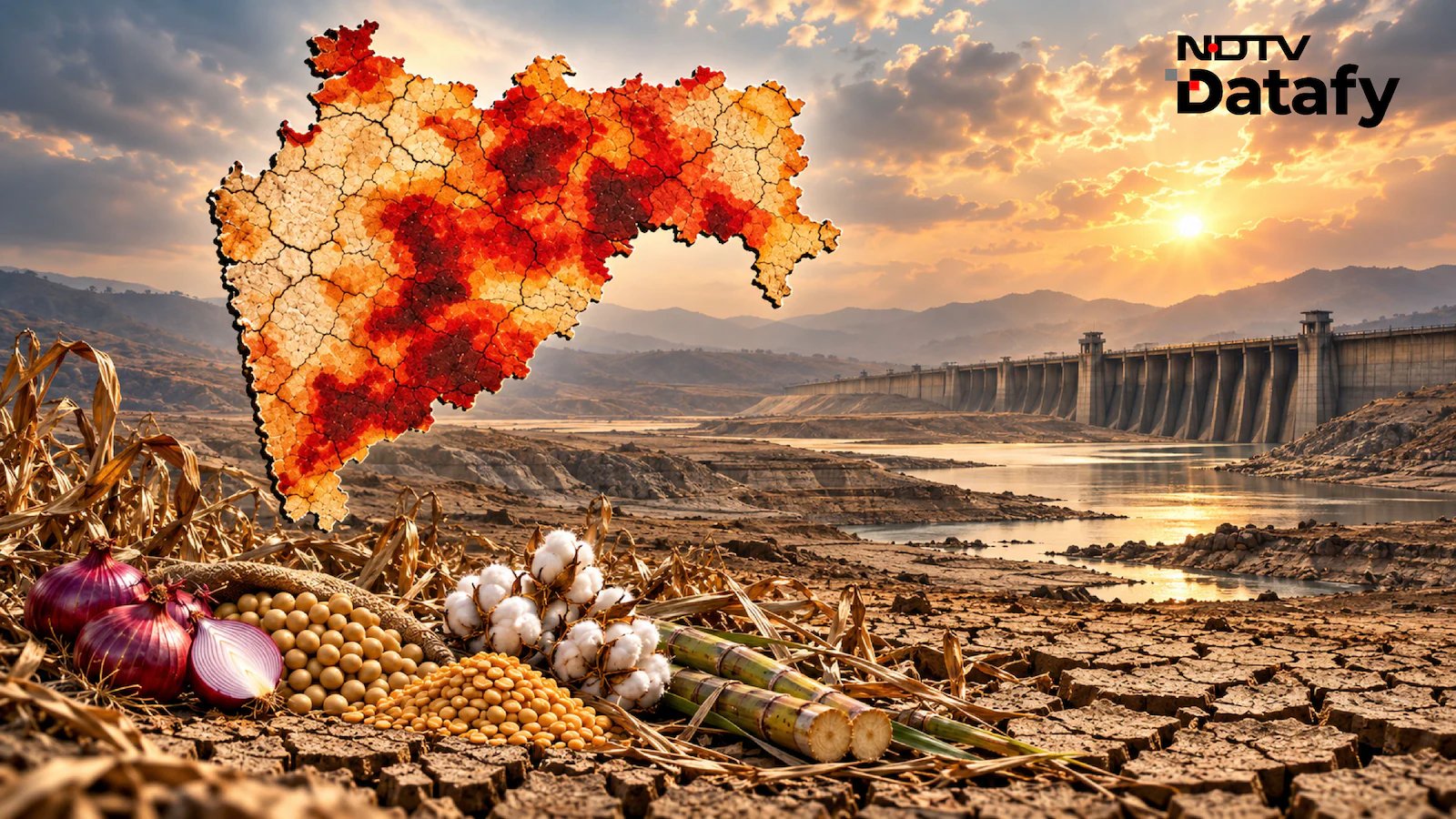
Large swathes of Maharashtra are currently reeling under severe to exceptional drought conditions, triggering widespread alarm. As a vital agricultural powerhouse for India, the state’s struggle is not merely a regional crisis; it serves as a warning sign for potential disruptions to the national food supply chain and rising inflation.
Agriculture Under Stress
Maharashtra acts as a foundational pillar for India’s agricultural output, consistently ranking among the top producers of critical commodities such as soybeans, tur dal, cotton, sugarcane, and onions. However, the current moisture deficit has placed these essential crops under significant physiological stress.
The state is particularly vulnerable due to its reliance on rain-fed Kharif crops. Soybean and tur dal, which constitute primary sources of edible oil and protein respectively, are facing the brunt of the dry spell. Maharashtra accounts for a staggering 38.5% of India’s total soybean production—nearly 4.85 million tonnes. Furthermore, the state contributes nearly one-third of the nation’s tur dal supply. Any significant shortfall in these commodities from Maharashtra’s fields is expected to reverberate across domestic markets, likely driving up food prices for millions of households.
Declining Water Reserves
The severity of the drought is starkly reflected in the state’s plummeting water infrastructure. Government data indicates that live storage in major dams across Maharashtra has dropped to 75.5% of total capacity. This represents a concerning decline compared to the 88.3% recorded during the same period last year.
The situation is most dire in the Chhatrapati Sambhajinagar region, where reservoir levels have crashed to just 45.4%—nearly half of what was available a year ago. Similar downward trends in storage have been reported in the Nagpur, Amravati, Nashik, and Konkan regions. These reservoirs are the primary lifeline for irrigation; as levels continue to dwindle, the ability of farmers to sustain crops through the remaining growth cycles is being severely compromised.
A Wider Economic Impact
The implications of this drought extend well beyond the farm gates of rural Maharashtra. With the state being a primary producer of raw materials for both the oilseed and textile industries, local shortages could lead to supply chain bottlenecks.
Policy experts have already voiced concerns about the cumulative impact on national food inflation. As the state administration grapples with the declaration of drought across 74% of its territory—impacting 265 out of 358 talukas—the challenge remains to balance immediate water management with long-term crop protection.
For the time being, farmers are trapped in a precarious cycle. While some crops may show resilience, the lack of timely rainfall and depleted irrigation resources suggest that the upcoming harvest season will be far from routine. As the central government and state authorities monitor the situation, the nation waits to see whether the drought will necessitate emergency measures to stabilize prices and support the distressed farming community.
Disclaimer: This content is auto-generated for informational purposes only.
Source: Read Original News