








The Earth’s surface, when viewed from several thousand feet above, undergoes a startling transformation. What appears on the ground as disparate industrial sites, waste management facilities, or agricultural expanses reveals itself from the air as a complex, often unsettling, tapestry of human intervention. A new exhibition featuring the work of photographer and environmental activist J. Henry Fair brings this aerial perspective into sharp focus, offering a stark visual record of how industrial processes reshape the natural world.
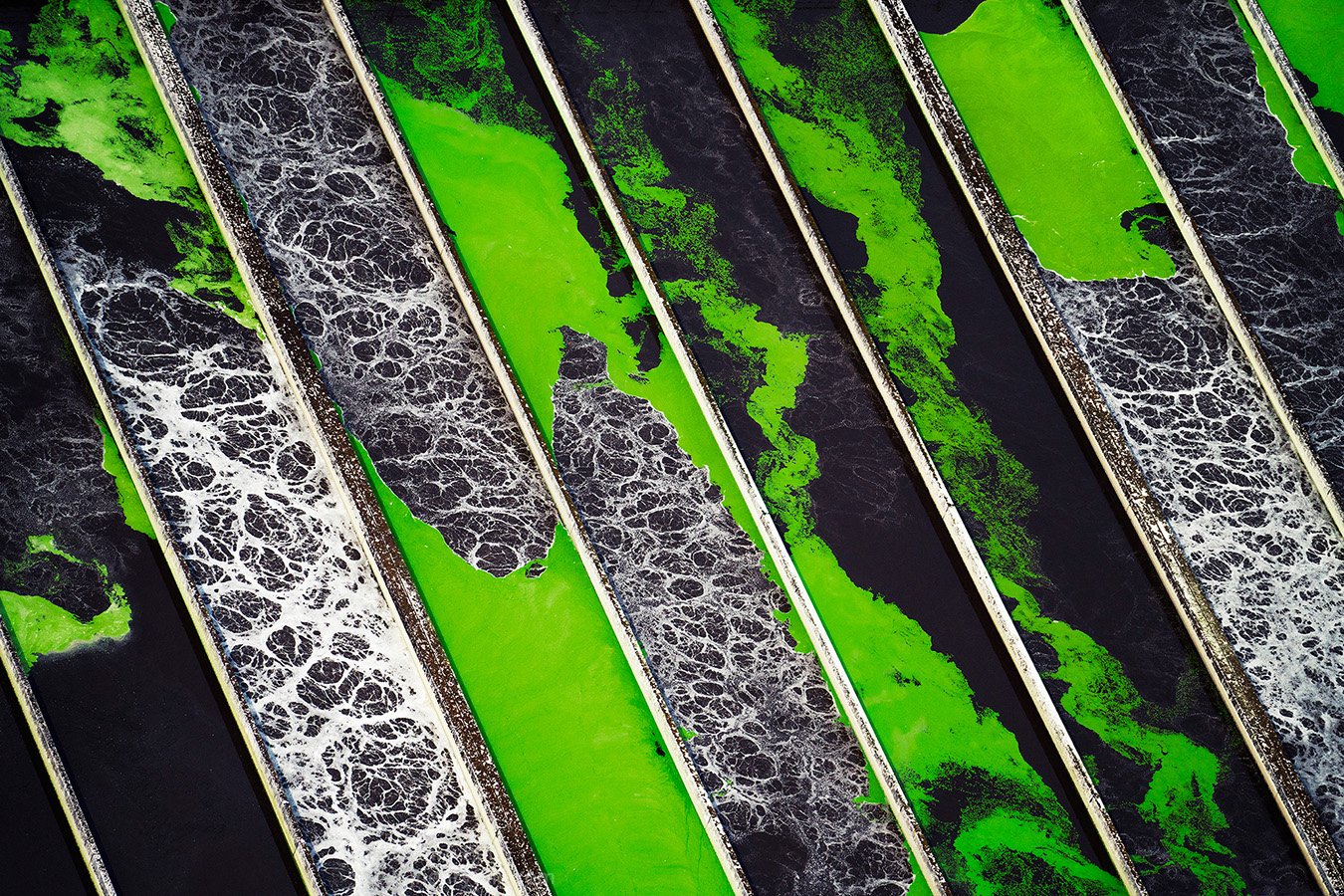
Fair’s photography does not rely on traditional landscape aesthetics. Instead, he treats the geography of extraction and production as a living canvas. His images capture the vibrant, almost painterly colors of chemical runoff, the jagged geometry of strip mining, and the sprawling, rhythmic patterns of deforestation. By removing the immediate context of the individual site, these aerial shots emphasize the sheer scale and systemic nature of humanity’s environmental footprint.
Among the featured works are images documenting the legacy of coal-fired power plants, where the byproducts of electricity generation—coal ash and wastewater—create artificial lagoons of striking, yet toxic, hues. In other frames, the viewer is confronted with the intricate, vein-like structures of clearing operations in the rainforest, illustrating the systematic fragmentation of ecosystems. The photographs serve as a bridge between the abstract data of environmental degradation and the visceral reality of physical change.
The exhibition underscores a critical tension in modern environmental discourse: the disconnect between consumption and consequence. Most consumers interact with the products of industrial processes—electricity, plastics, metals, and fuel—without ever witnessing the terrestrial scars required to produce them. Fair’s work aims to bridge this gap. By aestheticizing these sites, he invites viewers to look longer and deeper at subjects they might otherwise ignore or find too repulsive to acknowledge. The beauty inherent in the patterns of pollution acts as a “Trojan horse,” pulling the observer into a contemplation of the industrial mechanics that sustain global economies.
Environmental scientists and activists have long noted the difficulty of communicating the scale of planetary change. Satellite imagery has become a standard tool for monitoring climate change, deforestation, and water loss, but these images are often functional and sterile. Fair’s approach adds a layer of interpretative depth, framing environmental damage not merely as a technical problem but as a profound alteration of the planet’s identity. The images suggest that human activity has effectively become a geological force, shaping the terrain with the same intensity as volcanic eruptions or glacial shifts.
Beyond the immediate visual impact, the collection serves as a historical document. As policy shifts toward decarbonization and circular economies, these photographs provide a baseline for the landscapes of the fossil fuel era. They document the transition zones where energy production meets ecological survival, highlighting the locations where the cost of human convenience is paid in full by the environment.
The exhibition does not provide solutions, nor does it moralize in the traditional sense. Its power lies in its unflinching objectivity. By presenting the landscapes as they are—without the mediation of slogans or political framing—Fair forces the viewer to confront the physical evidence of the Anthropocene. The images demand that we question the sustainability of current industrial models and consider the long-term legacy of the shapes we are currently carving into the Earth’s crust.
As we move deeper into a century defined by the urgency of climate action, these aerial perspectives offer a necessary reality check. They remind us that for every switch flipped or package opened, there is a physical location undergoing a profound and often permanent metamorphosis. The exhibition stands as a testament to the fact that while we may live at ground level, our collective actions operate on a landscape scale that is impossible to miss once seen from the air.
Disclaimer: This content is auto-generated for informational purposes only.
Source: Read Original News