







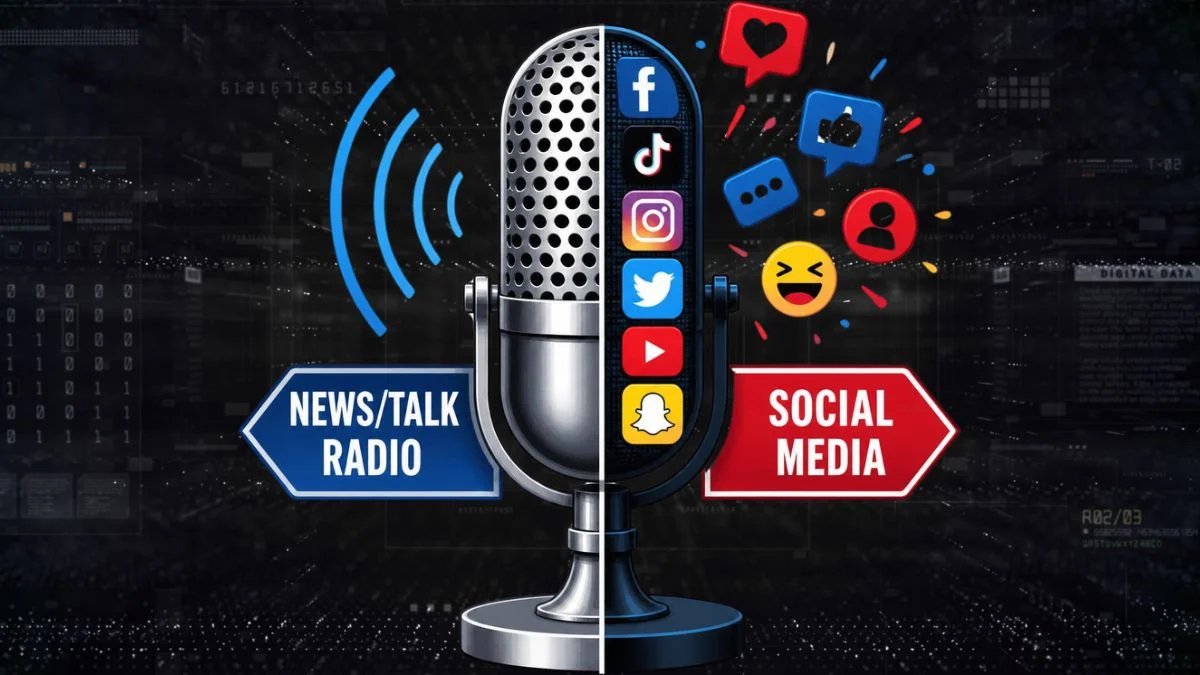
The traditional gatekeepers of news are fighting a losing battle against the clock, as the immediacy of social media threatens the relevance of news/talk radio. Across the country, veteran broadcasters are finding themselves stuck in a precarious limbo: forced to choose between waiting for official confirmation from sluggish government channels or risking their hard-earned credibility by chasing unverified rumors circulating on digital platforms.
The problem is systemic and rooted in a mismatch of expectations. In an on-demand world where listeners expect instant updates, professional newsrooms are often met with “business-as-usual” bureaucracy. A recent incident highlights the disconnect: a radio station attempting to verify a major interstate accident at 7:15 a.m. was told by state authorities that no information could be released until the Public Information Officer (PIO) arrived at 8:30 a.m.
While the station waited for the official word, the vacuum of information was filled by chaotic, unverified reports from social media. These “independent journalists”—often operating without the ethical training or verification standards of professional news outlets—flood the public consciousness with real-time updates that are frequently inaccurate.
Critics argue that government communications departments have failed to adapt. Many PIOs are former newspaper or television journalists who remain tethered to outdated cycles—focused on evening broadcasts or next-day press releases rather than the relentless speed of digital life. Even cities that have bloated their communications departments to 30 or more employees are failing to provide the, “in-the-moment” communication that is vital for public safety.
The solution, according to industry insiders, lies in a fundamental shift in how public agencies handle crisis communication. Instead of withholding information until a complete, polished report is ready, officials should adopt a strategy of transparent, iterative updates. A simple statement—acknowledging a situation, providing a rough location, and offering basic safety instructions—would go a long way in curbing misinformation while giving credible media outlets the tools to keep the public safe.
Despite these hurdles, the industry remains steadfast in its belief that radio is an essential public utility. When the internet fails or mobile networks are overwhelmed by natural disasters, the humble radio broadcast often remains the only connection between citizens and life-saving information.
As media leaders continue to lobby for better access to policymakers, the goal is not just convenience—it is about restoring the standard of truth in an age of instant, often unreliable, information. By bridging the gap between government agencies and professional broadcasters, stations hope to remain the primary, trusted voice in their communities when time is of the essence.
Disclaimer: This content is auto-generated for informational purposes only.
Source: Read Original News