







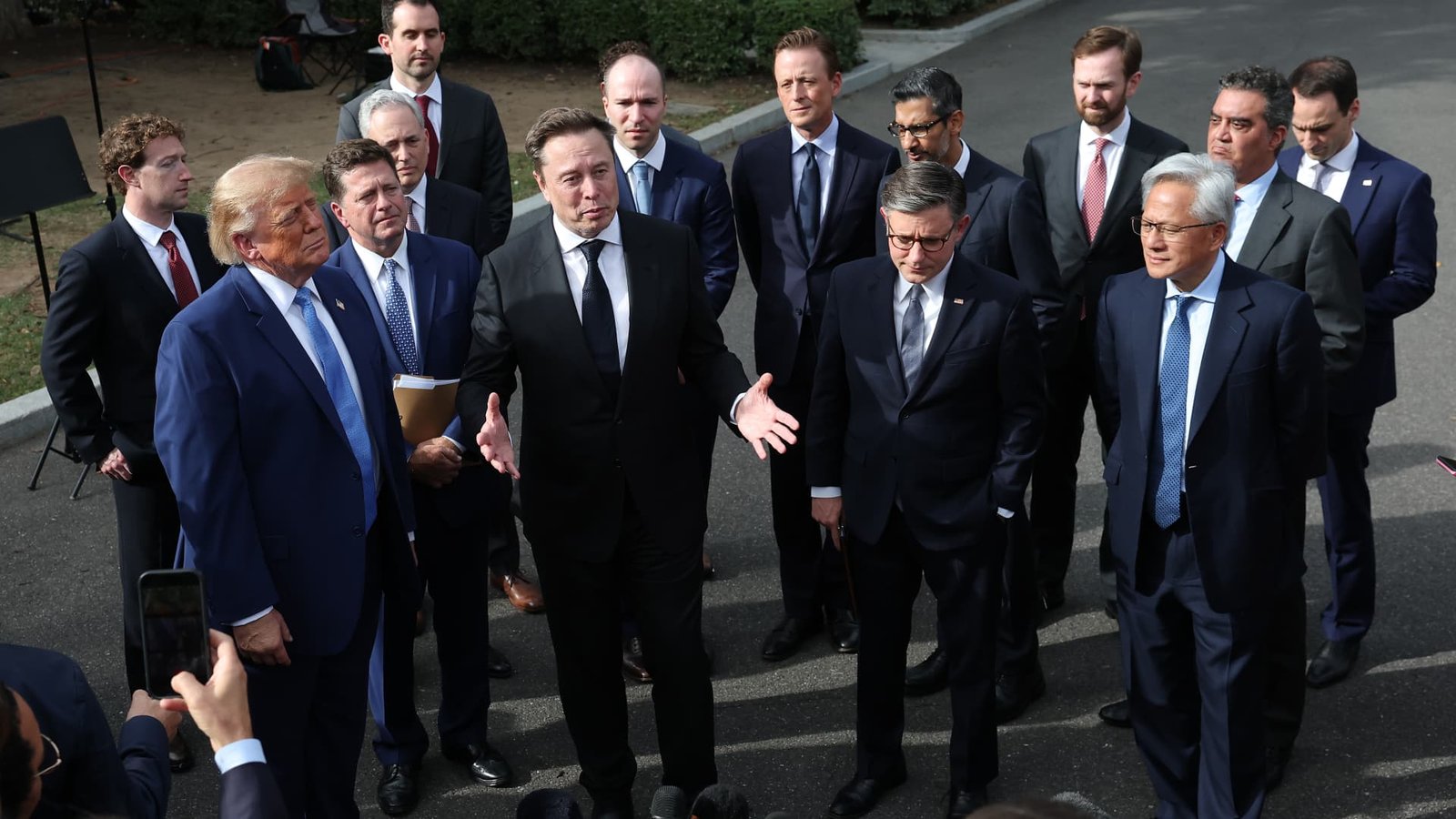
The landscape of artificial intelligence leadership was on full display at the White House this Tuesday, yet one notable vacancy sparked immediate industry chatter. As President Donald Trump hosted a high-stakes luncheon with the titans of the tech world to discuss the future of AI safety and policy, Apple was conspicuously absent. With leaders from Meta, Nvidia, OpenAI, and Google in attendance, the lack of representation from the Cupertino-based giant—which had neither former CEO Tim Cook nor current head John Ternus present—prompted questions regarding the company’s alignment with the current AI frontier.
The “Frontier” Divide
Industry analysts and investors were quick to debate whether Apple’s absence suggested a falling out or, more likely, a strategic divergence in technological focus. Brad Gerstner, CEO of Altimeter Capital, dismissed the rumors of a rift as a “nothing burger.” According to Gerstner, the attendees were specifically chosen for their roles in pushing “frontier” model development—the massive, compute-heavy language models that require sprawling clusters of GPUs to train.
Apple’s approach to artificial intelligence is fundamentally different. Rather than attempting to compete in the race for massive, cloud-based general intelligence, the company has prioritized “on-device” performance. By designing smaller, more efficient AI models that run directly on the custom silicon found in iPhones and Mac computers, Apple has carved out a unique position. Their strategy favors user privacy and hardware integration over the enterprise-scale AI arms race characterizing the agendas of Microsoft, Meta, and Google.
A Strategic Shift in Leadership
The meeting comes during a significant transitional period for Apple. Following the recent passing of the CEO baton from Tim Cook to John Ternus, the company has clarified that Cook will remain the primary figure for navigating international policy and government relations in his role as executive chairman. Despite his absence from this specific AI briefing, Cook’s track record with the Trump administration remains robust. He has maintained consistent, high-level access to the White House, frequently engaging with the president on trade, manufacturing, and regulatory issues.
Some observers suggest that Apple’s silence on “AI safety” manifestos—which have become a hallmark of its peers—is intentional. Apple has long held a policy of only entering public debates where the issue directly intersects with its business interests. Since Apple is not training frontier models that pose the systemic safety risks discussed at the White House, the company likely sees little value in participating in the broader regulatory noise currently surrounding the sector.
Market Performance and Future Outlook
Despite the external focus on Apple’s perceived distance from the AI hype cycle, the company’s financial health suggests that its strategy is resonating with investors. With stock performance up over 22% in 2026, Apple continues to outperform much of the Nasdaq, serving as a stable, consumer-focused counterpoint to the more volatile, capital-intensive AI labs.
While competitors pour billions into massive infrastructure projects, Apple continues to refine its own ecosystem. The recent rollout of its AI-enhanced Siri has garnered generally positive reviews, signaling that the company is successfully embedding intelligent features into its devices without needing to participate in every Washington policy forum. As the regulatory framework for artificial intelligence continues to solidify, Apple’s choice to remain on the periphery may prove to be a calculated maneuver, allowing them to focus on the consumer experience while the “frontier” players navigate the complexities of federal oversight.
Disclaimer: This content is auto-generated for informational purposes only.
Source: Read Original News