







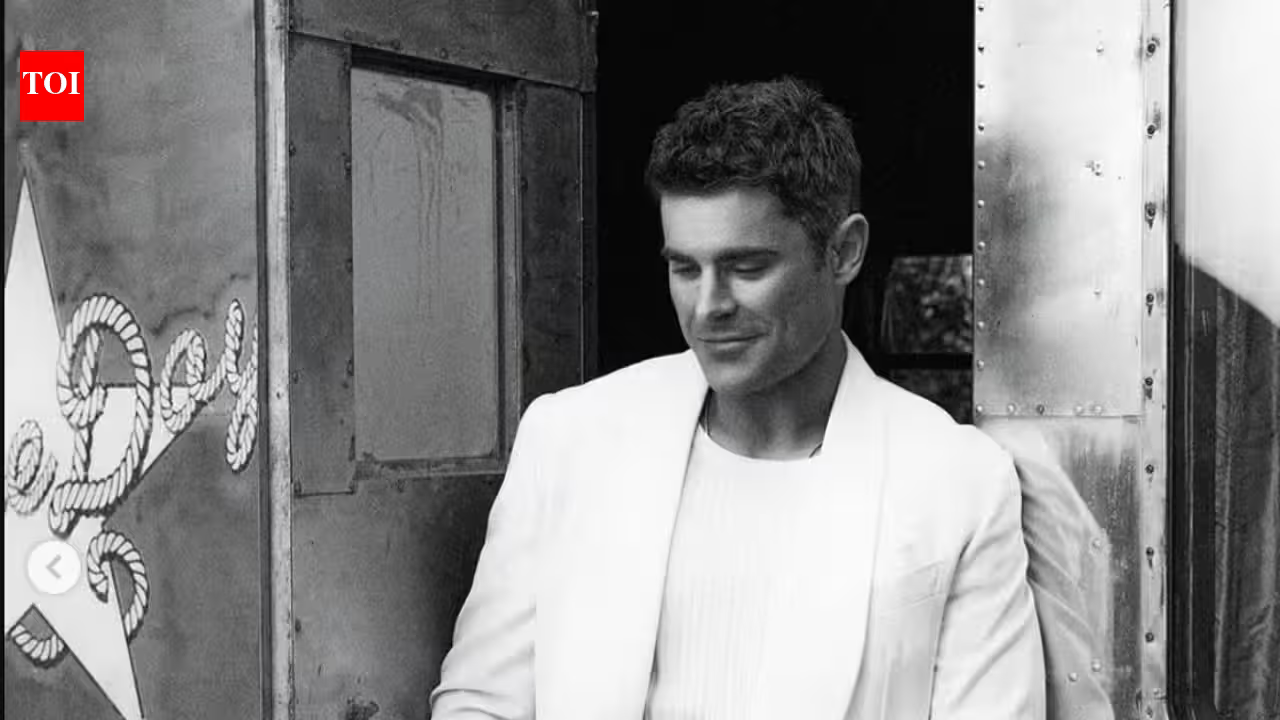
The transition from a Disney Channel poster boy to a seasoned, critically acclaimed actor is a well-trodden path in Hollywood, but few have navigated it with as much scrutiny—or as much introspection—as Zac Efron. For those who grew up watching him sing and dance in the halls of East High, it is easy to forget that the “Troy Bolton” era was a pressure cooker of public perception. Behind the perfectly coiffed hair and the chart-topping soundtracks lay the reality of a young man whose identity was largely being sculpted by a global audience.
Decades later, the most enduring lesson from Efron’s evolution isn’t found in his box office numbers or his physical transformations; it’s found in a quiet, candid admission he made during a 2014 interview. Reflecting on the chaos of his early fame and the personal struggles that followed, Efron noted, “I learned to take myself a lot less seriously, and that was a pretty valuable lesson.”
The Burden of Perpetual Perfection
In an industry that thrives on the commodification of personality, public figures are often forced into a binary: be the hero or be the cautionary tale. When you enter that ecosystem as a teenager, the line between the private self and the public brand blurs almost immediately. Every misstep is magnified; every rumor is treated as a character assessment.
For Efron, the realization that he could “take himself less seriously” served as a form of liberation. It was an admission that the suffocating weight of expectation—the need to be the flawless heartthrob, the well-behaved idol, the consistently bankable star—was fundamentally unsustainable. To take oneself seriously in the context of fame is to believe your own hype, whether that hype is positive or negative. By letting go of that rigidity, Efron wasn’t admitting defeat; he was reclaiming his humanity.
Breaking the Cycle of Performance
It’s a paradox of the modern era: the more accessible we are, the more performative our lives become. Whether you are a Hollywood A-lister or an average professional navigating a LinkedIn-obsessed career path, the pressure to maintain a curated facade is constant. We live in an age where a minor mistake on social media can feel like a professional death sentence, and the urge to “get it right” often overrides the courage to simply “be.”
Efron’s approach is a masterclass in emotional sustainability. When we take ourselves too seriously, we transform every failure into a tragedy and every setback into a referendum on our worth. By detaching his ego from the external feedback loop, Efron gained the latitude to take risks. It is no coincidence that his most compelling work—from the gritty transformation in The Iron Claw to the adventurous, globe-trotting curiosity of Down to Earth—came after he shifted his perspective. He stopped trying to play the part of “Zac Efron” and started actually living.
The High School Musical Shadow
To understand the weight behind his words, one must look at the monolithic shadow cast by High School Musical. For a generation, Efron was Troy Bolton. Being tethered to a character that defined an entire cultural moment for pre-teens is a unique kind of prison.
Many child stars implode under the weight of wanting to shed their past while simultaneously fearing their own irrelevance. Efron’s trajectory, however, was marked by a steady, deliberate pivot. He didn’t run from his past; he matured through it. He embraced roles that were messy, comedic, and even physically transformative, proving that he didn’t need the validation of his initial fanbase to maintain his relevance. His career became a testament to the idea that you don’t have to be the person the world expects you to be—you just have to be a person who is willing to grow.
Growth Through Vulnerability
The 2014 interview was a turning point because it was one of the first times Efron stripped away the PR-polished veneer. He wasn’t discussing a new project or a brand partnership; he was discussing his own resilience. In the decade since that interview, his work has shown a marked shift toward vulnerability.
Taking yourself less seriously is, counterintuitively, a sign of extreme confidence. It requires a secure foundation to acknowledge that you don’t have all the answers and that you aren’t always in control. It allows for the kind of self-deprecation that makes a person magnetic rather than untouchable. In an era of influencer culture and “main character syndrome,” this specific brand of humility is arguably the most rebellious act one can perform.
Why This Lesson Matters Now More Than Ever
If you find yourself paralyzed by the fear of being perceived, or if you are currently beating yourself up over a perceived career blunder, take a page from Efron’s mid-career pivot. The world rarely cares as much about your mistakes as you do. The frantic need to curate a perfect life is usually a byproduct of an insecure ego trying to protect itself from judgment.
Zac Efron’s journey reminds us that the most successful version of ourselves isn’t the one that never falters; it’s the one that learns to laugh at the absurdity of the climb. By letting go of the need to be a monument of perfection, he cleared the space to become an artist of substance. It turns out that the most powerful thing a person can do is acknowledge that they are just a human being, making it up as they go along. And honestly? That’s a lesson worth taking seriously.
Disclaimer: This content is auto-generated for informational purposes only.
Source: Read Original News