





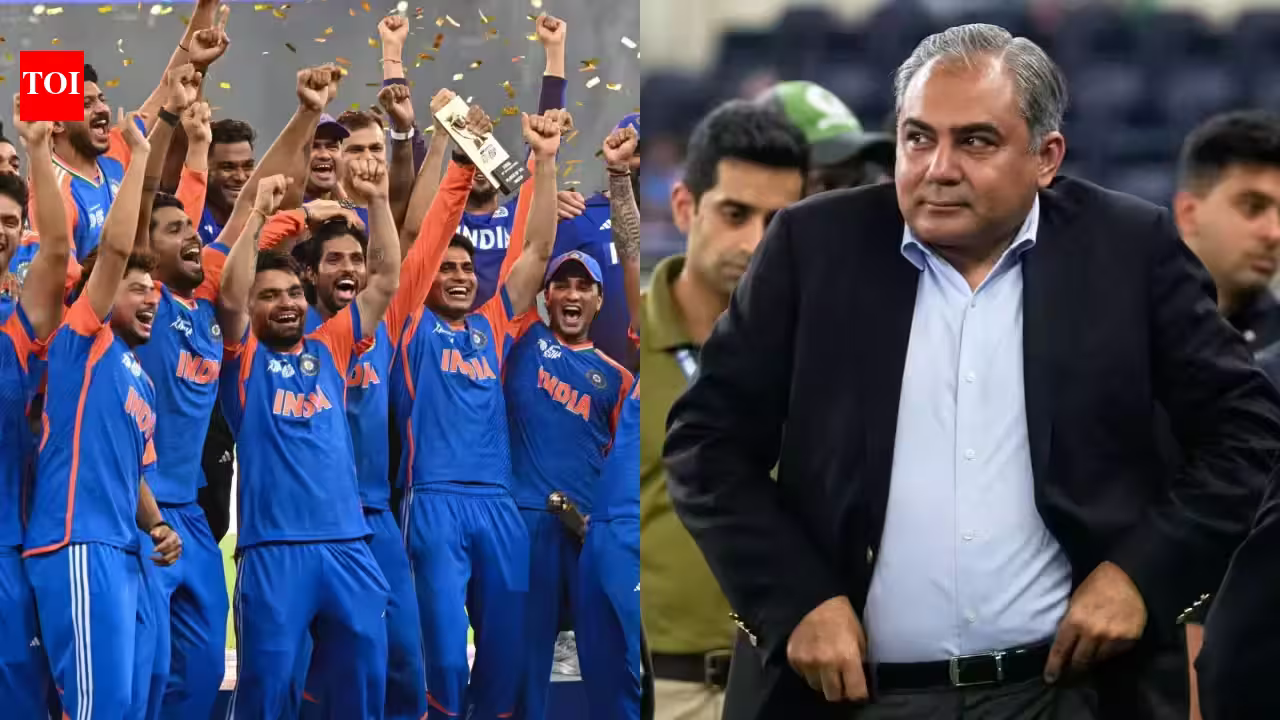
Nisshin, Japan — The geopolitical tension surrounding international cricket has reached a high-stakes standoff as the Asian Games 2026 cricket tournament reaches its climax. With India and Pakistan set to clash in a monumental gold-medal match at Korogi Park this Saturday, the atmosphere is already crackling with intensity. However, the most significant development ahead of the showdown isn’t a team lineup or a tactical change, but the confirmed absence of Asian Cricket Council (ACC) president Mohsin Naqvi.
The ACC officially announced that Naqvi, who serves a dual role as the chairman of the Pakistan Cricket Board (PCB) and the interior minister of Pakistan, would miss the tournament’s finale due to “prior commitments.” While the announcement was couched in the standard language of diplomatic sports protocol, industry insiders suggest that his absence effectively sidesteps a looming diplomatic and logistical crisis that threatened to overshadow the sporting spectacle.
A Diplomatic Dodged Bullet
The friction between the Board of Control for Cricket in India (BCCI) and the ACC president has become a fixture of recent tournaments. The roots of this animosity are deep, tied to both national security concerns and administrative governance. Indian cricket officials have maintained a firm stance that their teams would not accept trophies from Naqvi, a move largely prompted by the teams’ vocal support for the Indian armed forces involved in ‘Operation Sindoor’—a response to the tragic loss of innocent civilians during the 2025 Pahalgam terror attack.
This refusal has already played out in public view. During both the 2025 men’s Asia Cup and the subsequent women’s edition, Indian squads pointedly bypassed the standard trophy presentation process when Naqvi was on the dais. The standoff hit a boiling point when Naqvi remarked that if the Indian contingent wanted their Asia Cup trophies, they would be required to collect them directly from him—a condition the BCCI summarily ignored.
By choosing to skip the gold-medal match in Japan, Naqvi has averted a potentially embarrassing scenario at the Olympic Council of Asia (OCA) medal ceremony. Had he been present, the organizers would have been faced with the delicate task of navigating the protocol of a continental president potentially being shunned by the tournament’s most high-profile participants.
The ACC’s Official Stance
The Asian Cricket Council took to the social media platform ‘X’ to address the situation, framing the absence as a scheduling conflict rather than a calculated retreat. “ACC president, Mohsin Naqvi, will miss Finals Day at Asian Games 2026 due to prior commitments, but sends his very best wishes to all four teams ahead of the Gold and Bronze Medal Matches,” the official statement read.
Naqvi echoed these sentiments in a follow-up quote, saying, “Wishing all the participants the very best ahead of gold and bronze medal matches at the Asian Games 2026. Commitments will keep me away from Nagoya. But I will be looking forward to some thrilling action.”
While the diplomatic language remains polished, the practical reality is that Naqvi’s absence provides a clean slate for the medal ceremony. Organizers can now proceed with the podium celebrations involving the Indian Olympic Association and local officials without the risk of a televised boycott by the winning athletes.
Sporting Focus Returns to the Pitch
With the administrative drama sidelined, the focus at Korogi Park can finally shift back to the diamond. The gold-medal match between India and Pakistan is widely considered the pinnacle of the games, a rivalry that transcends the boundaries of the field. Before the main event, the bronze-medal match between Sri Lanka and Bangladesh will serve as a high-stakes precursor, setting the stage for what promises to be a day of intense competition.
For the Indian side, the tournament has been a masterclass in focus. Despite the off-field scrutiny and the pressure of the ongoing diplomatic standoff, the players have remained remarkably composed, delivering results that have kept them firmly in contention for the top spot on the podium.
The Pakistan team, under the watchful eye of the PCB, faces a massive challenge. Following a tournament characterized by fluctuating form, the pressure to secure a gold medal against their arch-rivals is immense. For Pakistan, a victory would be more than just a medal; it would serve as a vital morale boost for a board currently navigating significant internal and international pressures.
Looking Beyond the Final
The absence of the ACC president from such a high-profile event leaves several questions unanswered regarding the future of the organization and its ability to bridge the widening gap between its member nations. The BCCI’s refusal to engage with Naqvi highlights a significant fracture in the Asian cricket landscape, one that suggests the continental governing body may struggle to maintain its authority if the divide continues to deepen.
As the world turns its eyes to Nisshin, the narrative remains centered on the sport. Whether India takes home the gold or Pakistan manages an upset, the defining image of this final will be the game itself. For the organizers, the absence of the ACC president is a sigh of relief. For the fans, it is a reminder that in the world of international cricket, the boardroom is often just as volatile as the pitch.
As the sun rises over Korogi Park this Saturday, the flags will be raised, the national anthems will play, and the players will compete for the glory of their nations. For one day, at least, the focus will be entirely on the sound of leather meeting willow, rather than the sound of diplomatic deadlock.
Disclaimer: This content is auto-generated for informational purposes only.
Source: Read Original News