








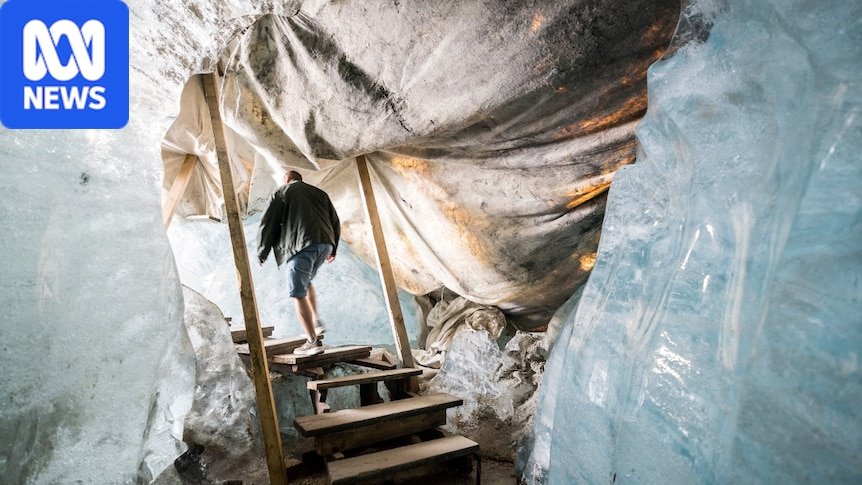
Switzerland’s iconic Alpine landscape is undergoing a transformation that scientists are calling “unprecedented,” as new data reveals a record-breaking year of glacial decay. According to a joint report from the Swiss Glacier Monitoring Network (GLAMOS) and the Swiss Commission for Cryosphere Observation, more than 5 per cent of the nation’s entire ice volume was lost in 2026 alone.
The collapse follows a winter defined by a lack of snowfall, which left glaciers vulnerable before they were battered by a record-hot summer. Heatwaves began as early as May and persisted with extreme intensity, stripping away layers of ice at a pace that has shocked researchers.
Matthias Huss, director of GLAMOS, described the current state of the Swiss Alps as being almost unrecognizable compared to just two decades ago. “Glaciers have retreated continuously over the past 100 years, but what we are seeing now is really unprecedented,” Dr. Huss said.
At the Rhone glacier, one of the most closely studied sites in the country, the situation is particularly dire. Monitoring teams reported a loss of 10 metres in ice thickness over the course of just four summer months. Dr. Huss noted that returning to the site repeatedly revealed a frighteningly rapid decline, with researchers watching the ice physically vanish before their eyes.
Professor Sonia Seneviratne, head of the Institute for Atmospheric and Climate Science at ETH Zurich, attributed the disaster to a relentless series of heatwaves. She characterized the summer as a “wake-up call” that has finally moved the issue of climate change to the forefront of Swiss politics and public discourse.
“Glaciers are one of the most beautiful illustrations of climate change,” Dr. Huss explained, noting that they provide a visible, tangible metric for a phenomenon that is often difficult to grasp. Beyond their aesthetic and cultural value, these ice fields act as critical water towers for the region, regulating flow during droughts and heatwaves. However, as the glaciers shrink, their ability to provide this vital service is rapidly diminishing.
The report highlights a grim trajectory: over the past five years, Swiss glaciers have shed nearly one-fifth of their total volume. While emergency measures—such as draping large, reflective polyester blankets over sensitive ice areas to slow the melt—have been utilized for over two decades, they are increasingly viewed as expensive, temporary “bandaids.” Some experts are now experimenting with locally sourced sheep’s wool as a more sustainable alternative to synthetic covers, but even these methods cannot reverse the long-term trend.
Dr. Huss offered a sobering conclusion regarding the future of the region. “Reducing CO2 emissions will stabilize the climate and will, with some delay, also stabilize glaciers,” he said. “But we have to be aware that for many of the small glaciers in the Alps, it’s already too late. We can’t save them.”
Disclaimer: This content is auto-generated for informational purposes only.
Source: Read Original News