







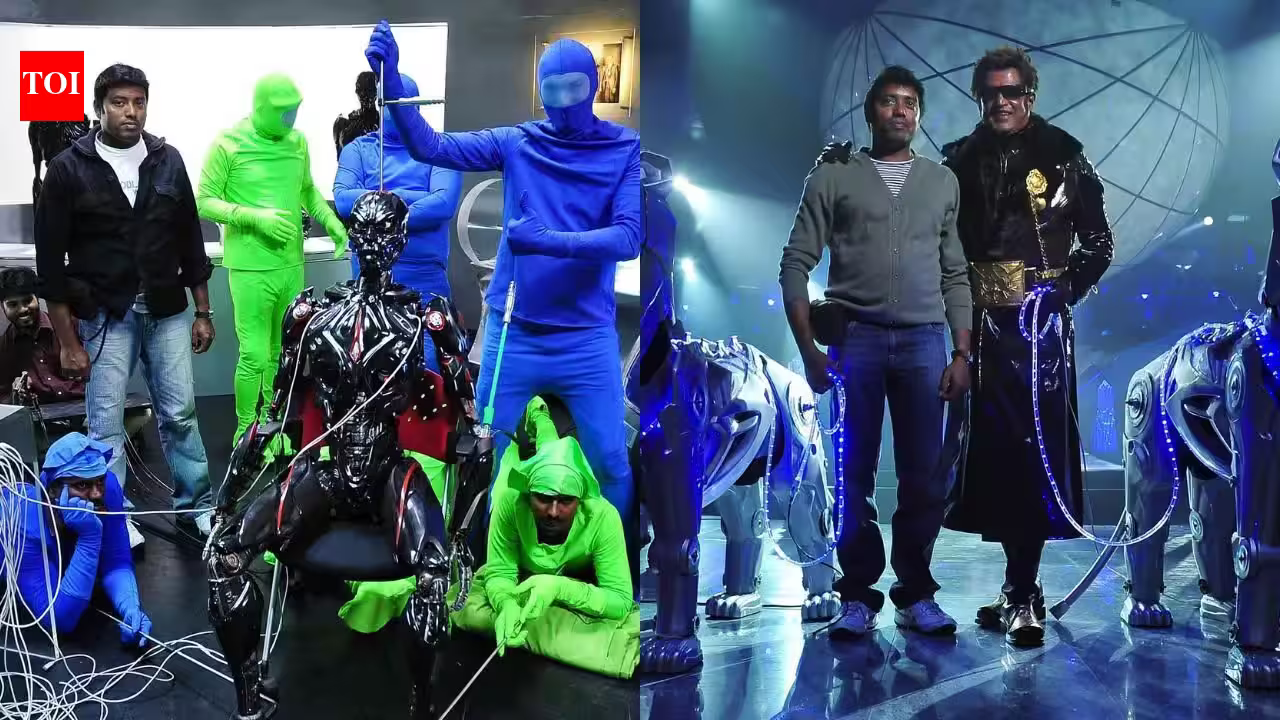
Sixteen years have evaporated in a digital blink, but for cinematographer Rathnavelu—affectionately known in the industry as “Randy”—the memories of Endhiran remain as vivid as a high-definition frame. As the magnum opus of Indian sci-fi celebrates its 16th anniversary, the man behind the lens has pulled back the curtain, offering a nostalgic look at the sheer logistical madness and creative genius that birthed Chitti the Robot.
When Endhiran (or Robot, to the global audience) hit theaters, it didn’t just break box office records; it shattered the glass ceiling of what Indian cinema could achieve visually. Today, as Rathnavelu sifts through his personal archives, sharing candid BTS snapshots on social media, he reminds us that behind the polished CGI and the larger-than-life presence of Superstar Rajinikanth lay a grueling, passionate, and deeply human endeavor.
A Time Capsule of Cinematic Chaos
Scrolling through Rathnavelu’s tribute, you don’t just see movie stills; you see a director of photography at work in a world that was being built from the ground up. One particularly striking image shows the crew swathed in green-screen body suits, hovering around the iconic Chitti. It’s a jarring contrast to the finished film, where the slick, metallic aesthetic of the robot made audiences forget they were looking at a masterclass in visual effects.
“ENDHIRAN 16 years… and these frames still carry the same magic,” Rathnavelu wrote in a caption that served as both a retrospective and a love letter to the project. For the veteran cinematographer, the film represents more than just a successful line on his resume; it’s a “time capsule” of a time when the Indian film industry dared to dream bigger, louder, and more ambitiously than ever before.
The Architect of the Vision
No director captures the spirit of scale quite like Shankar. Known for his “go big or go home” philosophy, Shankar tasked Rathnavelu with translating his high-concept vision into something grounded yet otherworldly. In his post, Rathnavelu made sure to tip his hat to the man at the helm, expressing profound gratitude for the trust placed in him.
Collaborating with the likes of A.R. Rahman for the score and the late, great visionary work of the art department, the team had to align their talents with the sheer force of nature that is Rajinikanth. Watching the BTS footage of the Superstar—switching effortlessly between the brilliant scientist Dr. Vaseegaran and the rogue, charismatic Chitti—reminds us why Endhiran remains the gold standard for the “Star Vehicle” genre. It wasn’t just about special effects; it was about capturing a screen presence that is arguably unparalleled in the history of global cinema.
Recognizing the Unsung Heroes
Perhaps the most touching aspect of Rathnavelu’s anniversary tribute was his focus on the “boots on the ground.” Large-scale productions are often sold on the names of the leads and the director, but cinema is a collective grind. Rathnavelu went out of his way to highlight his young camera team—the assistants, the focus pullers, and the grip crew who spent months sweating under the heavy equipment to make every shot count.
“And a heartfelt shout-out to my young camera team, who gave it their all,” he noted. This acknowledgment highlights a core truth of the industry: the longevity of a film’s legacy is rarely due to the work of a single auteur, but rather the cumulative exhaustion and dedication of a crew working long hours in pursuit of perfection. For them, sixteen years later, Endhiran isn’t just a blockbuster; it’s a shared rite of passage.
Why Endhiran Still Matters in 2024
When discussing the impact of Endhiran, it is easy to get lost in the technical superlatives: the record-breaking budget, the groundbreaking VFX, and the massive international reach. However, sixteen years later, the film’s staying power lies in its heart.
The story of a robot developing consciousness, love, and eventually a capacity for destruction, was a modern retelling of a Frankenstein-esque myth, polished with the sheen of a blockbuster. It proved that Indian audiences would embrace high-concept science fiction if the emotional stakes were high enough. The chemistry between Rajinikanth and Aishwarya Rai Bachchan gave the film a warmth that the cold steel of the robot couldn’t replicate, creating a balance that few subsequent sci-fi attempts have managed to strike.
As we look at the current landscape of Indian cinema—which is increasingly obsessed with “Pan-India” spectacles and massive visual effects budgets—it’s clear that the path was blazed by Endhiran. It taught producers that if you provide the budget, the talent, and the right creative vision, the audience will follow.
Rathnavelu’s reflection serves as a poignant reminder that while technology evolves and CGI gets sharper, the core of cinema remains the same: it’s about a group of people coming together to create something that shouldn’t exist, driven by a passion that, sixteen years later, still resonates through the screen. As the cinematographer himself put it, “Some journeys never really leave you.” And for millions of fans who remember the first time they saw that mechanical eye blink on screen, the journey of Endhiran feels like it’s only just beginning to cement its status as a permanent classic.
Disclaimer: This content is auto-generated for informational purposes only.
Source: Read Original News