







Surat Textile Sector Pivots to Energy Efficiency Amid Soaring Coal Costs
The industrial landscape of Surat, the nerve center of India’s textile processing industry, is undergoing a vital transformation as local stakeholders confront the challenge of escalating operational expenses. With coal prices reaching unprecedented highs, the South Gujarat Textile Processors Association (SGTPA) has launched a strategic initiative to fortify the sector’s bottom line by prioritizing energy conservation and technical proficiency.
Empowering Boiler Operators through Specialized Training
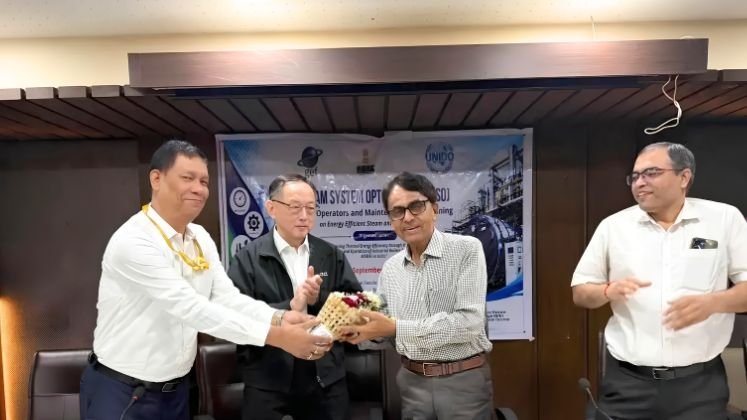
Recognizing that inefficient steam systems are a major drain on resources, the SGTPA has kicked off a comprehensive four-day training programme focused on Steam System Optimisation (SSO). The initiative is being facilitated in partnership with the National Institute for Micro, Small and Medium Enterprises (NI-MSME), Hyderabad, operating under the Union Ministry of MSME’s Energy Efficiency Improvement of Boilers (EEIB) project.
Jitu Vakhariya, President of SGTPA, emphasized that the primary motivation for this intensive skill-building exercise is to curb avoidable energy losses. “With the cost of raw materials and fuel rising, our textile processing units must move toward smarter consumption patterns. By optimizing our boiler and thermopack usage, we can achieve significant reductions in fuel requirements, which directly benefits our production margins,” Vakhariya stated.
Expert-Led Curriculum and Hands-On Learning
The training curriculum is meticulously designed to bridge the gap between theoretical knowledge and industrial application. The first half of the programme immerses participants in critical areas such as boiler combustion techniques, coal quality management, heat-loss mitigation, and advanced maintenance practices. The latter half transitions into the field, featuring two days of practical industrial visits where operators can apply classroom insights directly to their plant machinery.
Providing global expertise to the local workforce is Dr. Somchai Dechapanichkul, an esteemed chemical engineer with a PhD from the University of Iowa. Dr. Dechapanichkul, who previously chaired Thailand’s Energy Management Standard Technical Committee, is spearheading the sessions. His involvement brings international best practices in energy management and steam system integrity to Surat’s boiler operators, equipping them with the tools to manage fuel consumption with greater precision.
Scaling the Initiative for Regional Resilience
The positive reception from Surat’s technical workforce signals a growing awareness of the need for sustainable industrial practices. Beyond mere cost-cutting, the programme aims to foster a culture of operational excellence within the textile clusters.
Looking ahead, the success of this initiative is likely to trigger a ripple effect across the region. Kamalvijay Tulsian, President of the Pandesara Industrial Association, highlighted that this pilot programme is just the beginning. “The goal is to replicate this model across various industrial belts in the region. By standardizing energy-efficient practices, we can protect the competitiveness of our local industries against the volatility of global fuel markets,” Tulsian noted.
As Surat continues to play a pivotal role in India’s textile economy, such collaborative efforts between associations, government institutes, and global experts are becoming essential. By transforming boiler operators into energy managers, the region is not only addressing its immediate economic challenges but also moving a step closer to a more sustainable and efficient manufacturing future.
Disclaimer: This content is auto-generated for informational purposes only.
Source: Read Original News