







Large parts of the UK face several months of continued water scarcity as authorities warn that the nation remains at significant risk of drought. Despite a brief period of unsettled weather last month, experts from the Met Office and the Environment Agency have cautioned that the recent rainfall was insufficient to address the deep-seated water deficits accumulated throughout an exceptionally dry spring and a record-breaking summer.
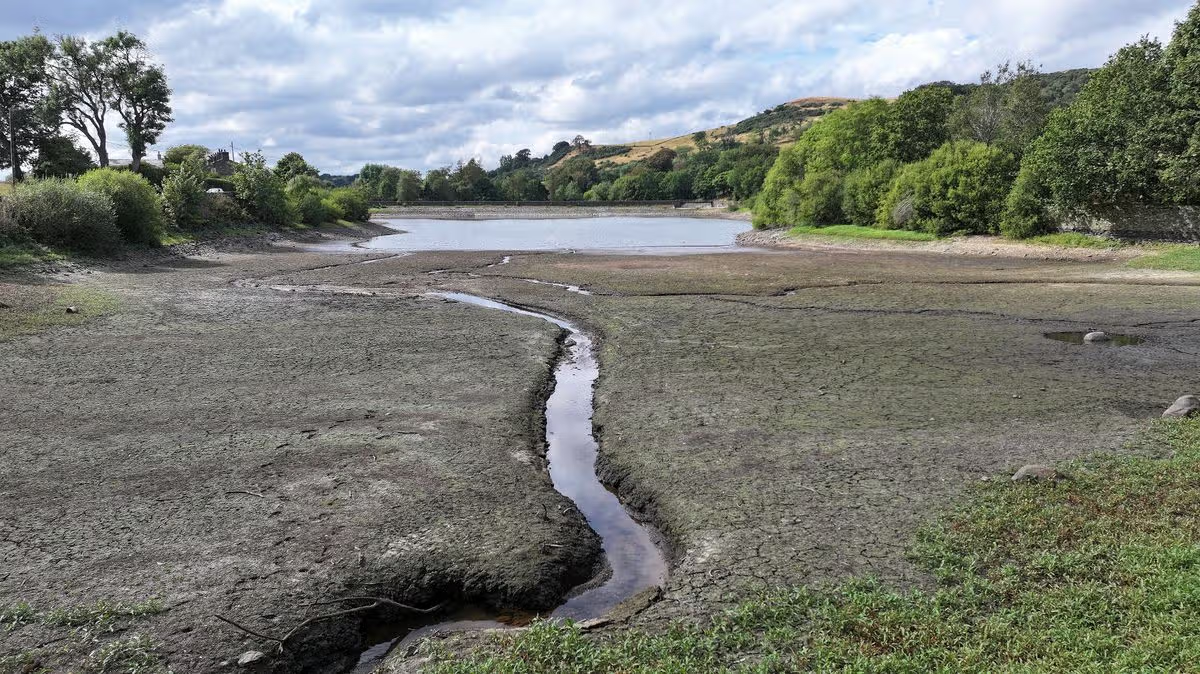
Water supplies remain under heavy strain, with many reservoirs across the country described as “concerningly low.” Data provided by the Met Office reveals a stark picture of the moisture deficit; by September 29, many regions had recorded only one-third of their average monthly rainfall. This lack of replenishment follows a summer that was officially confirmed as the hottest on record for the UK, triggering formal drought declarations across all of Wales and more than two-thirds of England.
Philip Duffy, Chief Executive of the Environment Agency, underscored the severity of the situation, noting that short-term weather fluctuations are not a substitute for the consistent, heavy rainfall required to restore natural systems. “September’s rainfall has been welcome, but a few weeks of unsettled weather is nowhere near enough to reverse the water deficits caused by a dry spring and record hot summer,” Duffy stated.
He further clarified the threshold for recovery, emphasizing that a drought is only considered officially ended when groundwater, rivers, and reservoir stocks return to normal seasonal levels. According to the Environment Agency, achieving this state will require months of sustained, significant precipitation. Until such conditions arrive, the agency warns that water supplies will remain limited and the overall status of the nation’s water health will stay critical.
The meteorological outlook provides little immediate relief. While light showers are forecast, they are not expected to be heavy or widespread enough to make a meaningful dent in the dryness of the landscape. Recent data further highlights the unusual nature of the season: September 2026 was the joint fourth warmest September on record, with temperatures dating back to 1884. The average temperature for the month was 14.6C, with late-month spikes reaching as high as 28.1C.
Regional data shows that the heat was persistent across the UK. England experienced its third warmest September, while Northern Ireland and Wales saw their fourth and joint sixth warmest, respectively. In Lincolnshire, some areas received only 33% of their typical September rainfall, a figure mirrored in many other parts of the country where totals failed to cross the 40% mark.
Looking ahead, the unseasonable warmth is expected to continue. Forecasters predict temperatures could reach 21C in the Southeast of England early next week, with some areas potentially seeing even higher figures on Monday. While light drizzle is expected in parts of Northeast England on Tuesday, meteorologists note that this precipitation will move eastward quickly, offering no sustained benefit to the parched ground or depleted water reserves. As the UK heads into the final quarter of the year, the combination of high temperatures and low reservoir levels remains a primary concern for water management and environmental stability.
Disclaimer: This content is auto-generated for informational purposes only.
Source: Read Original News