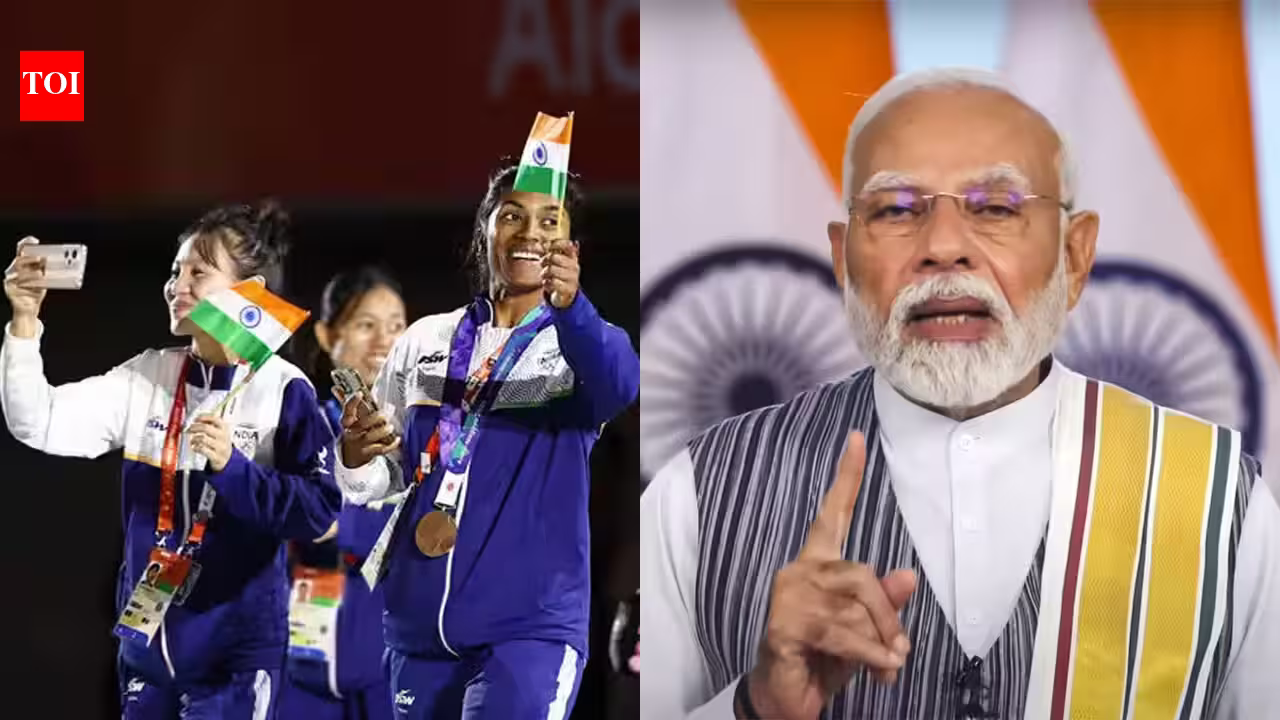






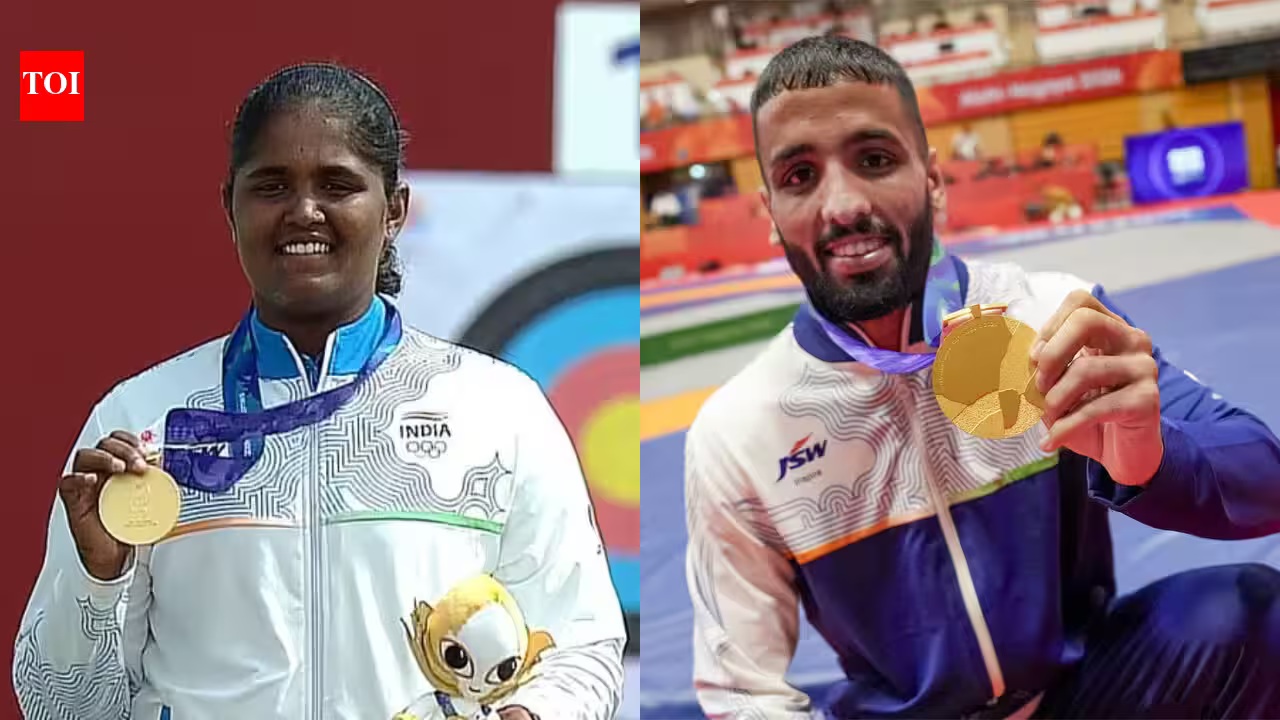
NEW DELHI: The echoes of victory from the Aichi-Nagoya Asian Games are still reverberating across India, but for two standout athletes, the accolades have only just begun. Following a historic campaign that saw India secure 85 medals—including 21 gold, 27 silver, and 37 bronze—the Indian Olympic Association (IOA) has officially named teenage archery sensation Kumkum Mohod and powerhouse wrestler Sujeet Kalkal as the recipients of the inaugural Jaspal Rana Award and the Raja Randhir Singh Award, respectively.
These newly instituted honors were designed by the IOA to serve as a benchmark for excellence, recognizing the most impressive male and female athletes of the Games while paying tribute to the legendary figures who have helped shape the landscape of Indian sports. For Mohod and Kalkal, the awards act as formal recognition of their pivotal roles in steering India to a fourth-place finish in the overall medal standings.
Mohod Ends South Korea’s Long Reign
If any athlete defined the term “breakthrough,” it was 17-year-old Kumkum Mohod. Making her debut on the grandest continental stage, Mohod did more than just compete; she shattered a glass ceiling that had been considered impenetrable for nearly three decades.
Competing in the women’s recurve event, Mohod spearheaded an Indian team effort alongside Ankita Bhakat and Kirti to secure the gold medal. The victory was historic, effectively ending South Korea’s iron-fisted dominance in the event, a streak that had remained unbroken since the 1998 Bangkok Asian Games. Not content with a team triumph, Mohod returned to the line to clinch the individual recurve gold as well. In doing so, she became the first athlete in the discipline’s history to ensure that South Korean women walked away without a recurve gold medal, while simultaneously booking a vital quota place for India for the 2028 Los Angeles Olympics.
IOA President PT Usha was quick to draw comparisons between the young prodigy and the iconic shooter for whom her award is named. “It is fitting that Kumkum is the first recipient of the Jaspal Rana Award, as Jaspal too burst onto the scene as a prodigy at the 1994 Asian Games,” Usha remarked. “Her composure under pressure and her ability to find her best form when her back was to the wall augur extremely well for Indian Archery.”
Usha remains bullish on the future of the sport, suggesting that Mohod’s performance represents a paradigm shift. After agonizingly close calls at the Paris Olympics, the IOA chief believes the “final frontier” of an Olympic medal in archery is now well within reach for the 2028 cycle.
Kalkal Turns a Lost Final into Gold
While Mohod’s dominance was characterized by clinical precision, Sujeet Kalkal’s path to the Raja Randhir Singh Award was defined by raw, unadulterated grit. The 23-year-old wrestler’s performance in the men’s 65kg freestyle category will likely be studied by future generations of combat athletes as a masterclass in resilience.
Kalkal’s run to the top of the podium was anything but conventional. He displayed his pedigree by dispatching reigning Olympic champion Kotaro Kiyooka of Japan in a high-stakes semifinal. However, it was his gold-medal bout against Abdulmazhid Kudiyev that truly cemented his legacy. Down 2-9 with only moments remaining on the clock, the odds of a comeback appeared mathematically insurmountable. Yet, in a display of sheer willpower, Kalkal rallied to secure a breathtaking 10-9 victory.
This performance served as a torch-passing moment for Indian wrestling, following the footsteps of stalwarts like Yogeshwar Dutt and Bajrang Punia, who claimed gold in the same weight class in 2014 and 2018.
Reflecting on the match, PT Usha emphasized that it was the manner of the victory—the refusal to accept defeat—that set him apart. “Wrestling is India’s sport, and Sujeet’s performance will be spoken of for years to come,” Usha said. “The gold medal will be celebrated, but his never-say-die attitude and refusal to accept silver have earned him a special place in the hearts of all Indians.”
Usha has set high bars for the young wrestler, stating she would be rooting for him to deliver India’s inaugural wrestling gold at the Olympic level in two years’ time.
A New Era for Indian Sport
As the IOA prepares for a formal felicitation ceremony in the coming days, the recognition of Mohod and Kalkal signals a shifting tide in Indian athletics. The Jaspal Rana and Raja Randhir Singh Awards are not merely tokens of appreciation; they are symbols of a high-performance culture that the IOA is desperate to foster.
With 85 medals in their pockets and a new generation of leaders emerging, the Indian contingent has proven that they are no longer just participating in continental events—they are now the ones setting the pace. For Kumkum Mohod and Sujeet Kalkal, the road to Los Angeles 2028 begins with these awards, but both athletes have already proven that they have the talent and the temperament to stand atop the podium on the world’s biggest stage.
Disclaimer: This content is auto-generated for informational purposes only.
Source: Read Original News