







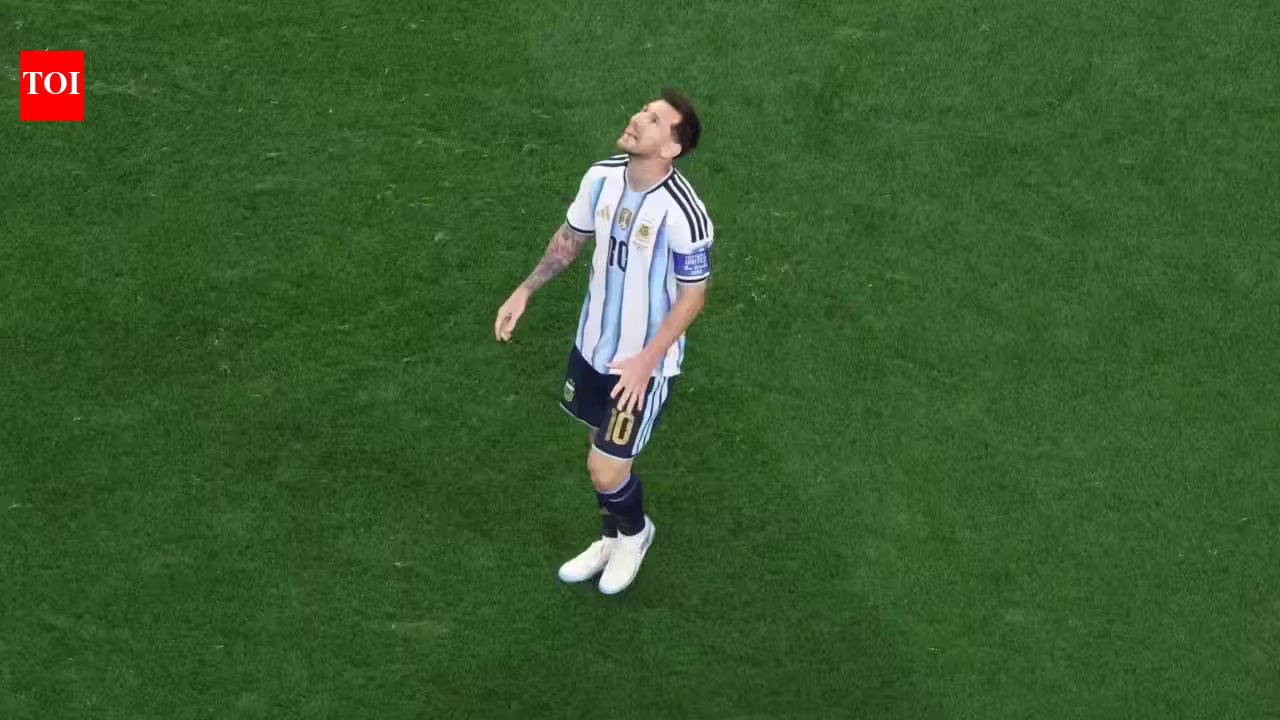
BUENOS AIRES — When Lionel Messi steps onto the immaculate pitch of the Estadio Monumental this Tuesday for a final bow against Benin, he will be doing more than simply playing a football match. He will be closing the book on an international odyssey spanning over two decades—a journey that transformed him from an unrecognizable teenager residing in a foreign land into the heartbeat of a nation.
For many, it is difficult to imagine a world where the name “Messi” wasn’t synonymous with the blue-and-white stripes of Argentina. Yet, the story of his integration into the national fold is one of accidental discovery, administrative confusion, and, ultimately, a profound, hard-won devotion.
The Anonymous Prodigy
In the early 2000s, while Lionel Messi was honing his otherworldly talents within the hallowed halls of FC Barcelona’s La Masia academy, the Argentine Football Association (AFA) was largely oblivious to the treasure sitting on their doorstep. During that era, Spain—keen to secure the future of the diminutive wizard—had already recognized his potential, but back home in Argentina, officials were scrambling just to get his name right.
The anecdotal evidence of this disconnect is striking. During the 2003 Under-17 World Cup in Finland, a young Cesc Fabregas, Messi’s teammate at Barcelona, famously warned Argentine delegates after a match, “You lost to us because we’ve got your best player at Barcelona and he’s a genius.”
The AFA’s internal struggles were equally profound. When administrators finally attempted to make contact, they were forced to scour a residential telephone directory in Rosario. In a moment of comical irony that sounds like urban legend, an AFA employee named Omar Souto called the family residence asking for “Leonardo.” He was swiftly corrected: it was Lionel. Later, in official correspondence sent via fax to Barcelona, officials mistakenly referred to the prospect as “Mecci,” suspecting that the boy with the Spanish address must surely be of Italian descent.
A Love Under Construction
“Messi was like suddenly finding out you have an 18-year-old son,” observes Sergio Levinsky, author of Messi and Everything Else. “You have to start loving him without having known he existed. It was a love under construction.”
That construction was far from seamless. Upon his introduction to the youth setup, Messi faced a wall of skepticism. Because he had bypassed the traditional Argentine domestic circuit, he was viewed by some as an outsider—a “foreigner” who lacked the necessary grit associated with the South American style of play. This resentment festered during the early years of his senior career, where unfair comparisons to his Barcelona exploits led to the derogatory label of “pecho frio”—suggesting a lack of passion or “heart” for the national cause.
The turning point was not a glorious goal or a trophy, but a demonstration of sheer human endurance. During a grueling 2011 World Cup qualifier against Colombia, in oppressive conditions, a visibly exhausted Messi—at times physically ill on the pitch—dragged his side to victory. It was the moment the public stopped seeing a distant European star and started seeing one of their own.
The Rise of the Undisputed Leader
The narrative of his relationship with the country reached its crescendo following his brief, heartbreaking retirement after the 2016 Copa America final. That moment of vulnerability triggered a massive public outcry in Argentina, as the fans finally shifted the burden of responsibility away from his shoulders. They realized, at long last, that Messi wasn’t the reason they were failing to capture major titles; he was the reason they were reaching the finals in the first place.
Under the stewardship of manager Lionel Scaloni, the final evolution of the Messi era took hold. The captain became more vocal, more expressive, and fundamentally more integrated into the collective spirit of the squad. The result was a golden period: two Copa America titles and the crowning achievement of the 2022 FIFA World Cup.
Legacy Beyond the Debate
As the sun sets on his international tenure, the inevitable comparisons to the legendary Diego Maradona have reached a fever pitch. However, many who have covered both careers suggest that the “who is better” debate is entirely reductive.
“It is Messi and Maradona,” Levinsky argues. “They were both geniuses in different eras.”
On Tuesday, when the final whistle blows at the Monumental, it will mark the end of a long, winding road from suspicion to absolute adoration. Argentina didn’t just find a player; they discovered a leader who, despite all the early administrative errors and misplaced doubts, proved that he was, and always had been, the quintessential Argentine icon. He leaves behind not just a legacy of trophies, but a testament to the fact that even the most complex relationships, when built on mutual respect and shared struggle, can result in the most enduring love stories in sport.
Disclaimer: This content is auto-generated for informational purposes only.
Source: Read Original News