






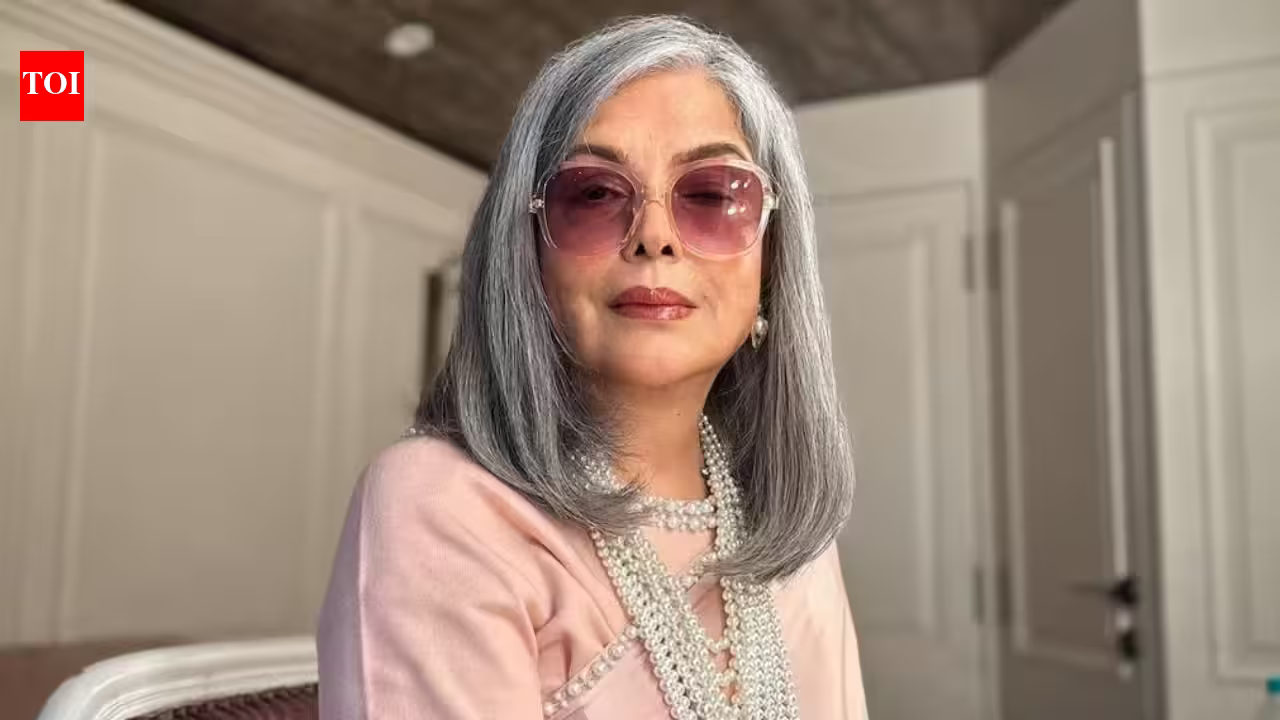
In an industry built on the ephemeral currency of flashbulbs, magazine covers, and opening-weekend box office numbers, Zeenat Aman has long been the exception to the rule. She isn’t just a screen icon; she is a survivor who has spent over five decades navigating the turbulent waters of Bollywood stardom. Recently, in a candid appearance on Koffee With Karan, the legendary actress pulled back the velvet curtain on the reality of celebrity, delivering a verdict on fame that was as bracingly honest as it was inevitable.
For decades, the public has viewed Zeenat through the prism of her roles: the bohemian Janis Joplin-esque Janice in Haré Rama Haré Krishna, the ethereal beauty in Satyam Shivam Sundaram, or the effortlessly chic leading lady of the seventies. Yet, sitting across from Karan Johar, it wasn’t the gloss of her career that took center stage, but the scars and wisdom left behind by the relentless cycle of public adoration and scrutiny.
The Fickle Nature of Public Adoration
The most striking moment of the conversation came when Zeenat dismantled the pedestal upon which Bollywood places its stars. “Fame is such a fickle thing,” she told Johar, her tone measured and devoid of the performative humility often found in modern celebrity interviews. “You cannot hinge your sense of self-worth on that because one day you’re loved, the next day you’re disliked, the third day you’re hated, the fourth day you’re pitied, and a few days down the road they will resurrect you again.”
This wasn’t just an observation; it was a manifesto for mental survival in the spotlight. In an era of social media, where the metrics of popularity are tracked in real-time, Zeenat’s words serve as a necessary gut check. She effectively argued that fame is a weather pattern—unpredictable, external, and entirely beyond one’s control. To tie one’s identity to such a shifting tide is, in her view, a fool’s errand. For someone who has been the subject of both national obsession and intense tabloid speculation, this detached perspective isn’t just intellectual—it’s armor.
A Trailblazer’s Cinematic Legacy
To understand why Zeenat’s perspective holds so much weight, one must look at the path she carved. She did not merely participate in the seventies and eighties; she redefined what a Hindi film heroine could be. After winning a beauty pageant in 1970 and making her debut in 1971’s Hulchul, it was the iconic Haré Rama Haré Krishna that catapulted her into the stratosphere.
Playing the defiant, troubled Janice, Zeenat broke the mold of the “shrinking violet” heroine. She brought an urban sophistication and a rugged edge that hadn’t been seen before. Throughout the seventies, she was a powerhouse of screen presence, starring in back-to-back hits like Yaadon Ki Baaraat, Roti Kapada Aur Makaan, and The Great Gambler. Her filmography is a tapestry of bold choices, cementing her as the most bankable and experimental actress of her generation. She didn’t just play the part; she dictated the aesthetic of an entire decade.
The Weight of Personal History
While her professional highs were legendary, the public discourse surrounding Zeenat has often been dominated by the turbulence of her personal life. The media glare that follows a superstar—especially a woman who defies convention—can be predatory, and Zeenat has endured her fair share of it. Her marriage to Sanjay Khan in the late 1970s and her subsequent union with Mazhar Khan in 1985 were played out in the headlines, often subject to the very “pity” and “hate” she spoke of on Johar’s show.
Surviving the loss of Mazhar Khan in 1998 and the years of public narrative that followed could have easily embittered her. Instead, Zeenat has emerged on the other side of that history as an elder stateswoman of Indian cinema. By speaking openly about the cycles of fame, she is essentially reclaiming the narrative. She is acknowledging that while the industry tried to “resurrect” her or tear her down, the version of her that exists in the real world has remained the architect of her own peace.
Redefining Relevance in a Digital Age
In recent years, we have seen a remarkable shift in how Zeenat Aman interacts with her audience. Through her Instagram presence, she has bridged the generational gap, becoming a beacon of grace and wisdom for a younger generation of followers who know her as much for her insightful captions as for her past hits.
This modern resurgence of Zeenat is perhaps the ultimate validation of her own theory on fame. She isn’t trying to recapture the frenzy of 1975; she is simply living, sharing her thoughts, and engaging with her audience on her own terms. She has effectively exited the “fickle” cycle of celebrity-as-product and entered a space of authentic human connection.
When she asks, “Why would you base your sense of self-worth on something as fickle as that?” she is addressing every young performer standing in the wings, waiting for their moment in the sun. It is a cautionary tale from someone who has seen the sun set and rise dozens of times over. Zeenat Aman doesn’t need the validation of the industry anymore, and in that realization, she has found a type of freedom that no award or box office record could ever provide. Her journey serves as a powerful reminder that while fame is a visitor that comes and goes, character is the only thing that stays home.
Disclaimer: This content is auto-generated for informational purposes only.
Source: Read Original News