








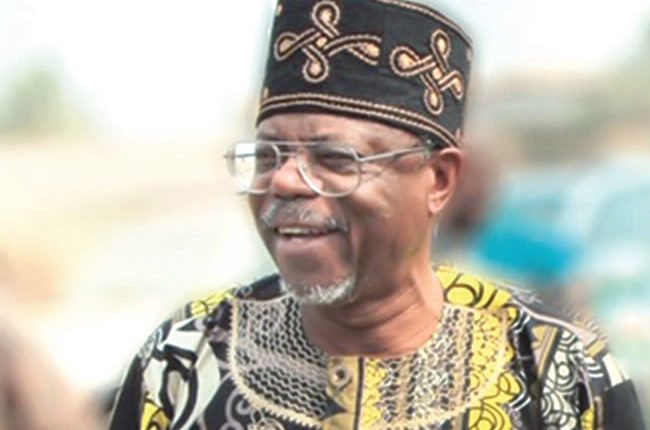
Lagos, Nigeria – The Nigerian intellectual landscape paused this week to celebrate the 65th birthday of Professor Gabriel Olatunde Babawale, a scholar whose expansive career has redefined the role of the academic in public life. Born on October 4, 1961, in Osun State, Professor Babawale is being lauded as a rare bridge-builder who has successfully navigated the intersection of political economy, cultural diplomacy, and institutional governance for over four decades.
In a virtual lecture delivered on October 4, 2026, distinguished historian Professor Toyin Falola hailed Babawale as a paradigm of “knowledge in action.” Reflecting on a professional relationship spanning nearly 50 years, Falola noted that while many academics measure success by books published, Babawale’s legacy is etched into the very institutions he helped shape and the public questions he dared to raise.
“His career presents a unique case study of an individual who has been a scholar, administrator, culturalist, and political analyst,” Falola stated. “He is an intellectual who has always raised questions about the utility of knowledge without action.”
Babawale’s journey began at the University of Ife, where he developed a foundational mastery of History and International Relations—disciplines that would inform his later work on the complexities of the Nigerian state. Following an early career in teaching, he joined the University of Lagos in 1991, ascending to the rank of professor of political science in 2002. However, his influence quickly expanded beyond the classroom.
Perhaps most notable was his leadership at the Centre for Black and African Arts and Civilization (CBAAC), which he directed starting in 2006. There, he challenged the notion that culture was merely ornamental, arguing instead that it is an essential pillar of national development. This interdisciplinary approach—blending political science with cultural heritage—defined his career, whether he was navigating the administrative demands of the University of Lagos or managing electoral transparency as a Commissioner for the Lagos State Independent Electoral Commission (2017–2021).
In 2021, Babawale transitioned into one of the most critical roles of his career: Provost of the Anti-Corruption Academy of Nigeria (ACAN). At the academy, he spearheaded research and ethics training, viewing the battle against corruption not merely as a matter of punitive measures, but as a crisis of institutional culture and behavior that required a scholarly response.
Even at 65, the scholar shows no signs of slowing down. His 2025 monograph, Democracy and Its Future in Nigeria: Constraints and Prospects, underscores a lifelong commitment to addressing the “vexing issues” of the African condition.
As the nation marks his birthday, the consensus among his peers is that Babawale has effectively dismantled the wall between the ivory tower and the public sector. His career stands as a testament to the idea that the Nigerian professor can—and should—be a central architect of the nation’s future.
Disclaimer: This content is auto-generated for informational purposes only.
Source: Read Original News