








Delhi’s Economic Tightrope: The Challenge of Untangling India’s Dependence on Chinese Imports
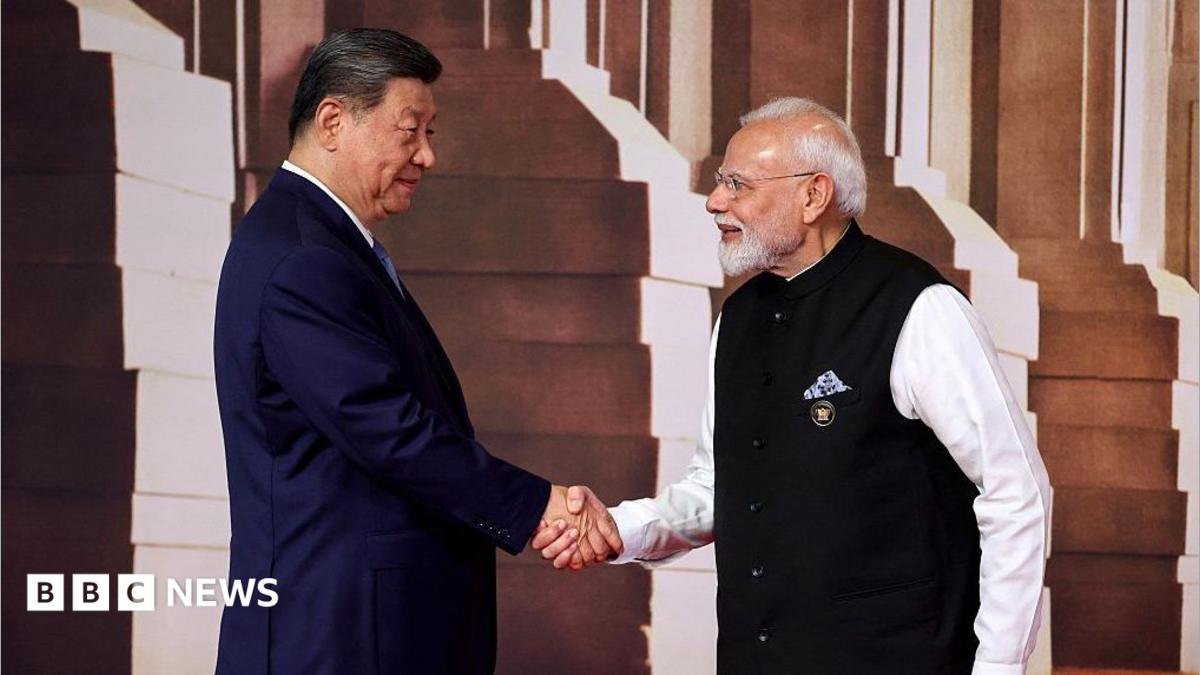
Following the high-stakes BRICS summit in Delhi this past September, a renewed diplomatic thaw between India and China has opened doors for high-level dialogue. During a landmark bilateral meeting, Prime Minister Narendra Modi and President Xi Jinping publicly committed to tackling the “structural trade imbalances and supply chain issues” that have long defined the uneasy economic relationship between the two Asian giants. However, as policymakers in New Delhi map out a path to greater self-reliance, experts warn that the task ahead is exceptionally complex due to the deep-seated integration of Chinese goods within India’s industrial core.
The Mirage of Assembly-Led Manufacturing
India’s recent success in domestic manufacturing—most notably its emergence as a global hub for smartphone assembly—has been a cornerstone of the government’s “Make in India” narrative. With India now responsible for over 25% of global iPhone production, the narrative of domestic growth is strong. Yet, beneath the surface, the industrial backbone remains fragile.
Industry analysts point out that much of this progress is assembly-centric rather than indigenous manufacturing. The value-add often remains limited because the essential components, high-end semiconductors, and specialized machinery required for these sophisticated assembly lines are largely sourced from China. Consequently, while the “Made in India” label is appearing on more finished products, the supply chain feeding those factories remains heavily tethered to Beijing.
A Fragile Industrial Ecosystem
The reliance on Chinese imports is not limited to consumer electronics. It permeates the foundational layers of India’s industrial base. According to data from the Observer Research Foundation (ORF), electrical machinery and electronics command a staggering 36% of total imports from China. This is compounded by a 21.7% reliance on mechanical appliances, alongside critical dependencies in plastics and organic chemicals—the building blocks for a vast array of domestic sectors.
For sectors like renewable energy and chemical manufacturing, a sudden restriction or geopolitical disruption in the supply chain would not just inconvenience consumers; it would bring production lines to a screeching halt. As experts at the ORF highlight, India currently lacks the domestic infrastructure to seamlessly substitute these vital inputs. This structural bottleneck means that as India expands its manufacturing capacity, its dependency on Chinese precursors often grows in tandem.
The Macroeconomic Pressure Cooker
The challenge is further exacerbated by global macroeconomic currents. China is currently grappling with a slowing domestic economy that is unable to absorb its massive industrial output. This has led to significant excess capacity in key sectors, including steel, solar panel manufacturing, and electric vehicles. To keep factories running, Chinese manufacturers are aggressively pushing these surplus goods into international markets at highly competitive prices.
This pressure is intensified by the shifting global landscape. As Western nations implement increasingly stringent tariffs and trade barriers against Chinese products to protect their own industries, India has become a natural destination for these redirected goods. India’s own rapid industrial expansion makes it a thirsty market, creating a perfect storm: Beijing needs to offload surplus to maintain its own economic health, while Delhi seeks cheap, readily available inputs to fuel its growth ambitions.
Achieving a sustainable trade balance is no longer merely a diplomatic aspiration; it is an urgent industrial necessity. Moving forward, the real test for New Delhi will be whether it can pivot from being an assembly-based economy to one that possesses the deep-tech manufacturing capabilities required to truly decouple its industrial future from its neighbor’s supply chains.
Disclaimer: This content is auto-generated for informational purposes only.
Source: Read Original News