






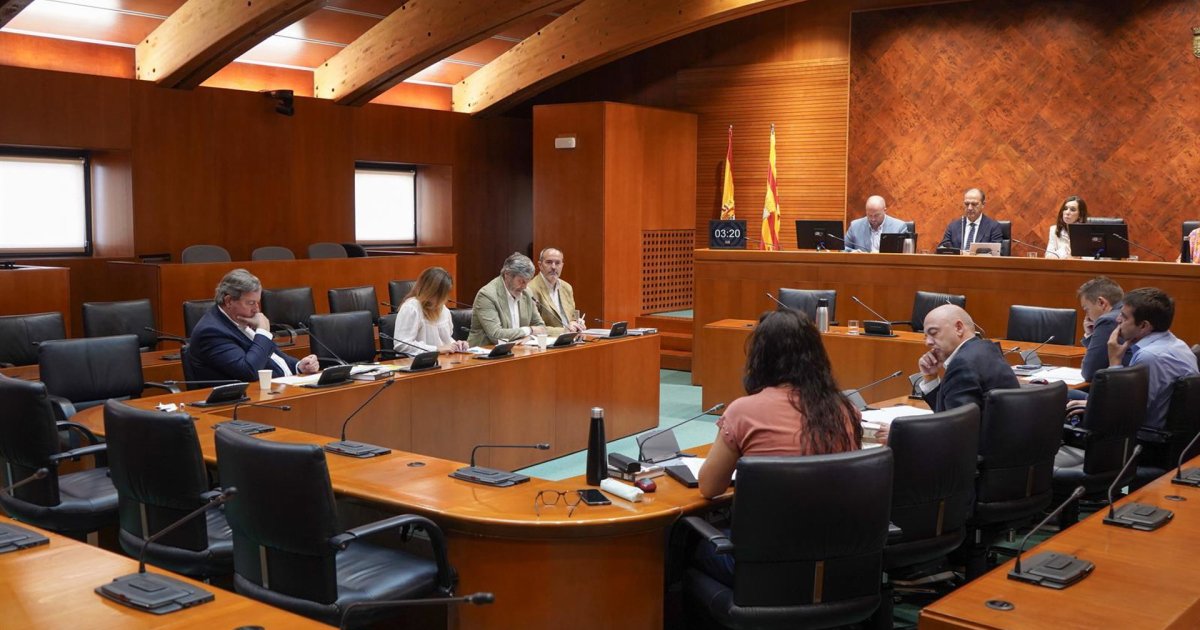
The Aragon Cortes is set to host a pivotal series of sessions this Monday, October 5, as high-ranking officials outline the strategic environmental and institutional roadmap for the current legislature. Among the most anticipated appearances is that of José Montoya, the General Director of Environmental Quality, who will present his department’s primary objectives to the Environment and Tourism Commission during an afternoon session beginning at 3:00 p.m.
Montoya’s appearance, requested by the departmental counselor alongside the PSOE, CHA, and A-TE parliamentary groups, marks a critical opportunity to define the government’s stance on pressing ecological concerns. As Aragon grapples with shifting climate patterns and the logistical demands of rural land management, the director is expected to address how the administration intends to balance industrial activity, tourism, and environmental preservation in the coming years.
The legislative agenda following the director’s presentation promises a rigorous debate on the region’s climate readiness. The Chunta Aragonesista (CHA) is set to lead a motion focusing on forest fire prevention and extinction policies. This initiative carries significant weight, as it seeks to hold the regional government accountable for commitments made to the SARGA union committee. The motion aims to ensure full compliance with pre-agreed labor and operational standards, which are widely considered essential for maintaining an effective rapid-response force capable of protecting Aragon’s vast forested landscapes during increasingly hazardous summer seasons.
In addition to fire management, the commission will weigh a proposal from the Izquierda Unida (IU) group that advocates for a structural shift in regional governance: the creation of a dedicated General Directorate of Climate Change. Proponents argue that the current environmental challenges—ranging from water scarcity to the mitigation of greenhouse gas emissions—require a more robust, centralized authority. The motion specifically calls for an office endowed with both specialized competencies and the institutional power to coordinate transversal policies across various government departments. Supporters believe such a body is necessary to ensure that climate action is not relegated to a secondary concern, but rather integrated into the fundamental economic and social planning of the Autonomous Community.
Earlier in the day, the focus of the Cortes will reside with the Institutional and Statutory Development Commission, where the General Director of Legal Services, Juan Ignacio Pérez, will outline his department’s policy. While the morning session is heavily weighted toward administrative and cultural issues—including debates on the Battle of Teruel museum and the declaration of popular Aragonese bullfighting as a Good of Cultural Interest—it also touches upon environmental regulatory oversight. Notably, the Commission is scheduled to examine audit reports concerning the establishment of Low Emission Zones (LEZs) in Aragonese municipalities.
The examination of these audit reports is highly relevant to the broader environmental agenda. As local governments across Spain navigate the implementation of LEZs to comply with air quality standards, the effectiveness of these zones in Aragon has come under increasing scrutiny. The review of the audit report serves as a benchmark for determining whether the current legal and financial framework is sufficient to meet national and European emission targets.
The day’s proceedings represent a significant intersection of policy and practice. By evaluating both the structural organization of climate governance and the immediate practicalities of forest protection and urban emission controls, the Cortes de Aragón is attempting to set a clear course for the legislature. The outcomes of the votes on these motions will likely signal the government’s commitment to either maintaining the status quo or pivoting toward a more assertive, climate-focused administrative strategy. Following these debates, the Commissions are expected to convene their expanded tables to finalize the legislative calendar, ensuring that these environmental directives remain a priority in the months ahead.
Disclaimer: This content is auto-generated for informational purposes only.
Source: Read Original News