




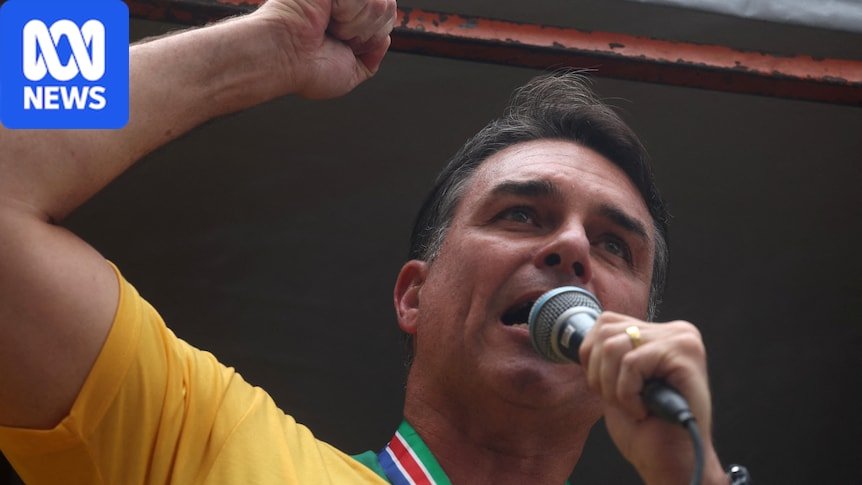
In a stunning upset that has sent shockwaves through Latin American politics, Flávio Bolsonaro, the son of jailed former leader Jair Bolsonaro, has finished ahead of incumbent President Luiz Inácio Lula da Silva in the first round of Brazil’s presidential election. The surprise result, which defied nearly all pre-election polling, forces the country into a tense run-off set to take place in three weeks.
With 47 percent of the vote compared to Lula’s 45 percent, the younger Bolsonaro—who was previously considered a political novice before being tapped as his father’s heir—has effectively captured the nation’s conservative base. His strong performance was bolstered by a broader surge for right-wing candidates in parliamentary elections, representing a significant setback for the 80-year-old leftist president who is seeking a fourth term to solidify his legacy.
Celebrating the results, Flávio Bolsonaro expressed confidence that he is on a path to victory. “I am very happy with the real possibility that, three weeks from now, Brazil will give a definitive answer by choosing a modern government,” he told supporters.
For Lula, the path forward is a familiar but difficult one. Addressing his campaign team, the veteran leftist framed the upcoming showdown as a struggle between democracy and “barbarism.” Maintaining a defiant tone, he stated, “Tomorrow we start a new campaign. I am very good in the knockout stage. We will see who has the best plan.”
The election has laid bare the deep polarization within Brazil. Supporters of the Bolsonaro name, particularly within the country’s evangelical community, view the younger candidate as a vessel for protecting religious freedoms and continuing the right-wing policies championed by his father. Conversely, opponents fear that a Bolsonaro victory would embolden discrimination and threaten the social safety nets that have been a cornerstone of Lula’s tenure.
Lula, who has seen his popularity fluctuate during his third term, has attempted to lean into a populist, anti-Washington narrative, positioning himself as a defender of Brazilian sovereignty. His supporters credit his social policies with lifting millions out of poverty, and many view a potential Bolsonaro presidency as a dangerous shift toward the influence of figures like former US President Donald Trump.
The next three weeks will be critical for both campaigns as they scramble to win over the moderate, undecided voters who did not commit to either candidate in the first round. With notable minor candidates like Ronaldo Caiado and Renan Santos refusing to endorse either finalist, the electorate remains fractured.
As Brazil braces for the final sprint to the October 25 poll, the nation stands at a crossroads. For voters like 62-year-old Oscarina de Oliveira, the indecision reflects a broader national fatigue. Having switched her vote to Bolsonaro at the last moment, she encapsulated the mood of a weary electorate: “Just to see what happens, to see if anything changes.”
Disclaimer: This content is auto-generated for informational purposes only.
Source: Read Original News